











Amazingly, the roots of the modern Tapir species can be traced all the way back to the Eocene Epoch, which lasted from 56 to 33.9 million years ago.
These early Tapirs were smaller than their modern counterparts and did not have an elongated nose or upper lip. These species weighed up to 400 pounds and were normally half the size of the existing species.
Evolution
The first examples of Tapirs with long snouts appeared during the Oliogocene period, which ended 23 million years ago. The species from 30 million years ago are nearly identical to their living cousins today. In fact, today’s South American, Asian, and Mountain tapirs have evolved extraordinarily little over the last 20 to 30 million years.
Tapirs are considered living fossils because they haven’t changed much since their evolution, more than 50 million years ago, and are considered one of the most primitive large mammals in the world.
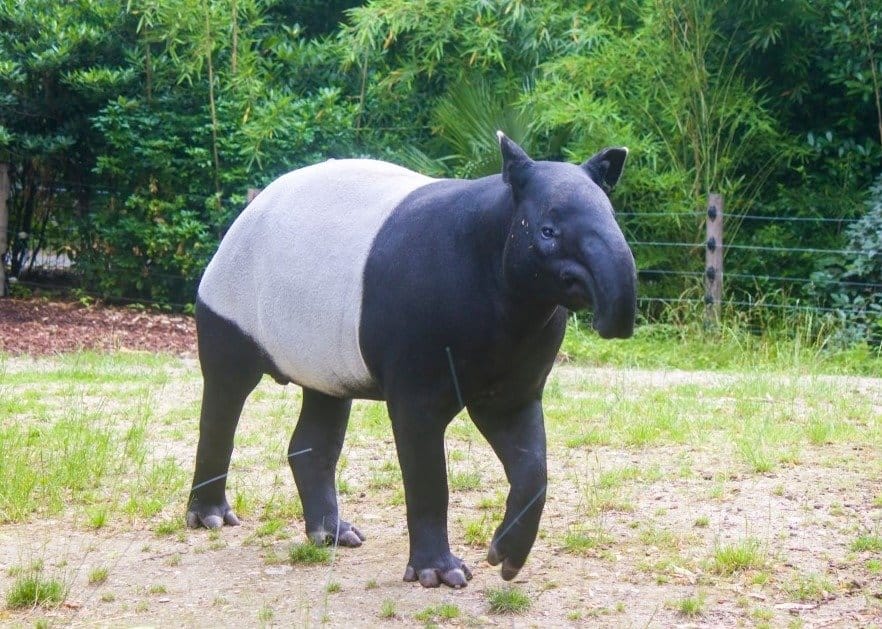
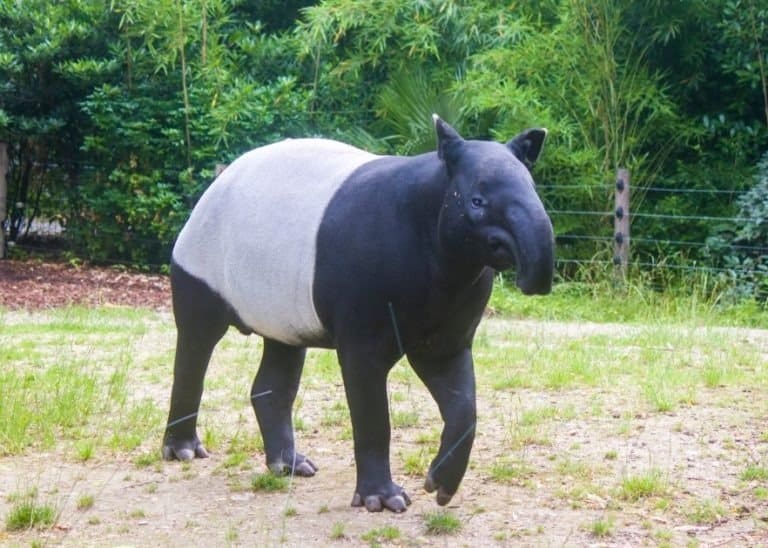
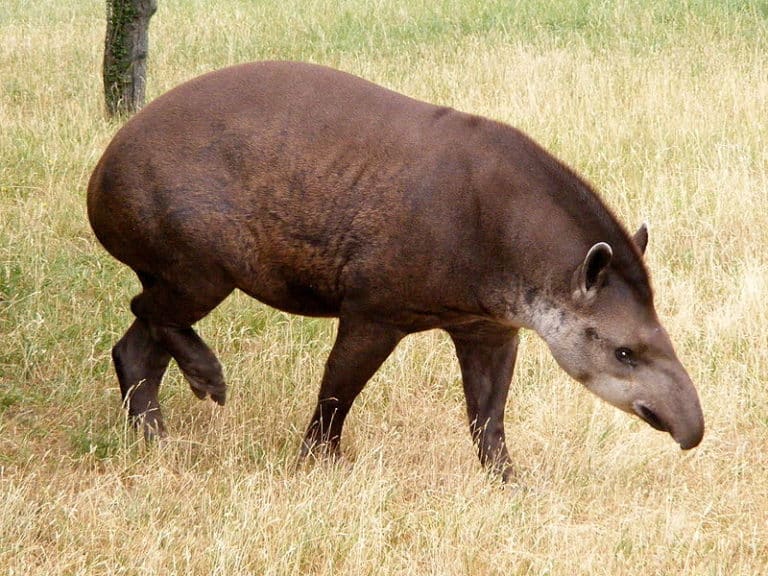
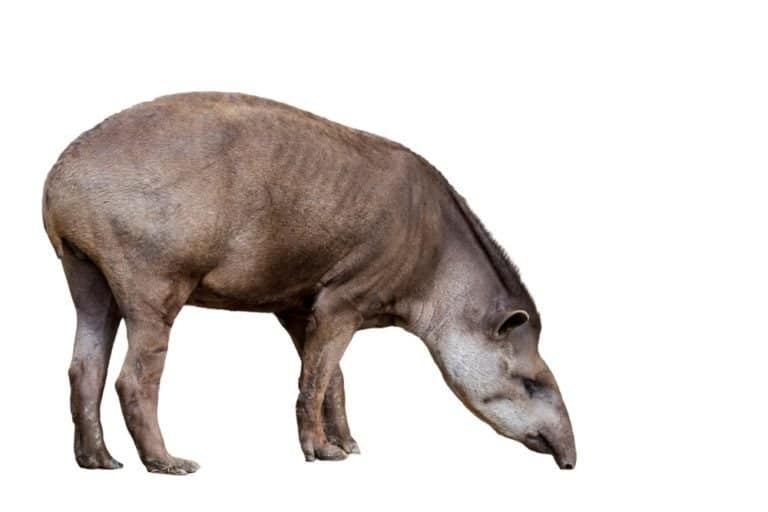
In general, these animals are solid creatures with large protruding rumps. They are covered with varying amounts of red, brown, gray, or black fur. The mountain Tapir, which makes its home in the Andes mountain, is smaller but has more fur than the other existing species.
Tapirs are animals that resemble numerous animals, some of which people think are most closely to donkeys, but they weigh up to 800 pounds and can be more than six feet long. They also stand between two and four feet high at the shoulder. Their tough hides provide protection from most predators.
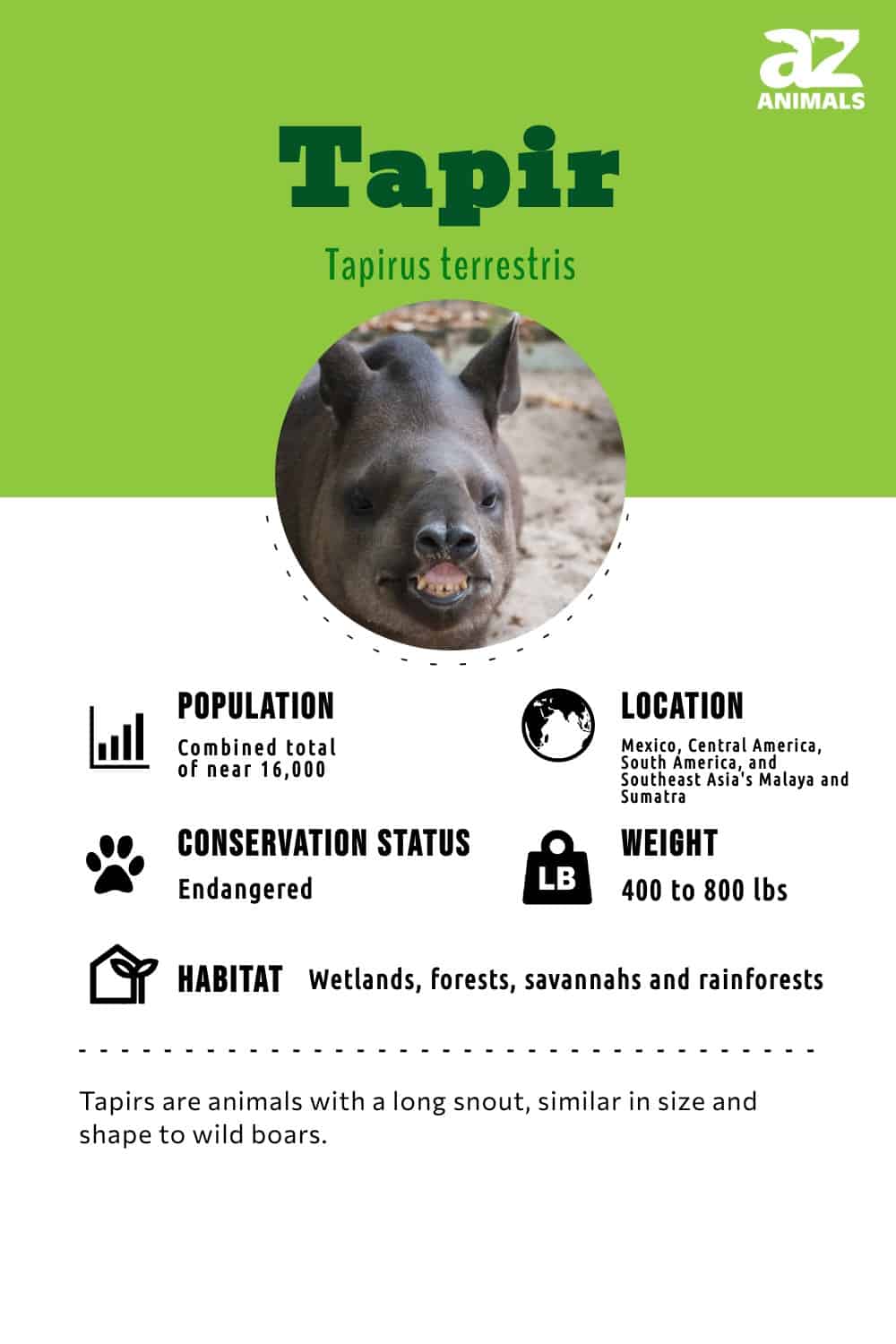
5 Incredible Tapir Facts!
- Tapirs are animals that have existed on Earth for more than 30 million years.
- They live in grasslands, forests, swamps, mountains, and other environments in South America, Asia, and India.
- They have between 42 and 44 teeth.
- Tapirs have between 52 and 80 chromosomes depending on the species.
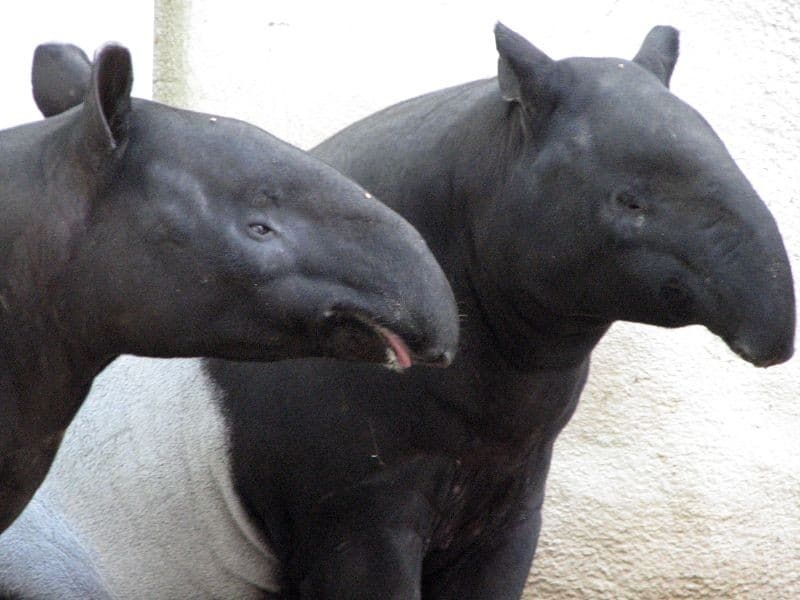
Tapirs have been on this earth for more than 30 million years!
©Just chaos, CC BY 2.0, via Wikimedia Commons – Original / License
Scientific Name
There are four living, or extant species of this animal, including:
- Tapirus terrestris, or the South American Tapir
- Tapirus pinchaque, or wooly tapir
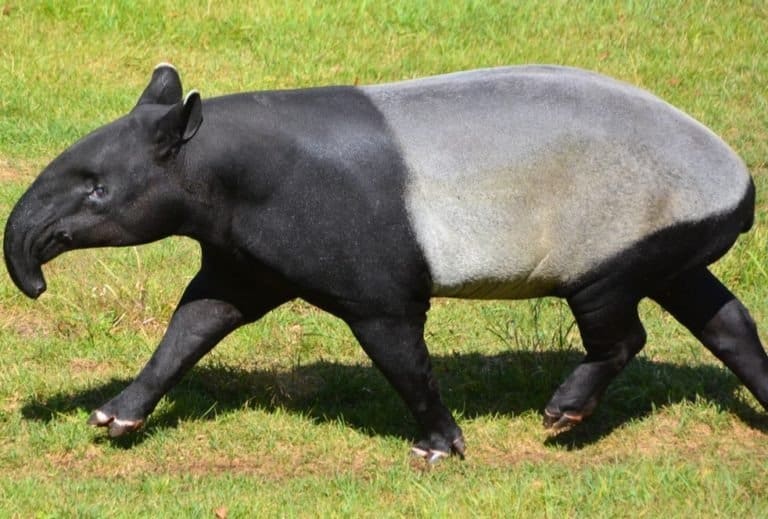
- Tapirus indicus, or Malayan tapir
- Tapirus bairdii, or Baird’s tapir.
A fifth species with the scientific name Tapirus kabomani, or the Kabomani Tapir, is not yet officially recognized. Beyond the living species, there have been at least 15 other known extinct species over the many millions of years since this unique creature first appeared.
Appearance And Behavior
In general, modern Tapirs all have a long snout, known as a proboscis, that is omnidirectional. They use this flexible appendage to gather berries, fruits and other vegetation from all surrounding areas. Their mouth contains between 42 and 44 teeth that are largely flat to help grind plants and fruits.
Other than the nose, these animals are similar in size and shape to wild boars or to Rhinoceroses. They can reach more than six feet long and nearly three feet high. They weigh anywhere from 400 to 800 pounds as adults and have tough skins that make them resistant to many predators that are native to South America, India, and Asia.
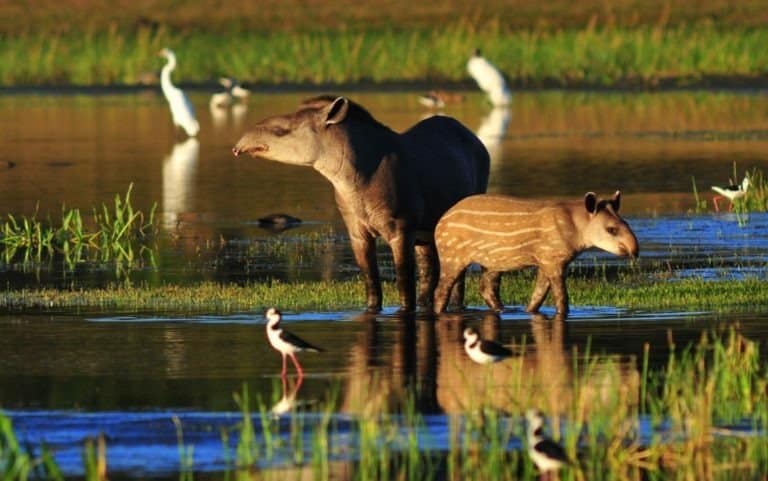
These animals are generally solitary creatures. They will gather in small groups, called candles, to procreate, and for social interaction. Babies, known as calves, remain with their mothers until they reach six to eight months of age. At that time, they go off on their own and the mother is free to raise another offspring.
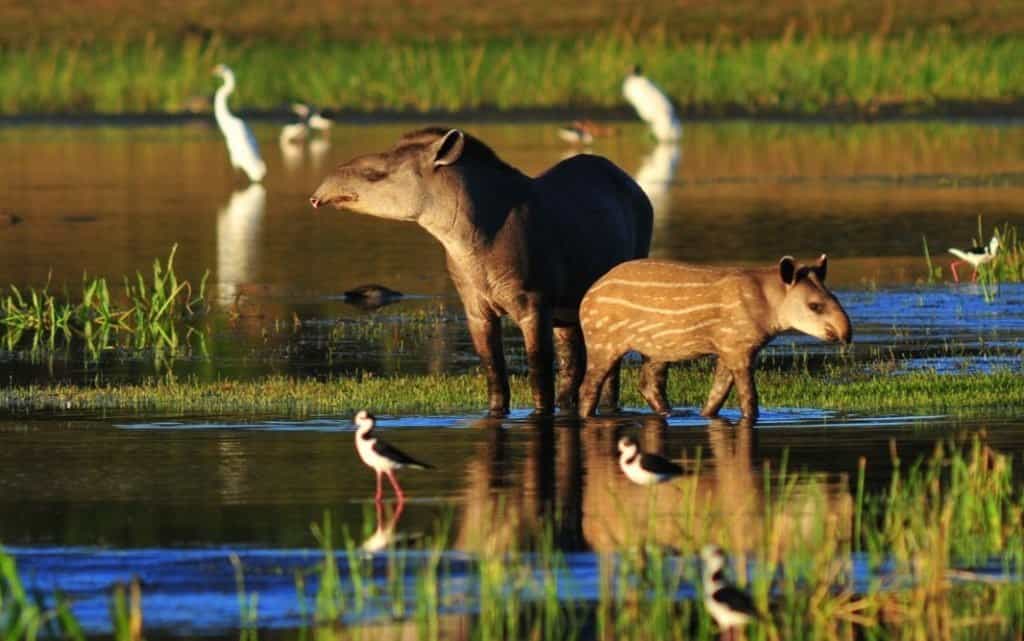
Tapirs have diverse native habitats.
©Lucas Leuzinger/Shutterstock.com
Habitat
Tapirs have diverse native habitats depending upon which species it is and where it is found. For example, the South American species, the scientific name Tapirus terrestris, lives in the grassy plains of Brazil, Venezuela, Colombia, Argentina, Peru, Ecuador, and Guiana.
In contrast, the Baird Tapir, scientific name Tapirus bairdii, roams the grasslands of Mexico, Central America, and parts of northern South America. The Mountain Tapir is smaller and woolier than its cousins. It primarily lives in the Andes mountains.
The Indian or Asian tapir is found in Cambodia, Indonesia, and Laos. It has also been seen in Malaysia, Myanmar (formerly known as Burma), Thailand, and Vietnam. These animals like to forage in the jungles and rainforests of these countries.
Diet
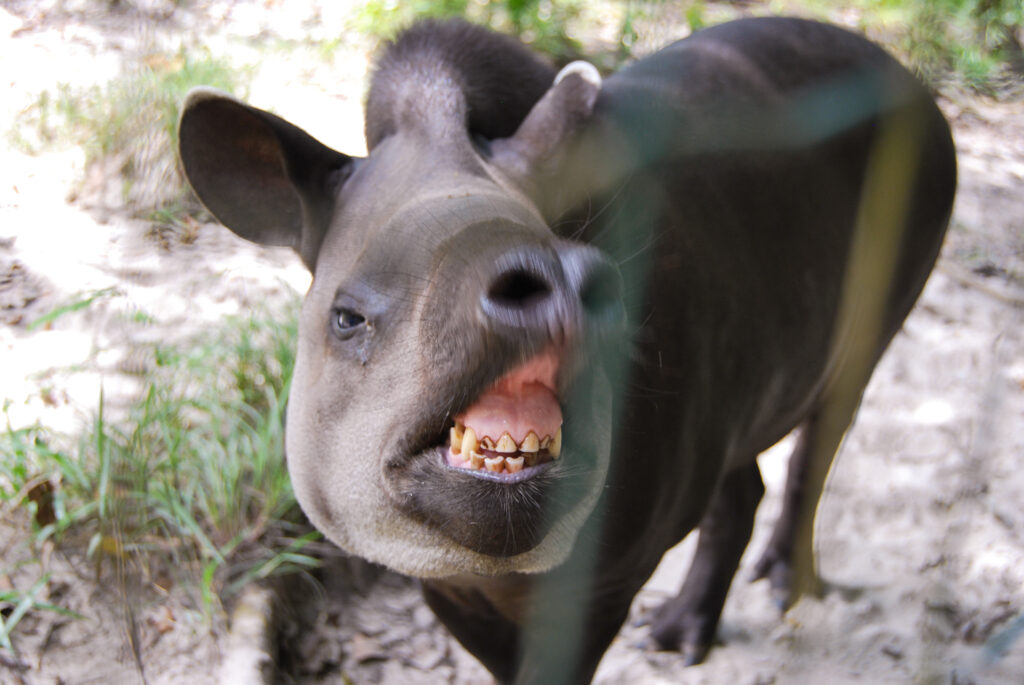
Tapirs are herbivores and use their long noses to grab items that may seem out of reach.
©Margus Vilbas Photography/Shutterstock.com
All species are herbivores, which means that their diet includes only grasses, seeds, fruits, and other plant life. This creature’s proboscis can move in all different directions to grab low-lying leaves and fruit that other animals might not be able to reach. The animal does not eat meat, so its teeth are used solely to grind up its vegetative diet.
Predators And Threats
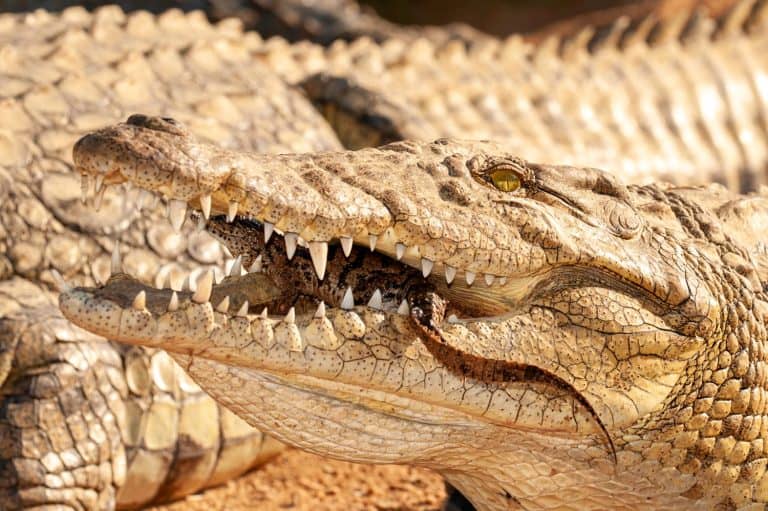
This animal has tough skin on its back and neck that helps protect it from many predators that might want to target it as a source of meat. However, crocodiles have been known to attack them while they are wallowing in swamps and mud pits or while trying to cool off in lakes and rivers.
Wild jungle cats that roam the grassy plains in Central America or the jungles of South America and Asia also may prey on these animals. Tigers, jaguars, and cougars are three examples of larger felines that hunt the Tapir.
Despite these few natural predators, perhaps the biggest risk to the animal’s survival are humans. People have hunted the Tapir for centuries to obtain not only its meat but also its hides. The Tapir’s durable skin makes them particularly prized for leatherwork in some parts of Asia and India.
Deforestation and the destruction of their natural mating habitats are also other major risks to these animals. In fact, all four Tapir species are either endangered or vulnerable according to conservation tracking groups. Estimates indicate that none of these species have a population larger than 4.500 out in nature.
Reproduction, Babies, And Lifespan
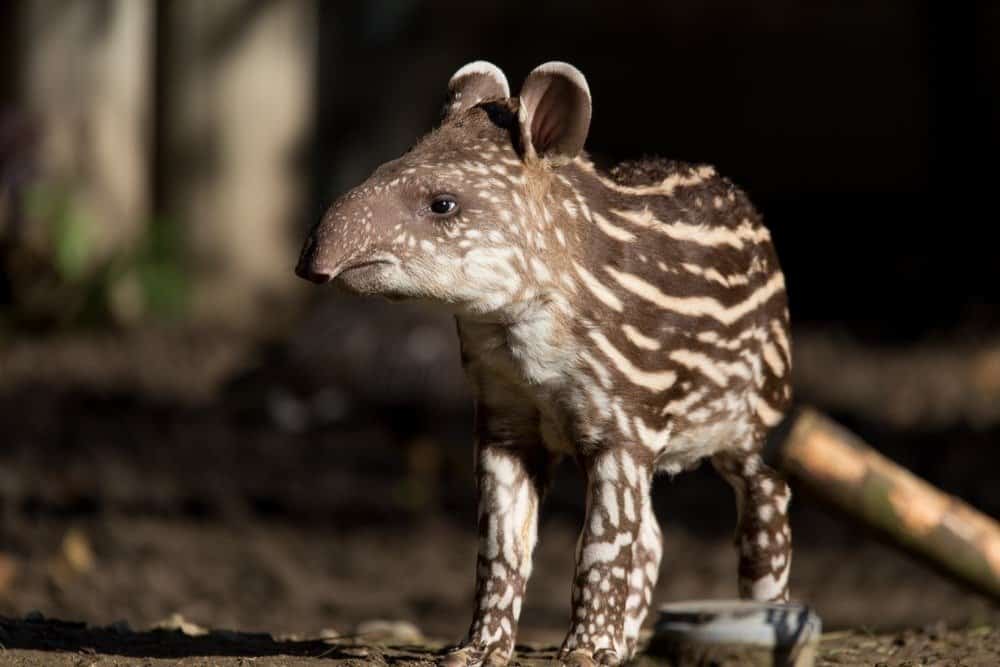
After birth, a calf is weaned over the next six to eight months.
©Artush/Shutterstock.com
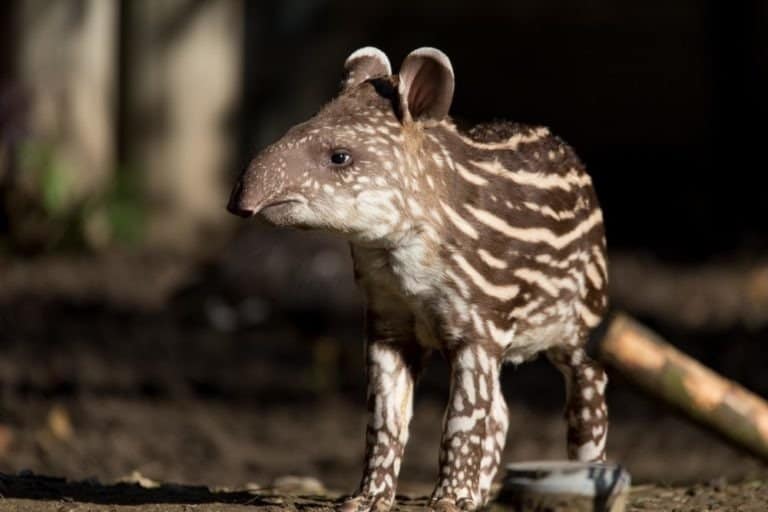
These animals have a relatively long gestation period. They generally attempt to mate just before the rainy season in South America and Asia. If successful, then a male or female baby, known as a calf, is born 13 months later just after the rainy season begins.
Mothers can only carry one calf at a time. After birth, the female raises and weans her offspring over the next six to eight months. At that time, the juvenile is nearly full-grown, and the mother can look for a new mate. Female Tapirs can have one calf every two years throughout their lives.
Female Tapirs often reach sexual maturity before their male counterparts. Females can become sexually active as early as three years old whereas it may take a male Tapir between four and five years to completely mature. Once mature, procreation can take place on dry land or while the Tapirs are cooling off in lakes, rivers, or other large bodies of water.
A Tapir’s lifespan remains remarkably consistent whether they are out in the wild or held in captivity at a zoo. In fact, most individuals of the four recognized tapir species live between 20 and 30 years. Their consistent lifespan may be because of their large size, tough hides, and other natural defenses limit their number of true predators in the wild.
Population
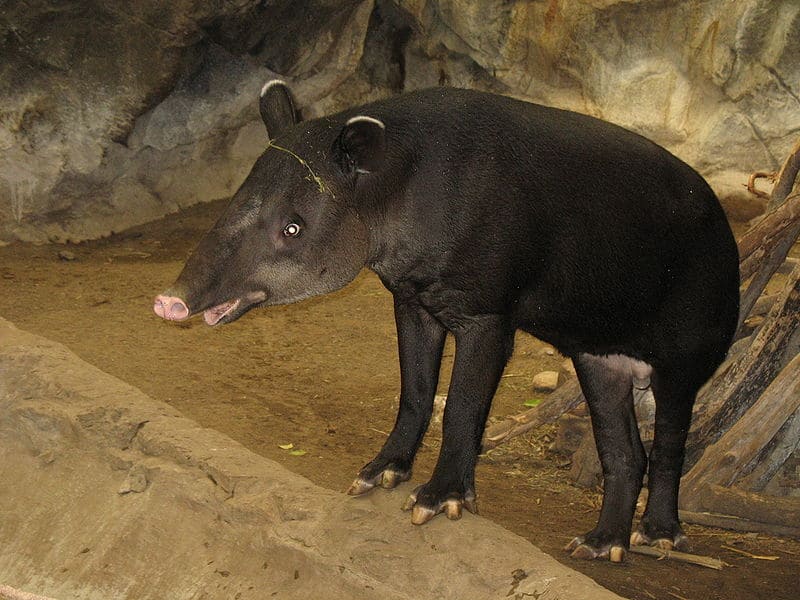
All four recognized species are listed as vulnerable or endangered.
©Sasha Kopf, CC BY-SA 3.0, via Wikimedia Commons – Original / License
All the recognized Tapir species are listed as either vulnerable or endangered on wildlife conservation lists. None of the four species have a population bigger than 4,500 in the wild. Scientists believe that the Malayan Tapir may have a population as low as 3.000 left in the world. The Baird Tapir’s count is only slightly better at 4,500 animals.
Tapirs In The Zoo
These animals generally survive well at the zoo. Their life expectancy is surprisingly similar whether they are in captivity or out in the wild. These creatures typically live for 20 to 30 years, but some specimens have lived 35 years or more at the zoo. In fact, the San Diego Zoo has an established breeding program that has resulted in more than 30 baby Tapirs being born over the last 80 years.
Tapirs can be kept with other species native to Central America, South America, or Asia. For example, Tapirs live in the same exhibit as capybaras and guanacos at the San Diego Zoo.
Tapir Pictures
View all of our Tapir pictures in the gallery.

Danny Ye/Shutterstock.com
Sources
- Wikipedia / Accessed December 23, 2020
- National Geographic / Accessed December 23, 2020
- Live Science / Accessed December 23, 2020
- Animal Corner / Accessed December 23, 2020
- Mongabay / Accessed December 23, 2020