



The turkey is a fascinating bird that is directly related to dinosaurs like the Velociraptor. It’s an intelligent and social animal, and it’s also related to pheasants and grouse. These birds can be found all across the United States, Canada, and Mexico.
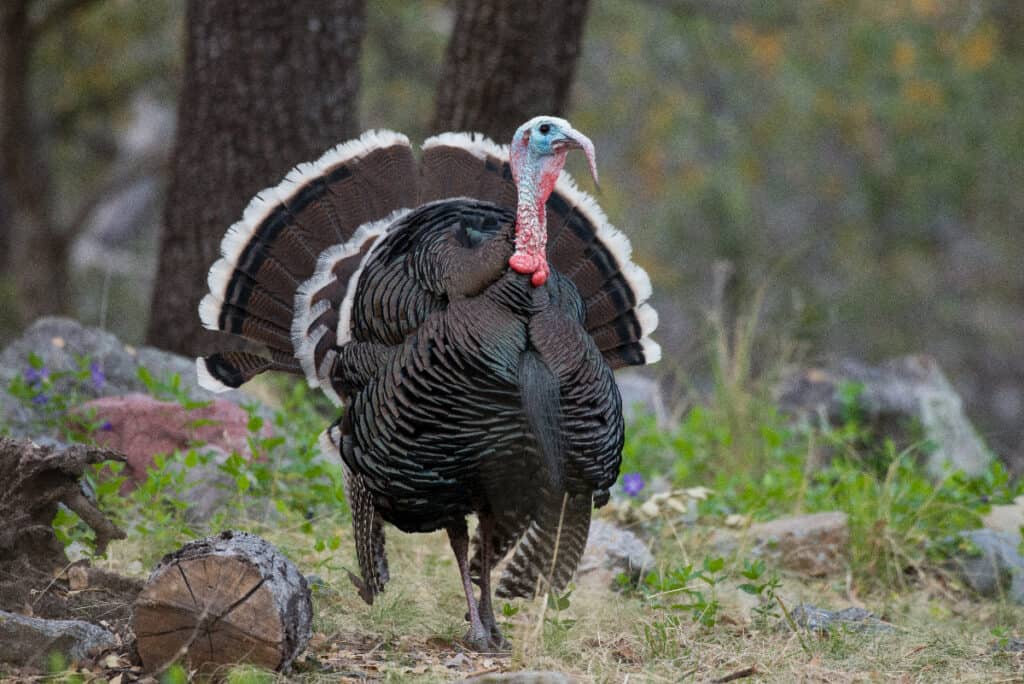
When awake, turkeys spend most of their time looking for food.
©Sean R. Stubben/Shutterstock.com
Where to Find These Birds
There are two primary species. The one that most people are familiar with is the wild turkey, the same species as the turkeys that are raised for the table, but domesticated turkeys tend to be heavier birds since they are bred to be eaten. This species is native to North America, and it can be found in almost every part of the United States. Some are even found in the northern regions of Mexico.
These birds aren’t especially popular among birdwatchers, but they are sought after by hunters. Hunting seasons vary by state, but most take place in late spring.
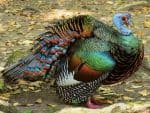
The second species is known as the ocellated turkey, and it is native to the Yucatan Peninsula of Mexico. At one point, researchers classified these birds separately from the North American species, but they are extremely similar, so they have since been placed into the same genus.
Ocellated turkeys are more endangered, so Mexican authorities are stricter about hunting. They typically employ “hunting tourism” trips in the spring to manage the bird population safely.
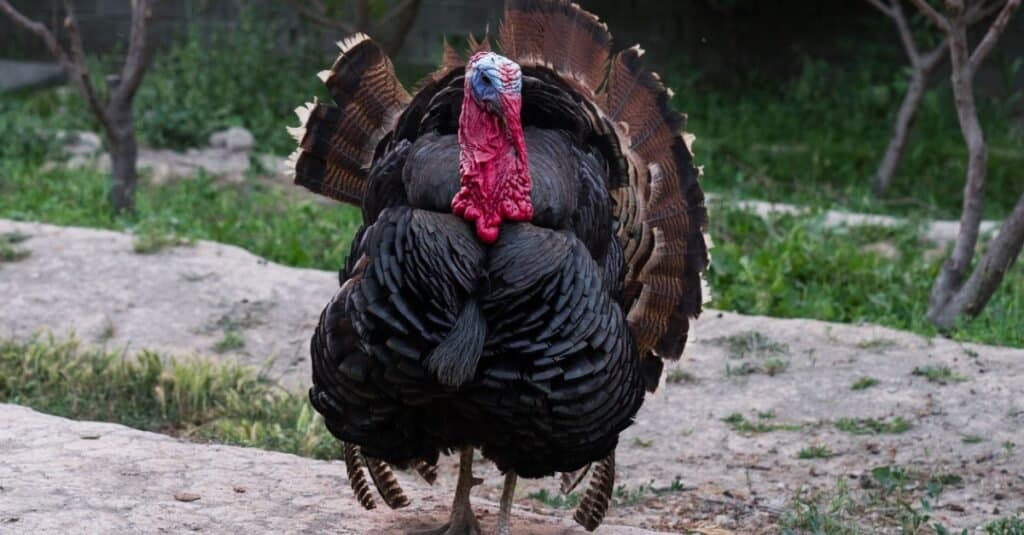
Turkeys love to be stroked, petted, and cuddled. They will remember your face, and if they like you, they will come up to you to greet you.
©iStock.com/DA69
Evolution and Origins
The domesticated turkeys that we have today were originally descended from the tamed Aztec birds found in southern Mexico, with the sixth “South Mexican” subspecies serving as the wild progenitor, while domestic turkeys bred by the Anasazi in the Four Corners region were linked to the Eastern and Rio Grande subspecies.
Turkeys have been evolving in North America for more than 20 million years and share a recent common ancestor with other fowl, like grouse and pheasants. It is the wild turkey species that was the forefather of the domesticated turkey, which was tamed around 2,000 years ago.
The domesticated turkeys commonly found on farms were derived from the Wild Turkey species, which is originally from the eastern and southwestern parts of the United States and Mexico, and it is believed that the Mayans, who lived in southern Mexico, were the pioneers of turkey domestication about 2,000 years ago.
Different Types of Turkeys
There are currently two turkey species that are still in existence: the wild turkey, which is found in the eastern and central parts of North America, and the ocellated turkey, which is found in the Yucatan Peninsula in Mexico.
Bird Nests
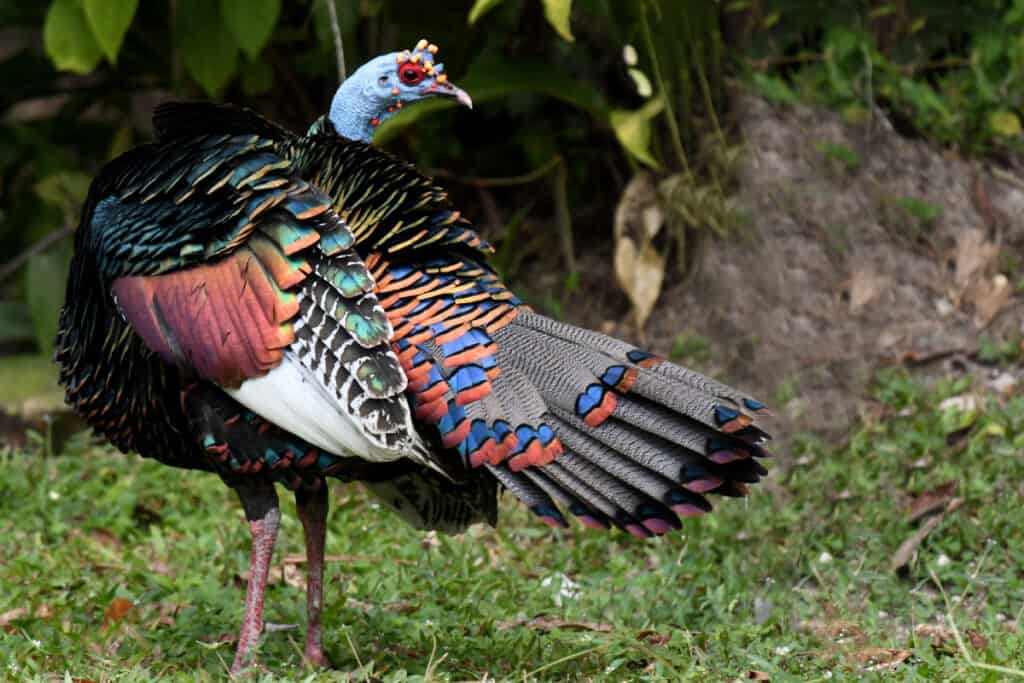
The ocellated turkey at Tikal in Guatemala.
©Lev Frid/Shutterstock.com
These large birds create their nests on the ground, typically at the base of a tree. The female will scratch a shallow rut into the soil near the tree’s roots and use the dead leaves and plant material that have accumulated in the spot as nesting material.
Scientific Name
The wild turkey’s scientific name is Meleagris gallopavo. The origin of this name is a bit unusual. The word “Meleagris” comes from a Greek myth in which Artemis, the goddess of the hunt, turns the sisters of the slain hero Meleager into guinea fowl. Its second name, “gallopavo,” is derived from two Latin words: “gallus,” which means rooster, and “pavo,” which means peacock.
The ocellated turkey’s scientific name is Meleagris ocellata. The word “ocellata” is derived from the Latin “ocellatus,” or “little eye.” The name refers to the eyelike spots that appear on the tail feathers of these birds.
Size, Appearance, and Behavior
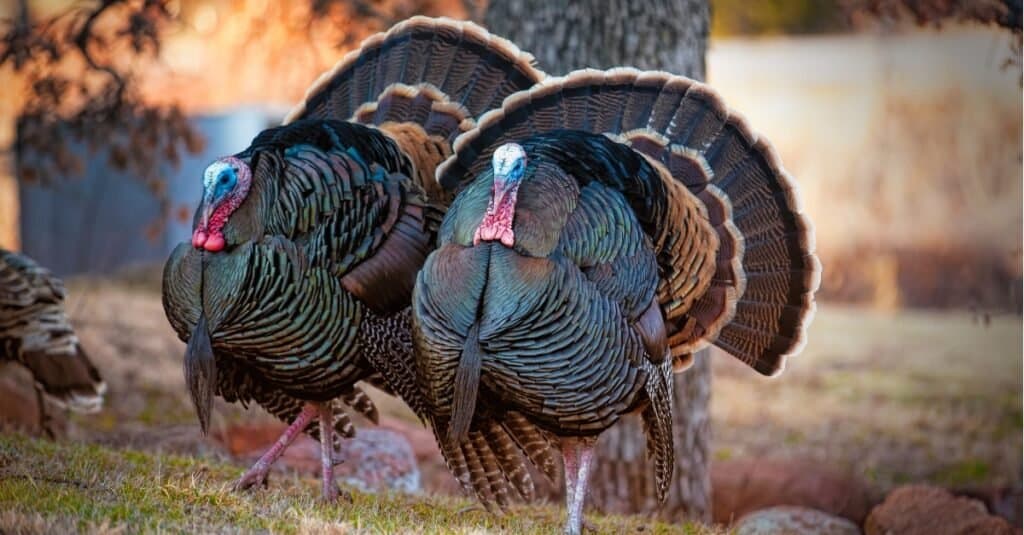
Turkeys belong to the family Meleagrididae, which is distinct from the Phasianidae family that includes pheasants and related birds.
©iStock.com/davidsdodd
Wild male turkeys, known as “toms,” typically weigh 11 to 23 pounds and measure about 45 inches in length. According to the National Wild Turkey Federation, the largest wild tom on record weighed 37.1 pounds. In contrast, domesticated turkeys’ average weight is 30 to 80 pounds, and the largest bird on record weighed 86 pounds. They also grow to be about 45 inches long.
Females are called “hens,” and they are smaller and lighter than toms. Wild hens are only about 11 pounds in weight, and they usually measure about 35 inches long. Domesticated hens may be up to 18 pounds in weight. Both males and females have a wingspan of about 48 to 57 inches.
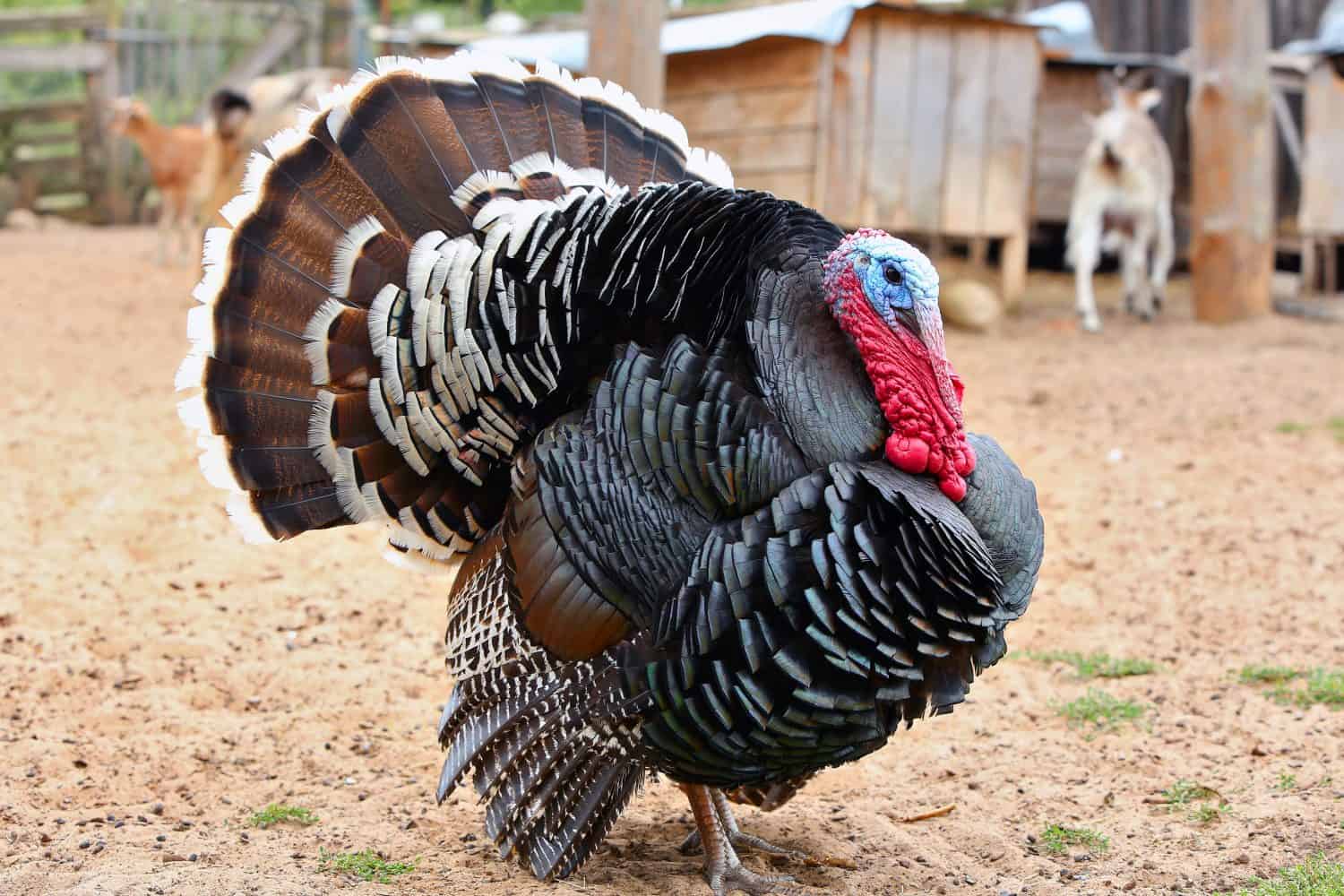
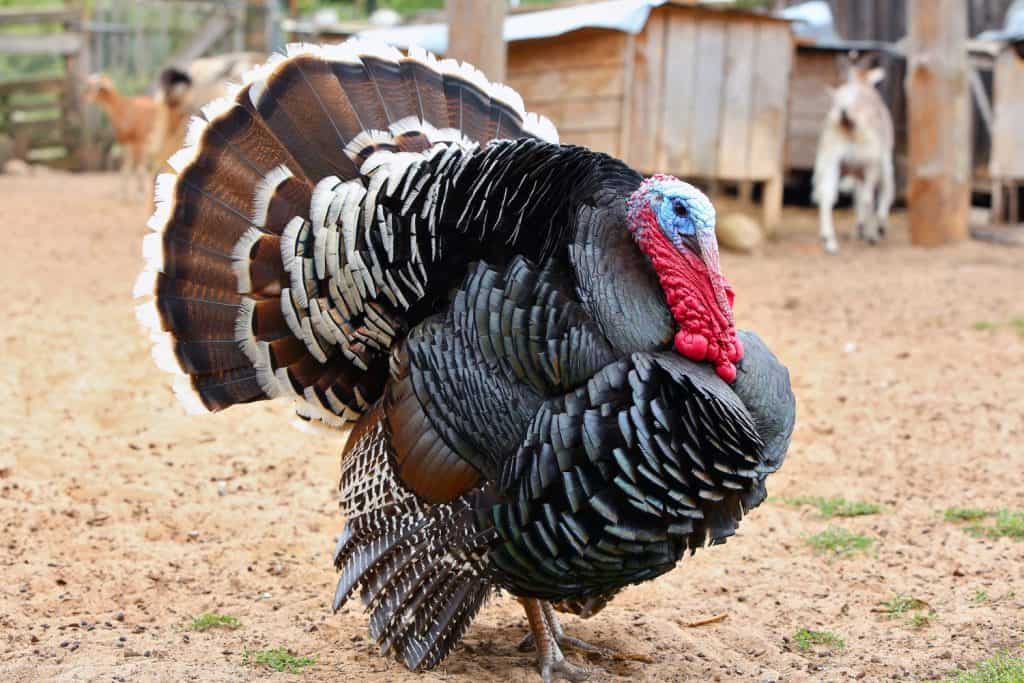
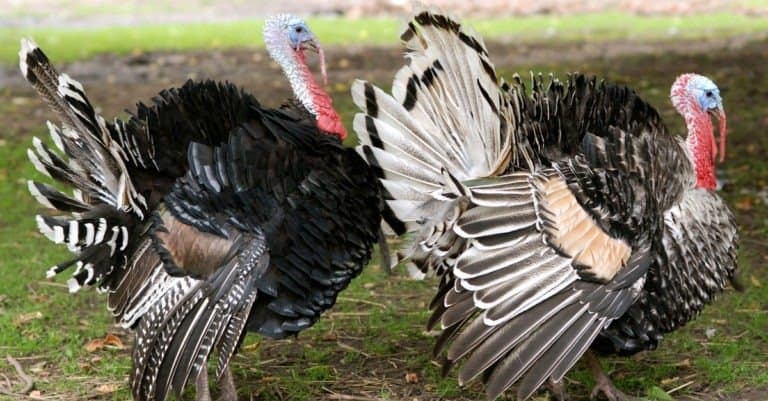
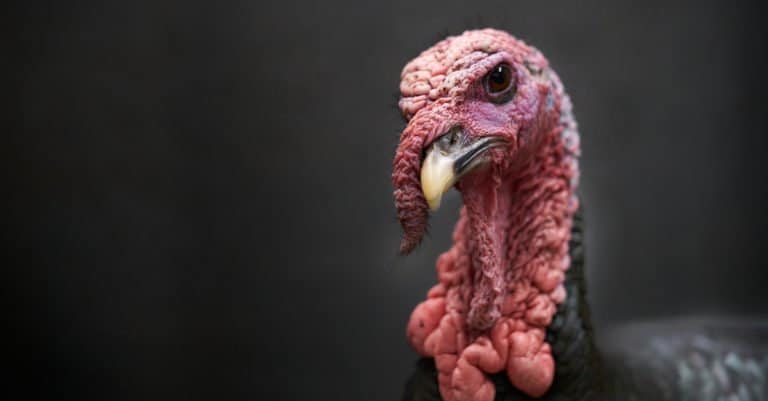
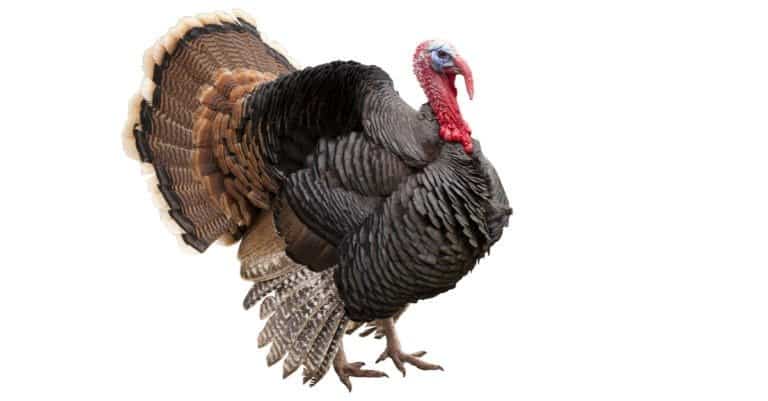
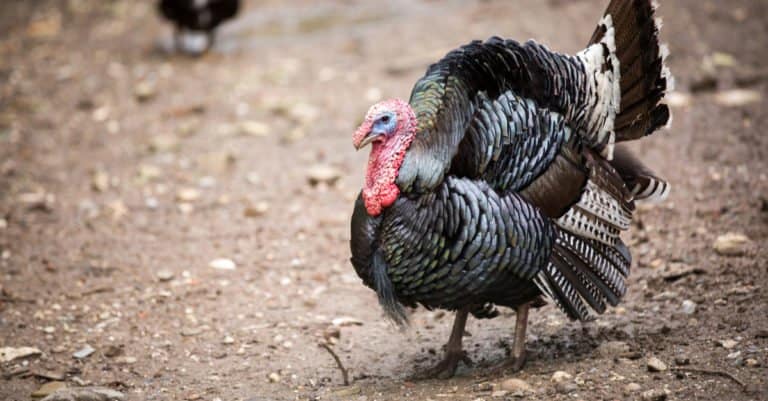
Adult wild males, or “toms,” have large bodies covered in gray-brown feathers that sport a coppery sheen. Their heads are featherless and red with bright red throats and red wattles on the throat and neck as well. They have long, glossy, and colorful tail feathers that create the distinctive fan shape that turkeys are often known for. Juvenile males are called “jakes,” and they can be identified by their short beards and the presence of longer feathers in the middle of their tails. Toms have tail feathers of uniform size and length.
Adult females, or “hens,” have feathers that are dull gray or brown, and they do not have colorful tail feathers like males. They are able to fan their tail feathers like males, but they seldom do so. Juvenile females are called “jennies,” and they look nearly identical to hens aside from their smaller size.
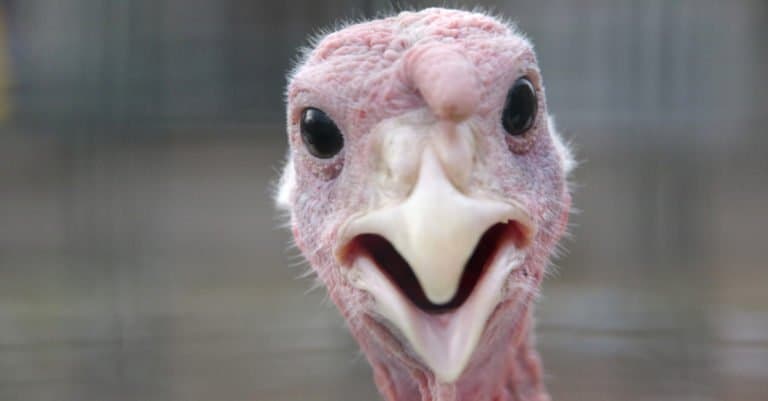
Both sexes have a fleshy protuberance called a snood that hangs over the beak, and both can also have a small tuft of feathers under the beak called a beard. Males will also have short, sharp spurs protruding from their legs near the feet.
For ocellated turkeys, both males and females sport iridescent bronze and green feathers. They both have shorter fan tails that are blue-gray in color with a small, eye-shaped spot at the tip. This is where the name “ocellated” comes from. Like North American turkeys, they also have black and white striped wing feathers.
Ocellated turkeys are even smaller birds than wild turkeys. Toms weigh up to 13 pounds at their heaviest, and hens weigh 6 to 8 pounds. Both sexes average 24 to 36 inches in length and have a wingspan range of 26 to 30 inches.
Both sexes also have bright blue heads with orange snoods and dark red legs. Males have sharp spurs on their legs, but they are longer and thinner than their North American counterparts. A group of domesticated turkeys is called a rafter.
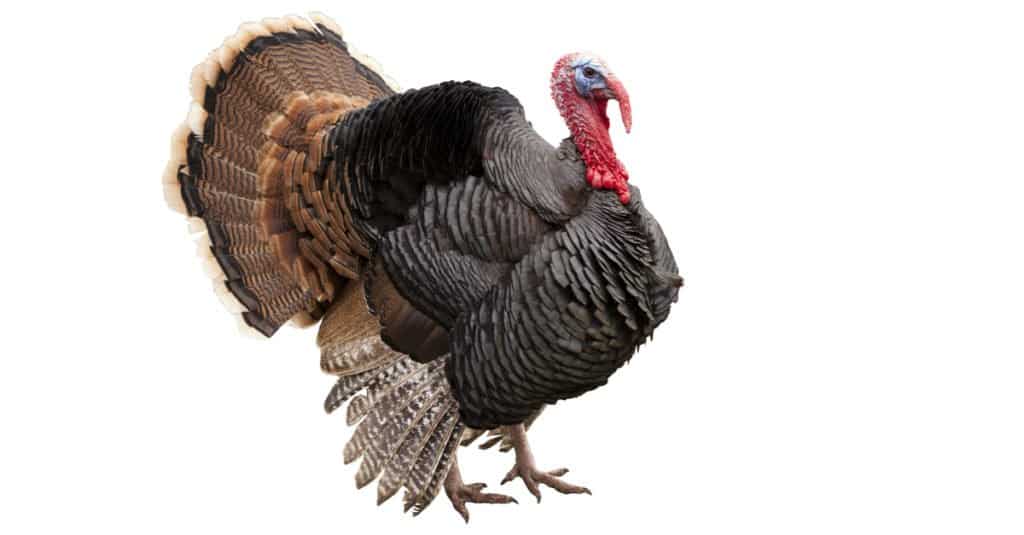
Turkeys are omnivorous, eating fruit, veggies, insects, and acorns.
©veleknez/Shutterstock.com
Diet: An Omnivorous Bird
These birds are omnivores, which means that they eat plants as well as meat. They typically survive on a diet of foraged fruit, veggies, grasses, insects, and acorns. Because they are so large, they require a lot of protein in order to stay healthy. In the winter, acorns are a staple of a nutritious diet.
What do turkeys eat?
Both ocellated and North American turkeys have similar preferences when it comes to food. In the wild, they feed on insects, nuts, leaves, fruit, and grass. Domesticated turkeys are generally fed a broad variety of garden scraps alongside high-protein turkey feed.
Predators, Threats & Conservation Status
These birds have a rather long list of predators, which explains why they can be so aggressive in the wild. The North American turkey is not endangered, and its primary predator is human hunters. They are popular game birds across the United States.
Ocellated turkeys are marked as “near threatened” due to a combination of habitat loss and hunting. Their populations remain vulnerable and are carefully monitored.
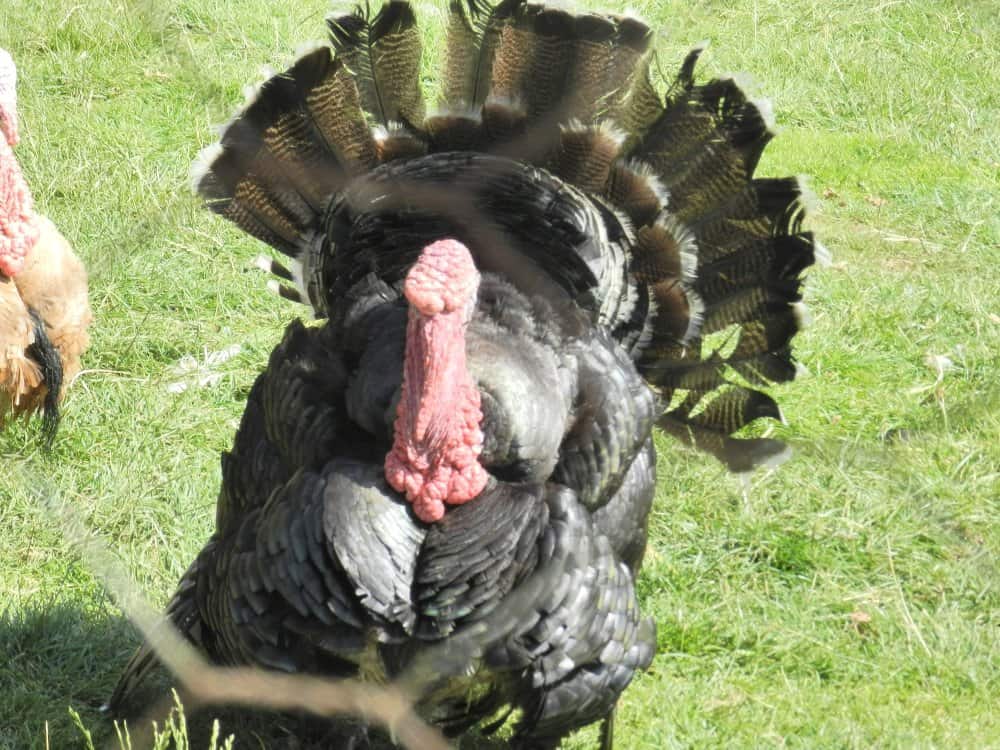
Turkeys have quite a few predators, like coyotes, weasels, foxes, raccoons, and owls.
©Millie Bond – Copyright A-Z Animals
What animals eat turkeys?
Many animals besides humans eat these birds. Other predators include domestic dogs, coyotes, weasels, foxes, bobcats, skunks, opossums, raccoons, hawks, and owls.
Reproduction, Babies & Lifespan
Wild turkey mating happens in the spring. Males will perform a “courtship dance” that involves puffing out their feathers, fanning their impressive tails, and gobbling loudly while dancing around in the presence of females. These birds can mate with multiple partners and do not pair up.
Once the female is inseminated, she will find a nesting spot and lay one egg each day, up to 17 eggs. An average clutch is typically 7 to 10 eggs. Eggs take about 28 days to hatch.
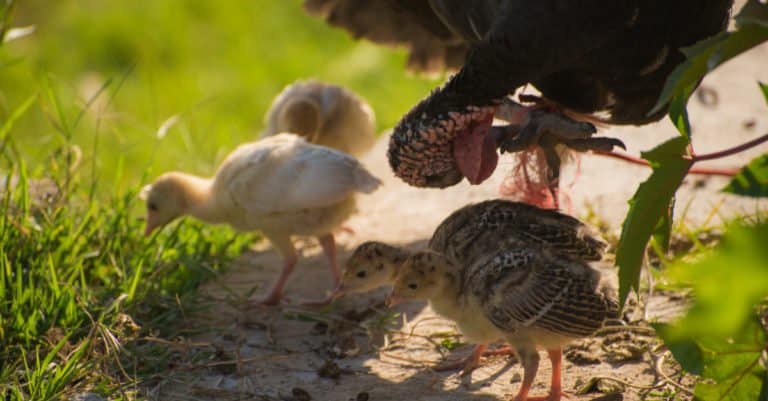
Babies are called chicks or poults, and they stay in the nest with their mother for 2 weeks after hatching. After this time, they learn to roost in trees alongside their mother. These birds are extremely social, so they stay together in groups to play and learn survival skills, and poults will continue to stay with their mothers until the next breeding season arrives.
In the wild, these creatures usually live for 3 to 5 years. Domesticated turkeys may live up to 10 years. However, turkeys raised for slaughter typically only live for about 18 weeks.
Population
According to the National Wild Turkey Federation, there are roughly 6.2 million North American turkeys in the wild.
It’s difficult to obtain reliable data on ocellated turkey population numbers, but researchers estimate that 20,000 to 50,000 birds currently live in the wild.
Turkey Pictures
View all of our Turkey pictures in the gallery.

Kemeo/Shutterstock.com
Sources
- Wikipedia / Accessed November 8, 2019
- Wikipedia / Accessed November 8, 2019
- National Wild Turkey Federation / Accessed November 8, 2019
- All About Birds / Accessed November 8, 2019
- The Atlantic / Accessed November 8, 2019
- Merriam-Webster / Accessed November 8, 2019
- Sciencing / Accessed November 8, 2019