






Classification And Evolution
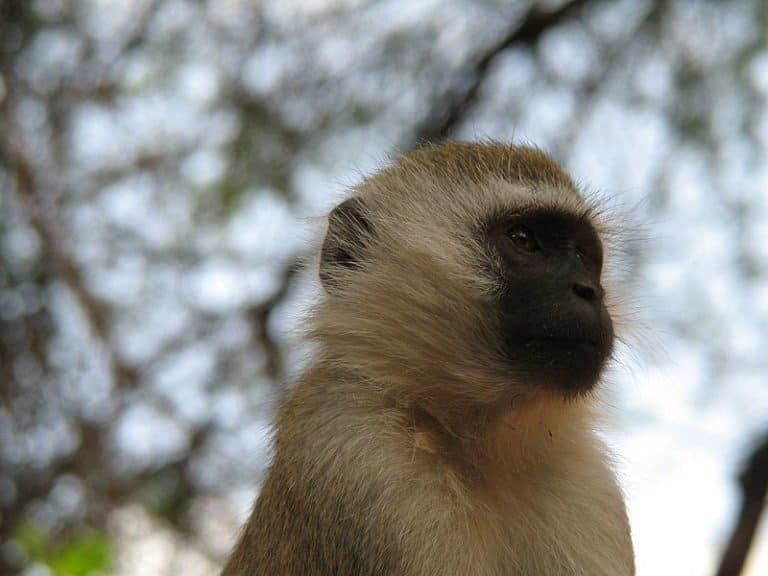
The Vervet Monkey is a medium to large-sized monkey that is primarily found in Eastern Africa and is an old-world monkey. The Vervet Monkey is thought to be a species of Grivet, another tree-dwelling African monkey that has very similar characteristics to the Vervet, along with the Malbrouck, which is considered by some to be a sub-species of Vervet Monkey. These three animals are very closely related but they tend to inhabit territories in slightly different locations and are thought to rarely come into contact with one another.
The modern version of these old-world monkeys began to appear during the Miocene era, around 5 million to 23 million years ago although this green savannah monkey most likely began to evolve around 4.8 million years ago, from their ancestor, Cercopithecini, which has one of the most diverse groups of primates. The oldest known ancestor of all of these primates is Victoriapithecus, who was found to live about 15 million to 17 million years ago.
Types Of
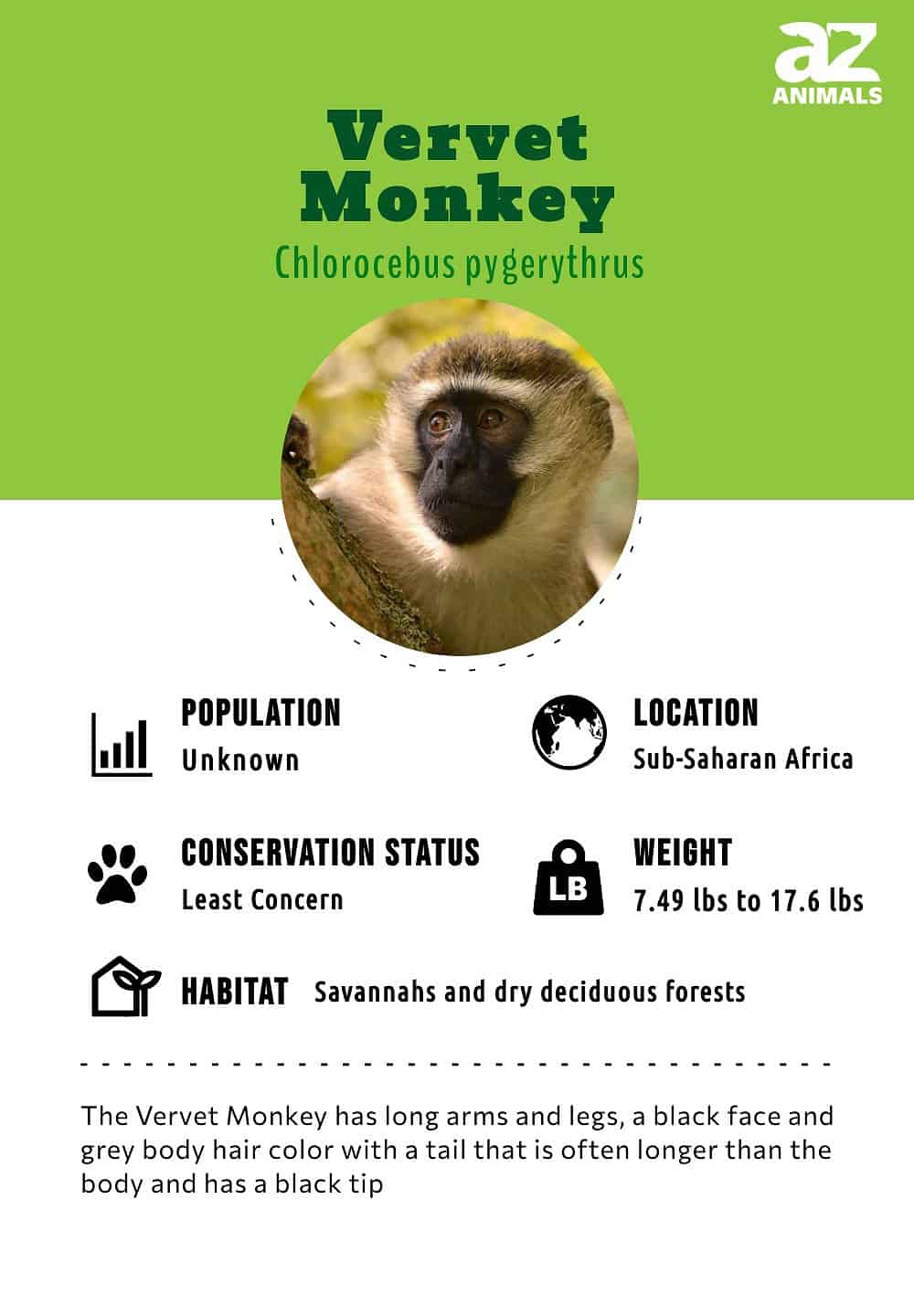
There are currently five recognized sub-species of the Vervet Monkey that are generally classified depending on their location, although there is some difference in coloration between them. The five species are:
- Pemba Vervet Monkey (Chlorocebus pygerythrus nesiotes)
- Reddish-green Vervet Monkey (Chlorocebus pygerythrus rufoviridis)
- Hilgert’s Vervet Monkey (Chlorocebus pygerythrus hilgerti)
- Southern Vervet Monkey (Chlorocebus pygerythrus pygerythrus)
- Wittu Islands Vervet Monkey (Chlorocebus pygerythrus excubitor)
Anatomy And Appearance
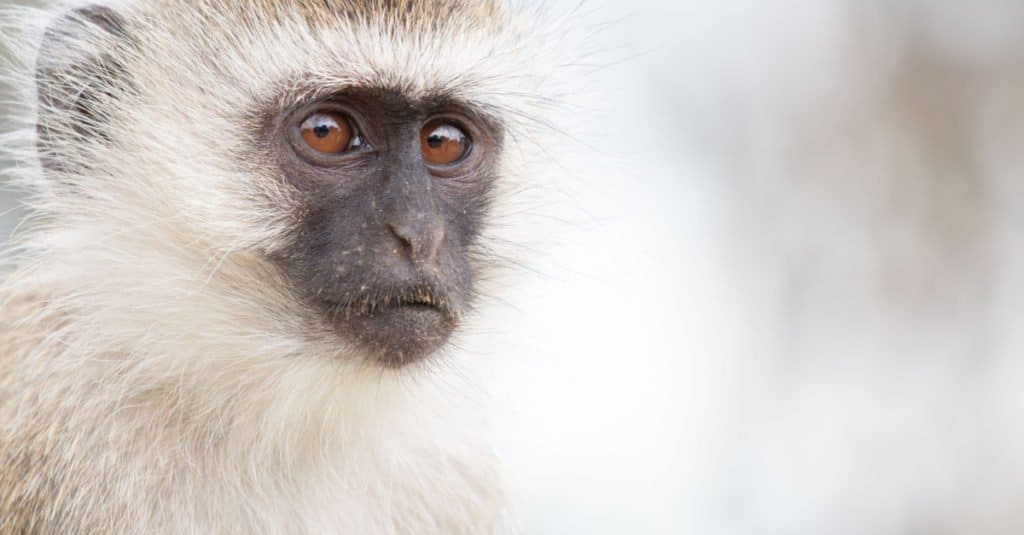
The vervet has long arms and legs which allows them to walk on all fours on the ground with ease.
©hachiko.58/Shutterstock.com
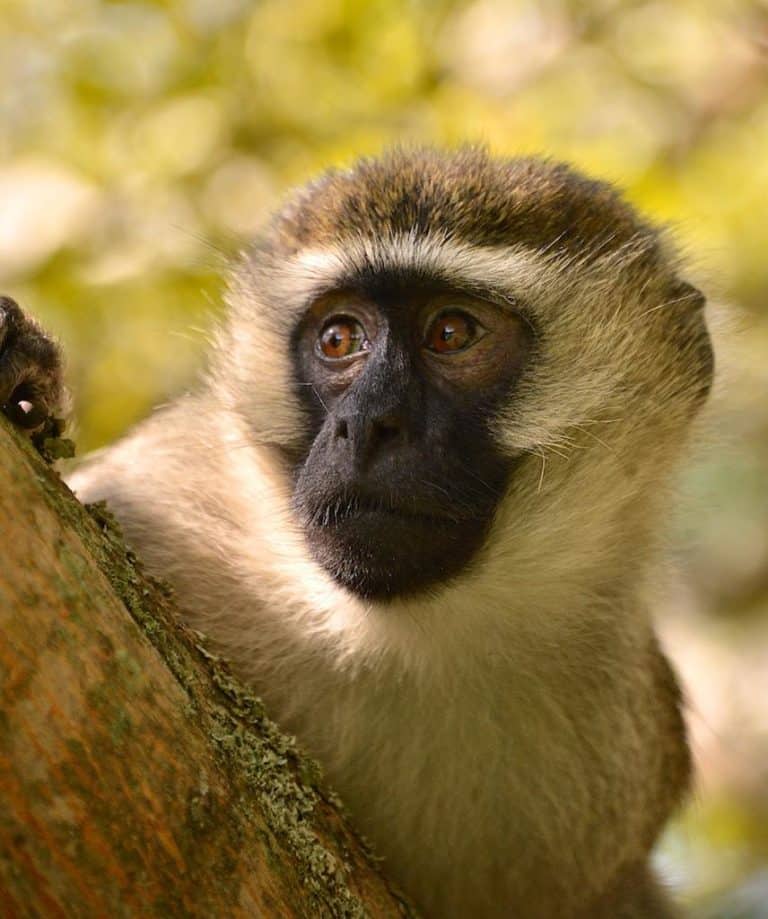
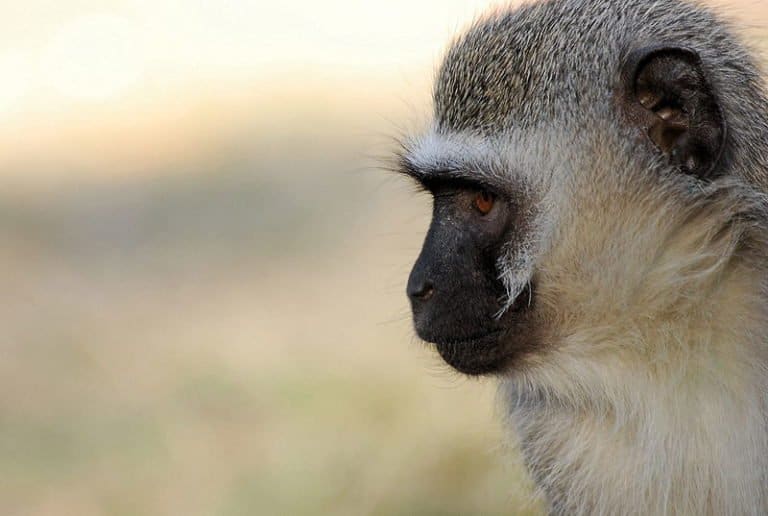
The Vervet Monkey grows to an average of 50cm tall, with a tail that is often longer than the body itself and has a black tip. Their fur tends to be grey or olive in color (depending on the species) and is lighter on their underside. This mammal has hands and feet that are black, as well as ears and a face, which also has a white band above it and is framed by white cheek tufts. Long-limbed, both arms, and legs are similar in length which allows this species to walk easily on all fours when on the ground, and in fact makes them quite fast when running. Males, distinguished by their bright blue testicles, are the larger of the species.
Distribution And Habitat
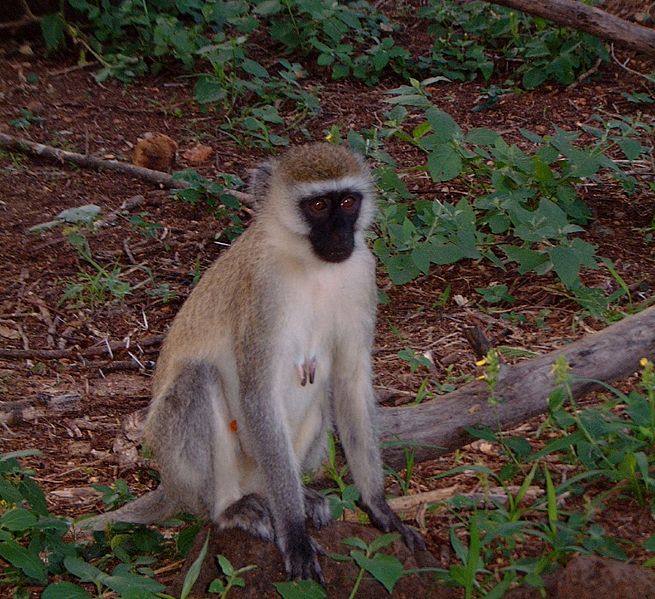
Vervet Monkeys are found in Sub-Saharan Africa in savannahs and forest.
©D. Gordon E. Robertson, CC BY-SA 3.0, via Wikimedia Commons – Original / License
The Vervet Monkey is found south of the Sahara and is widespread across Eastern Africa. They are also found in parts of southern and western Africa from Uganda to Ghana but their location is generally dependent on the sub-species. The Vervet Monkey inhabits savannahs, woodlands, and forests that tend to be close to water, preferring acacia forests that line rivers and lakes. Vervet Monkeys can also be found in mountainous regions up to 1,300 feet providing that there is an adequate supply of both food and water to sustain the population. They are rarely found in more extreme environments such as deserts and rainforests as these regions simply do not have everything that Vervet Monkeys require to successfully survive.
Behavior And Lifestyle
The Vervet Monkey is an arboreal monkey which means that it spends most of its time in the safety of the trees. Although they do venture down to the ground in search of both food and water, Vervet Monkeys rarely go further than 450 meters from the trees, which helps to protect them from predators. They are diurnal animals spending days foraging for food and resting at night. The Vervet Monkey is a very sociable animal inhabiting territories in troops that can contain between 10 and 50 individuals, depending on the location and how ample the food supply is. These troops are comprised of adult females and their young, with males wandering between different troops to both socialize and mate.
Reproduction And Life Cycles

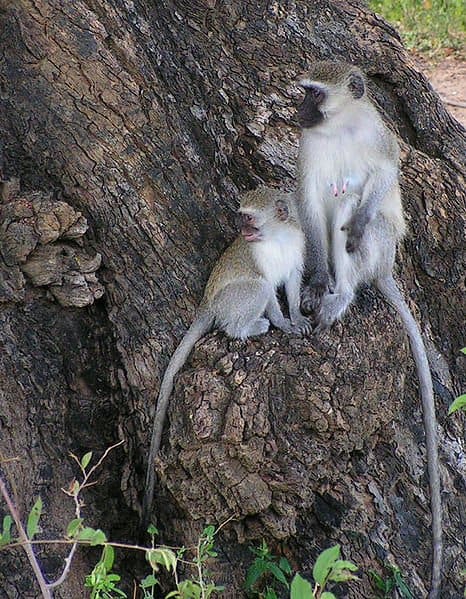
Vervet Monkey babies quickly develop strong social bonds with other monkeys and interact with each other by the time they are 1 month old.
©Charles J. Sharp, CC BY 3.0, via Wikimedia Commons – Original / License
The Vervet Monkey is not usually able to reproduce until they are about five years old, although its age of sexual maturity is known to vary slightly and may be dependent on how much food they have access to. After about 5 and a half months, females give birth to a single infant which is cleaned by its mother at birth, and clings to her stomach during the first week or so. Vervet Monkey babies quickly develop strong social bonds with other monkeys and are known to begin interacting and playing with them by the time they are a month old. They have pink faces and black fur and don’t tend to develop their adult coloration until they are a few months old. Vervet Monkey offspring suckle on their mother’s milk until they are nearly four months old and start to eat softer vegetation, but they are not fully weaned until they are about a year old.
Diet And Prey
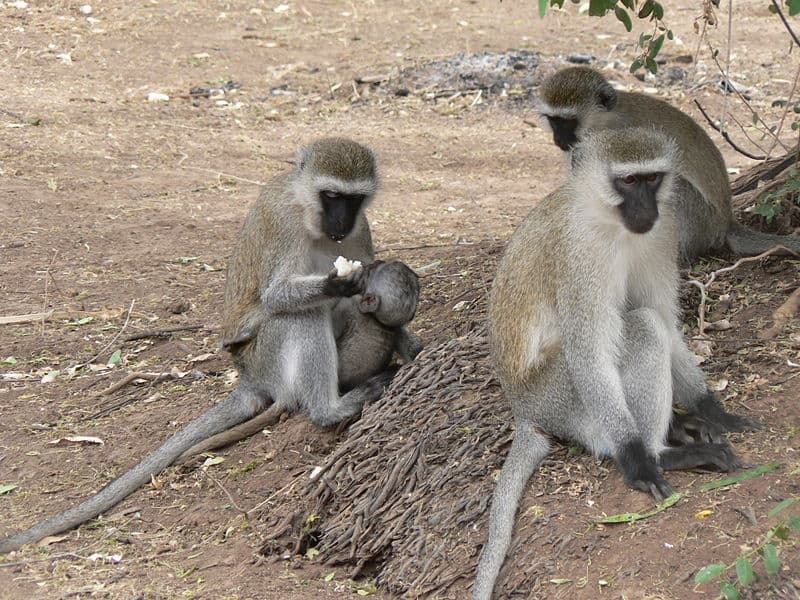
Vervet Monkeys consume both plant matter and animals in order to get proper nutrition.
©Wouter van Vliet from The Hague, The Netherlands, CC BY 2.0, via Wikimedia Commons – Original / License
The Vervet Monkey is an omnivorous animal, meaning that they consume both plant matter and other animals in order to get the nutrition that they need to survive. Leaves and young shoots make up the bulk of this primate’s diet, along with tree bark, flowers, and fruits that can also be found in the trees surrounding them. On the ground, they forage for roots, bulbs, seeds, and grasses and are also known to supplement their diet with insects, eggs, rodents, birds, and other small animals. Like many other monkey species, the Vervet uses its incredibly dexterous hands in order to collect food, with its long tail aiding in balancing on the tree branches.
Predators And Threats
The Vervet Monkey has few predators whilst it remains in the safety of the trees with larger species of eagles being their most common threat. On the ground however, they are preyed upon by a number of Africa’s large predators including felines like the leopard, serval, and caracal, along with large reptiles such as pythons, and crocodiles close to water. Never venturing too far from the trees means that they can quickly make it back up into safety, and their ability to run at speed allows them to try and escape more quickly. Although Vervet Monkeys generally only make chattering sounds, they are known to scream and whistle to alert other members of the troop that they are in danger.
Interesting Facts And Features
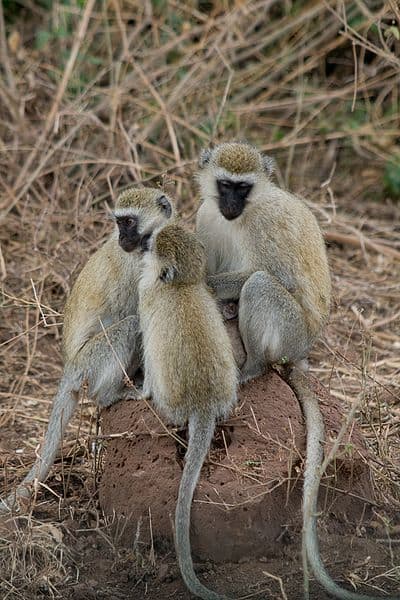
Vervet monkeys are very well adapted to their environments and can jump and climb very well.
©Fanny Schertzer, CC BY-SA 3.0, via Wikimedia Commons – Original / License
Despite the fact that the Vervet Monkey tends to reach sexual maturity after a number of years in the wild, sexual maturity in captivity tends to occur much sooner at an average age of two years old. They are especially well adapted to the environments surrounding them. Not only are they able to climb and jump great when in the trees, but they are also rather fast when on the ground as well. Additionally, they are excellent swimmers. Younger females in the troop that have not yet reached maturity, quite often show a high interest in the babies of adult females and help them with grooming and taking care of their young. They have also been known to enjoy holding them, making it no surprise that social bonds within these groups, especially between relatives, often lasts for life.
Relationship With Humans
The Vervet Monkey has adapted well to the growing urban environments that have replaced its historical habitat, but they are sometimes seen as pests in these areas. Vervet Monkeys are known to raid fields of crops, along with stealing food and other items that they find, and are rarely caught by Humans due to their speed and agility, both on the ground and in the trees. Although they have been affected by growing Human settlements, it is also the destruction of their natural ranges mainly for agriculture, that is affecting the Vervet Monkey populations. They have also been introduced to two of the West Indian Islands, which are the islands of St. Kitts and Barbados.
Conservation Status And Life Today
Today, the Vervet Monkey has been listed as a species that is of Least Concern of becoming extinct in its natural environment in the immediate future, as the species is widespread and is found in a variety of different habitats. Although they have also adapted well to city life, they are often killed by electricity pylons and traffic, in addition to being used in traditional medicines, and caught as bushmeat.
Vervet Monkey Pictures
View all of our Vervet Monkey pictures in the gallery.

Sources
- David Burnie, Dorling Kindersley (2011) Animal, The Definitive Visual Guide To The World's Wildlife / Accessed May 4, 2011
- Tom Jackson, Lorenz Books (2007) The World Encyclopedia Of Animals / Accessed May 4, 2011
- David Burnie, Kingfisher (2011) The Kingfisher Animal Encyclopedia / Accessed May 4, 2011
- Richard Mackay, University of California Press (2009) The Atlas Of Endangered Species / Accessed May 4, 2011
- David Burnie, Dorling Kindersley (2008) Illustrated Encyclopedia Of Animals / Accessed May 4, 2011
- Dorling Kindersley (2006) Dorling Kindersley Encyclopedia Of Animals / Accessed May 4, 2011
- David W. Macdonald, Oxford University Press (2010) The Encyclopedia Of Mammals / Accessed May 4, 2011
- Vervet Monkey Facts / Accessed May 4, 2011
- Vervet Monkey Information / Accessed May 4, 2011
- About Vervet Monkeys / Accessed May 4, 2011