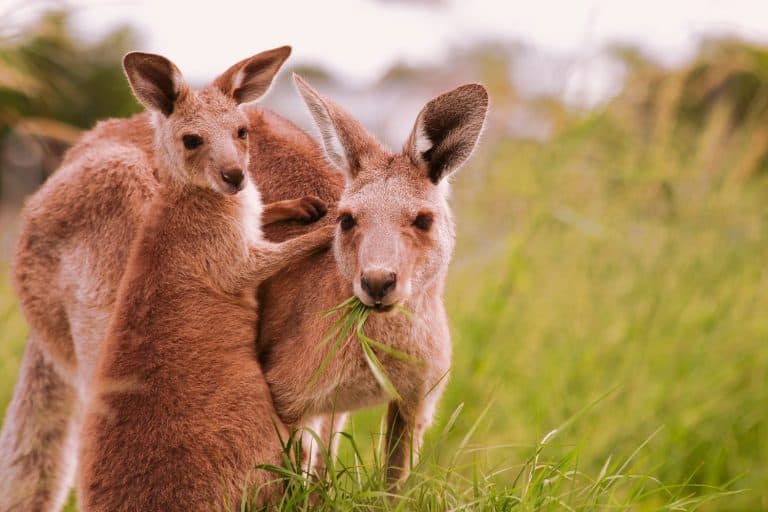
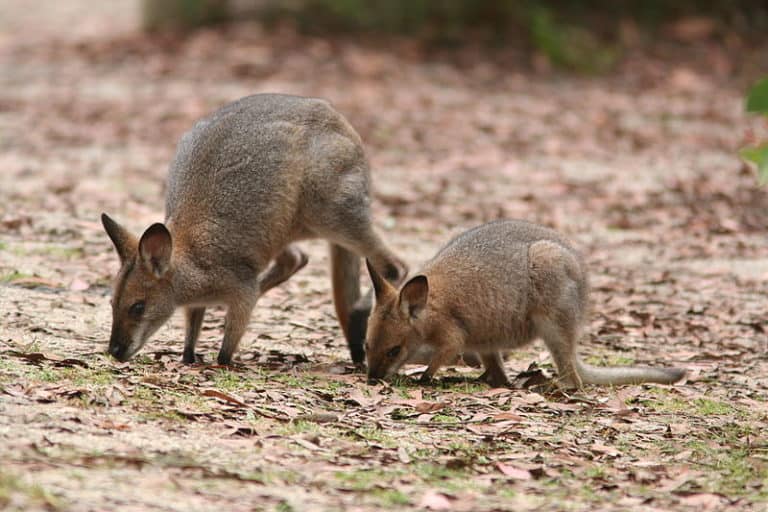
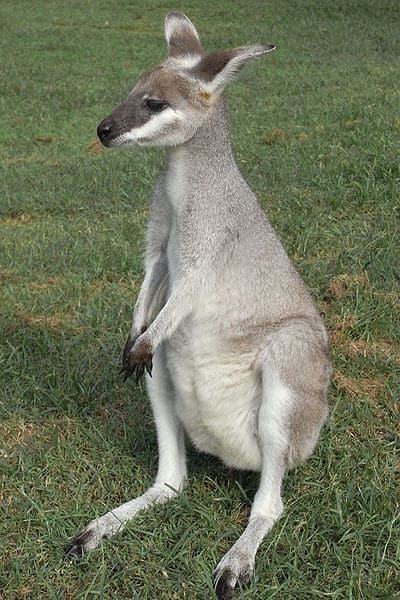
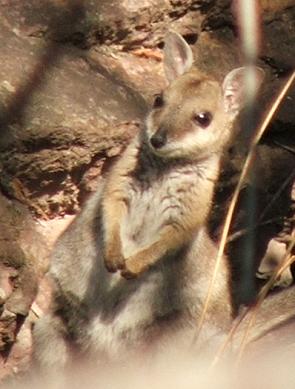
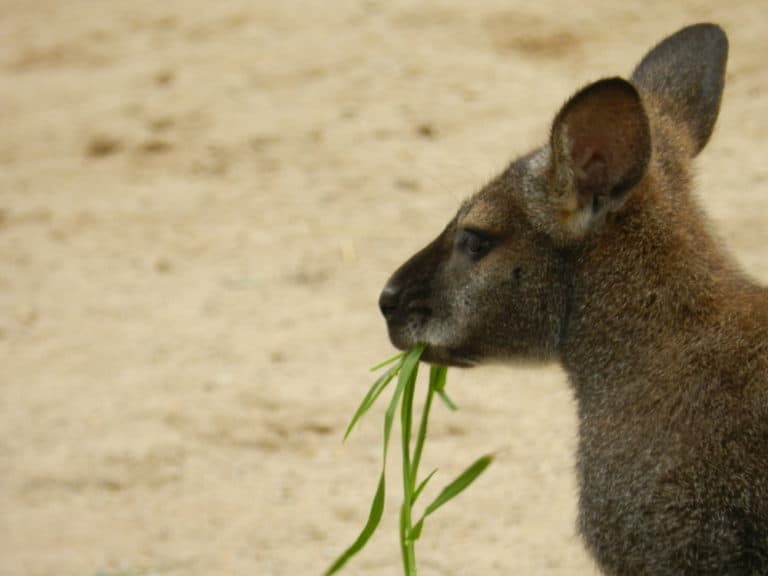




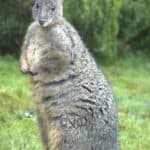
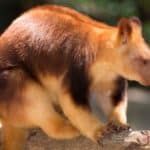
The main distinction between wallabies and kangaroos is that kangaroos are significantly larger than most wallabies.
Like kangaroos, wallabies are marsupials that are part of the family Macropodidae. Native to Australia and Papua New Guinea, wallabies have been introduced to other areas of the world, including New Zealand and the United Kingdom. Of the more than 30 species that survive today, several are threatened or endangered. At least five species are extinct.
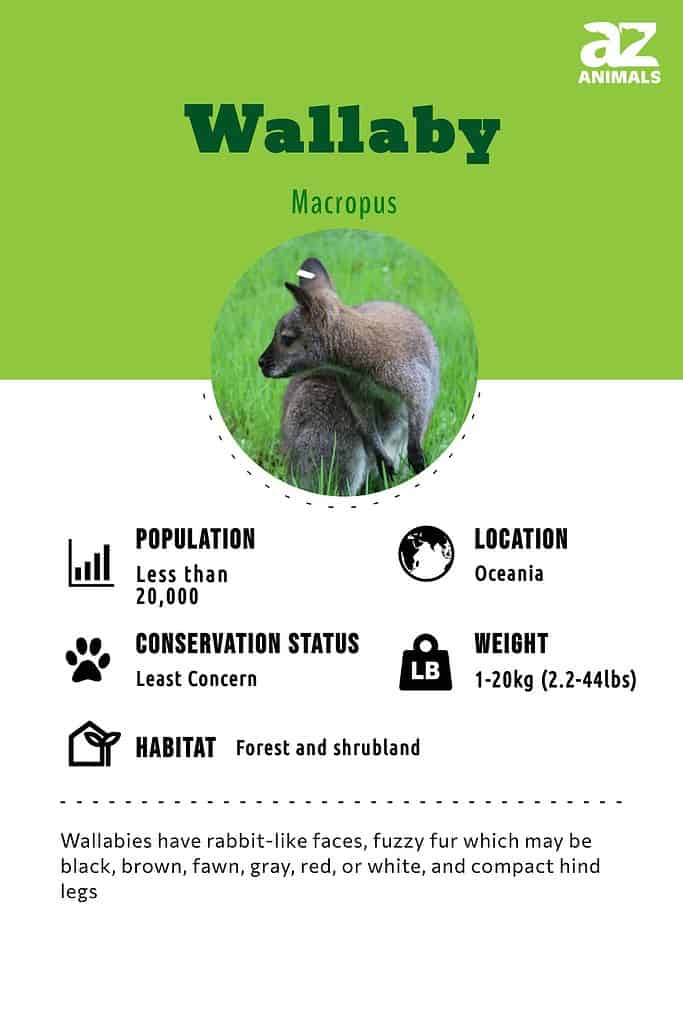
Scientific Name
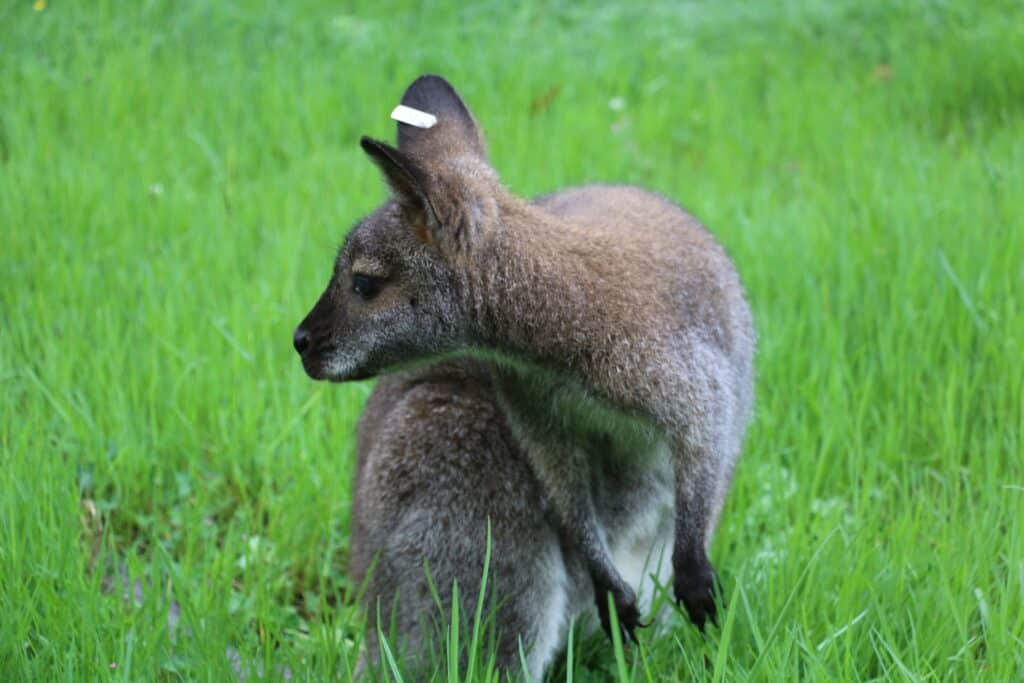
Wallabies belong to the same family as kangaroos but are however smaller in size.
©Gene Emrah/Shutterstock.com
These animals are mammals that are classified into the infraclass Marsupialia. They belong to the order Diprotodontia, which includes kangaroos, opossums, wombats, and koalas. They are further classified into the suborder Macropodiformes. Like kangaroos, they are members of the Macropodidae family. The term means “big feet.” In fact, the distinction between the two creatures is arbitrary and mostly relates to size. Most wallabies are significantly smaller than kangaroos, but some can be 6 feet long (including their tail).
The term wallaby is derived from the Dharug “walabi” or “waliba,” which comes from the Eora Aboriginal people of coastal New South Wales, which is near modern-day Sydney. Starting around the year 1802, residents called these creatures “brush kangaroos.”
The young are called joeys. Adult males are called boomers, jacks, and bucks; while adult females are called does, jills, or flyers. Groups of wallabies, which typically appear around watering holes, are troupes, courts, or mobs.
Appearance and Behavior
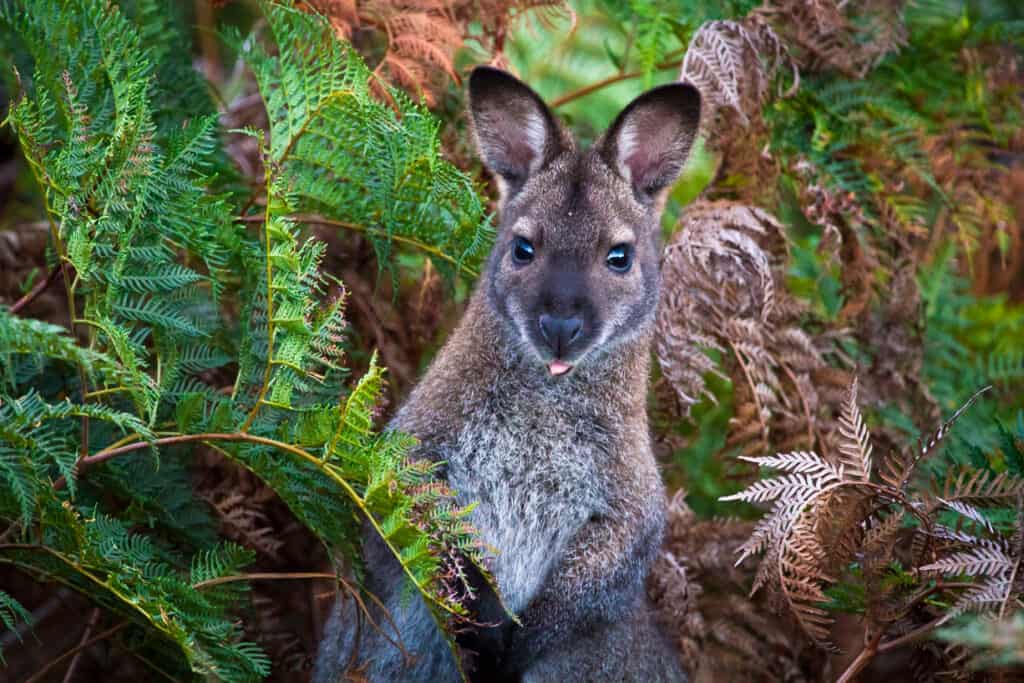
Wallabies’ powerful hind legs allow them to leap high, move with speed, and defend themselves.
©Kevin Wells Photography/Shutterstock.com
Wallabies span more than 30 species. Across these species, these marsupials vary widely in size. On average, however, these animals measure anywhere from one to three and a half feet in height, and their tails measure anywhere from 10 to 29 inches in length. These creatures weigh anywhere from around four to 53 pounds. Although typically small to medium-sized, the largest species average about six feet from head to tail – about three feet tall. For reference, kangaroos are usually 3 to 8 feet tall and weigh 40 to 200 pounds.
These mammals have small forelimbs primarily for feeding. They possess large ears and a long, pointed snout. Their elongated faces provide ample jaw room for a series of large, flat teeth that chew up plant materials.
These animals also have large, strong tails. Although they aren’t prehensile, or capable of gripping objects, these tails aid in balance and prop them up while in seated positions. The creatures’ powerful hind legs allow them to bound along at high speeds and to jump across vast distances. In addition to using them to jump high, they also kick these powerful legs when in confrontations with predators or with other wallabies.
When threatened, these animals thump their feet, kick their hind legs, and emit a hoarse noise to alert other members of their group. They are usually more active during the evening and early morning hours, and that’s especially true in arid areas.
Evolution
This history of the wallaby begins with that of its parent group the marsupials which began 160 million years ago during the Jurassic period. It was then that the ancestors of these mammals separated from those of the placental variety. And yet, the earliest macropod fossil in Australia dates between 12 – 28 million years ago.
Subsequent fossils have also been found dating back to 5.33 million years. However, beneath the broad umbrella of Macropodidae or Macropods is the subfamily Macropodinae. It is to this group that wallabies belong with the sole exception being the banded hare-wallaby which belongs to the family Lagostrophinae and is its only surviving member. Right there with them are kangaroos too.
Types
There are 48 subspecies of wallaby including:
- Agile wallaby (Notamacropus agilis): A sandy-colored wallaby with a pale chest and abdomen, this marsupial is capable of reaching 33 inches in height and 60 lbs. in weight. It is solitary by nature, fond of palm fruit, and clever enough to dig holes in billabongs and creeks to drink from in order to avoid encounters with saltwater crocs.
- Black-striped wallaby (Notamacropus dorsalis): This elusive mammal is rather similar to the red-necked wallaby in appearance although the black stripe running down its back sets them apart. It is something of a mystery to wildlife experts owing to its elusive nature and its preference for living in dense scrub.
- Parma wallaby (Notamacropus parma): This diminutive marsupial’s claim to fame was its ability to stage a comeback in the 1960s when it had been believed to be extinct for several decades. The elusive mammal is actually the smallest of the wallaby subspecies and is the size of a robust feline.
- Red-necked wallaby (Notamacropus rufogriseus): Recognizable by its grey fur and a splash of russet about its ears and neck, this relative to the kangaroo is capable of reaching 35 inches in height and weighing 41 lbs. The wallaby prefers to relax during daylight hours and feed by night. It lives in Eastern Australia and Tasmania where it is doing rather well population-wise thanks to hunting restrictions.
- Tammar wallaby (Notamacropus eugenii): An ability to drink seawater, expect a fetus while caring for a very young joey, and a gregarious nature set members of this subspecies apart. They are rather small, capable of weighing 20 lbs. and measuring 27 inches.
Habitat
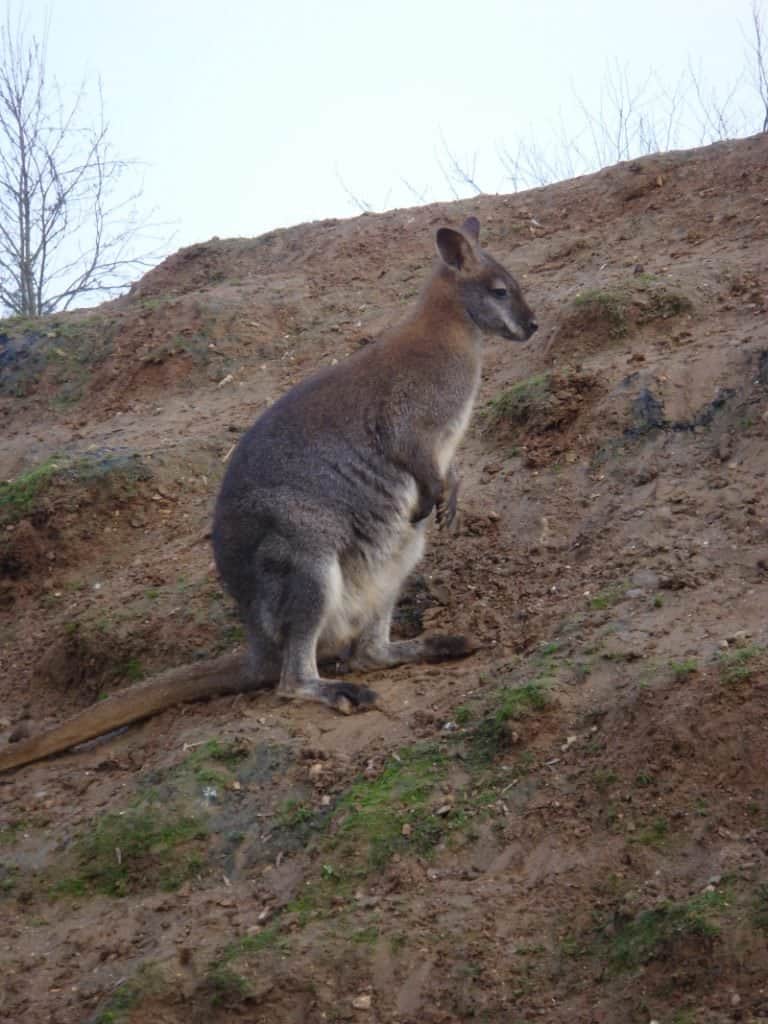
Wallabies are native to Australia and New Guinea and grouped according to habitat.
©Millie Bond – Copyright A-Z Animals
They are distributed widely across Australia, but they are most prevalent in rugged, remote areas that are heavily forested. A few reside in more open areas. They are native to Australia and Papua New Guinea, and conservationists have successfully introduced them to New Zealand and the United Kingdom.
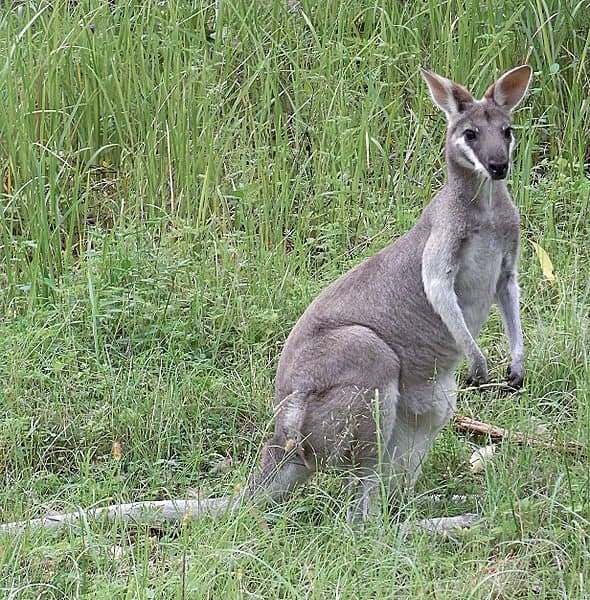
Different wallaby species are grouped by habitat. For example, brush wallabies, which are made up of 11 species, are mostly in the brushlands of Southeastern Australia and Tasmania and in the open woods of coastal Eastern Australia. Members of this subgenus, Protemnodon, are most like kangaroos but have different teeth (type of teeth). They include the red-necked and the pretty-faced wallaby.
Rock wallabies live near the water among rocks. They include six named species that belong to the subgenus Petrogale. They tend to be brown and gray in color with patches, stripes and other markings. So-called nail-tailed wallabies, which fall into the subgenus Onychogalea, include three named species. Two of these species, which feature sharp growths at the ends of their tails, are classified as endangered. Hare wallabies of the subgenus Lagorchestes are quite small, and their movements are like those of hares. Other examples of a species of these animals that are classified by habitat include scrub and forest wallabies. The latter includes the dwarf wallaby. Native to New Guinea, this species is the smallest of the genus, measuring an average of 18 inches in length and about 3.5 pounds in weight.
Certain species of wallabies have adapted to their unique habitats. For example, rock wallabies possess modified feet that grip onto stone via skin friction rather than through sharp claws.
Diet
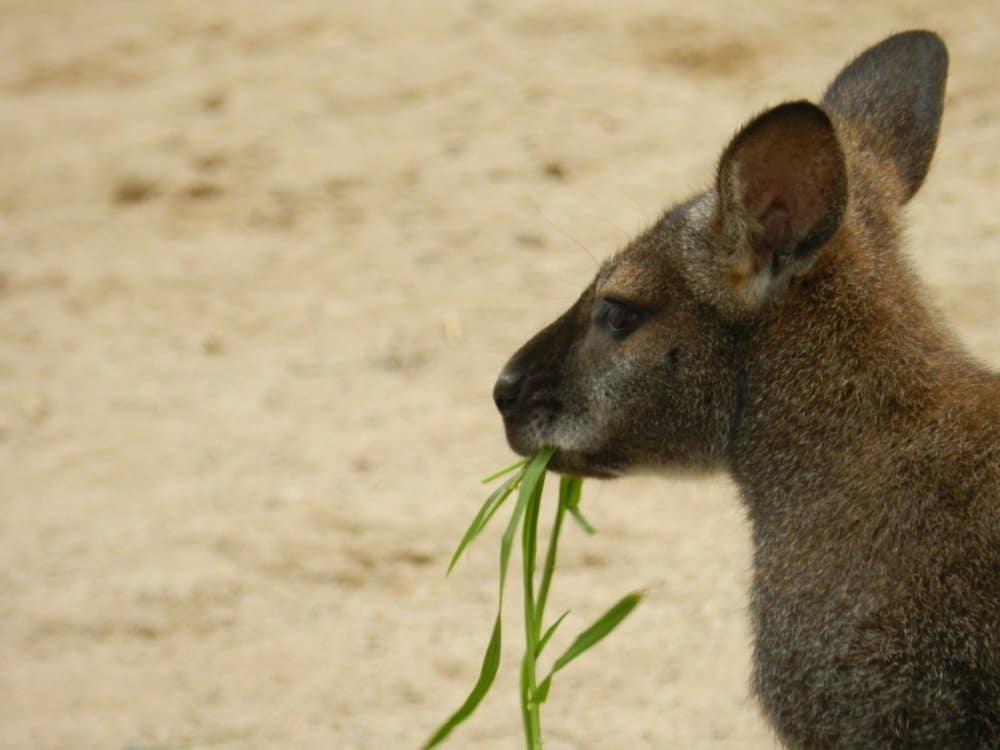
Wallabies enjoy eating ferns, fruit, grasses, herbs, and leaves.
©Millie Bond – Copyright A-Z Animals
These animals are herbivores, which means that their diet is entirely plants. Depending on their habitat, they may subsist off of grasses, ferns, leaves, herbs, and even various types of fruit. They cover vast distances to acquire food and water, and it is not unusual to see large congregations of them huddled around watering holes.
Predators and Threats
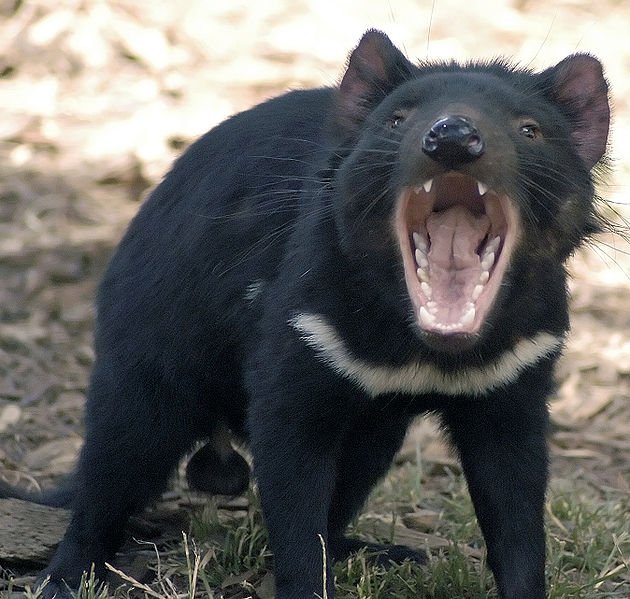
Tasmanian devils are marsupials that hunt wallabies.
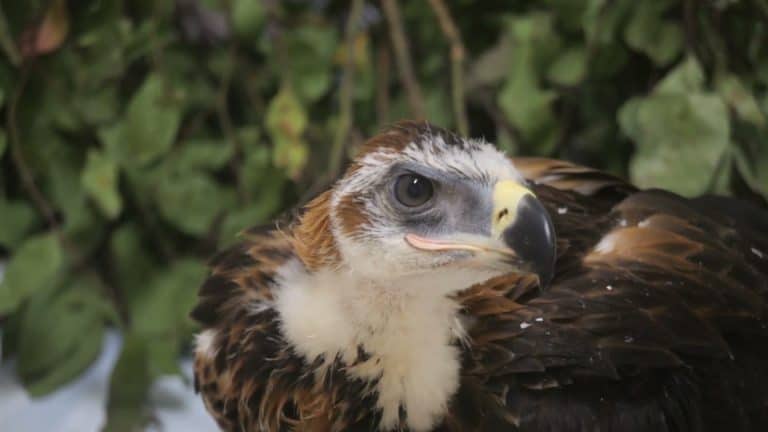
In the wild, these animals have few natural predators. However, dingoes, Tasmanian devils, and wedge-tailed eagles hunt them. Unfortunately for these marsupials, however, several introduced species have wreaked havoc on their security. In particular, the introduction of feral predators like dogs, cats, and foxes has proven disastrous to many species of these animals.
Another threat that has arisen for them is the introduction of non-native species that now compete with them for limited resources. The introduction of non-native herbivores like rabbits, goats, cattle, and sheep has pushed many wallaby species into the endangered territory.
Several species appear on the International Union for the Conservation of Nature (IUCN) Red List of Threatened Species. For example, five species of the black-footed rock wallaby are listed as endangered, vulnerable, or near-threatened. The Proserpine wallaby is classified as endangered, the yellow-footed wallaby is listed as near threatened and the mala and bridled nail-tail wallabies are listed as vulnerable to extinction. Sadly, two species of these animals, the eastern hare wallaby, and the crescent nail-tail wallaby, have gone extinct.
Reproduction, Babies, and Lifespan
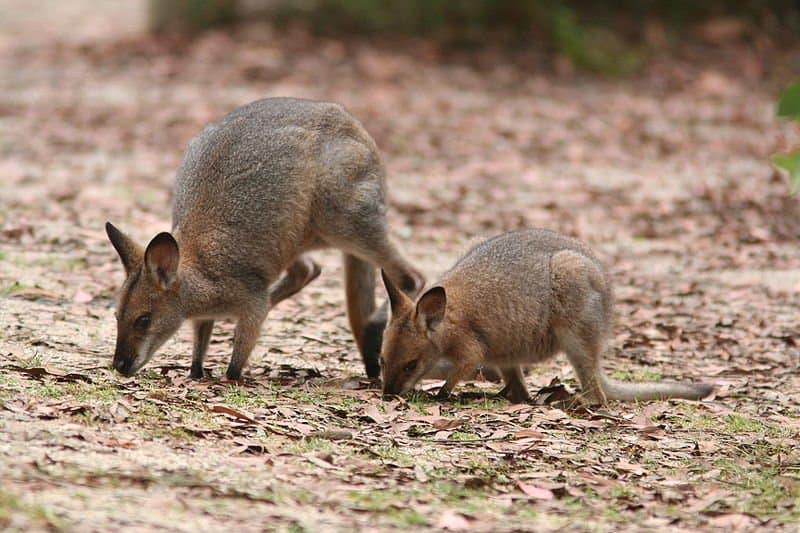
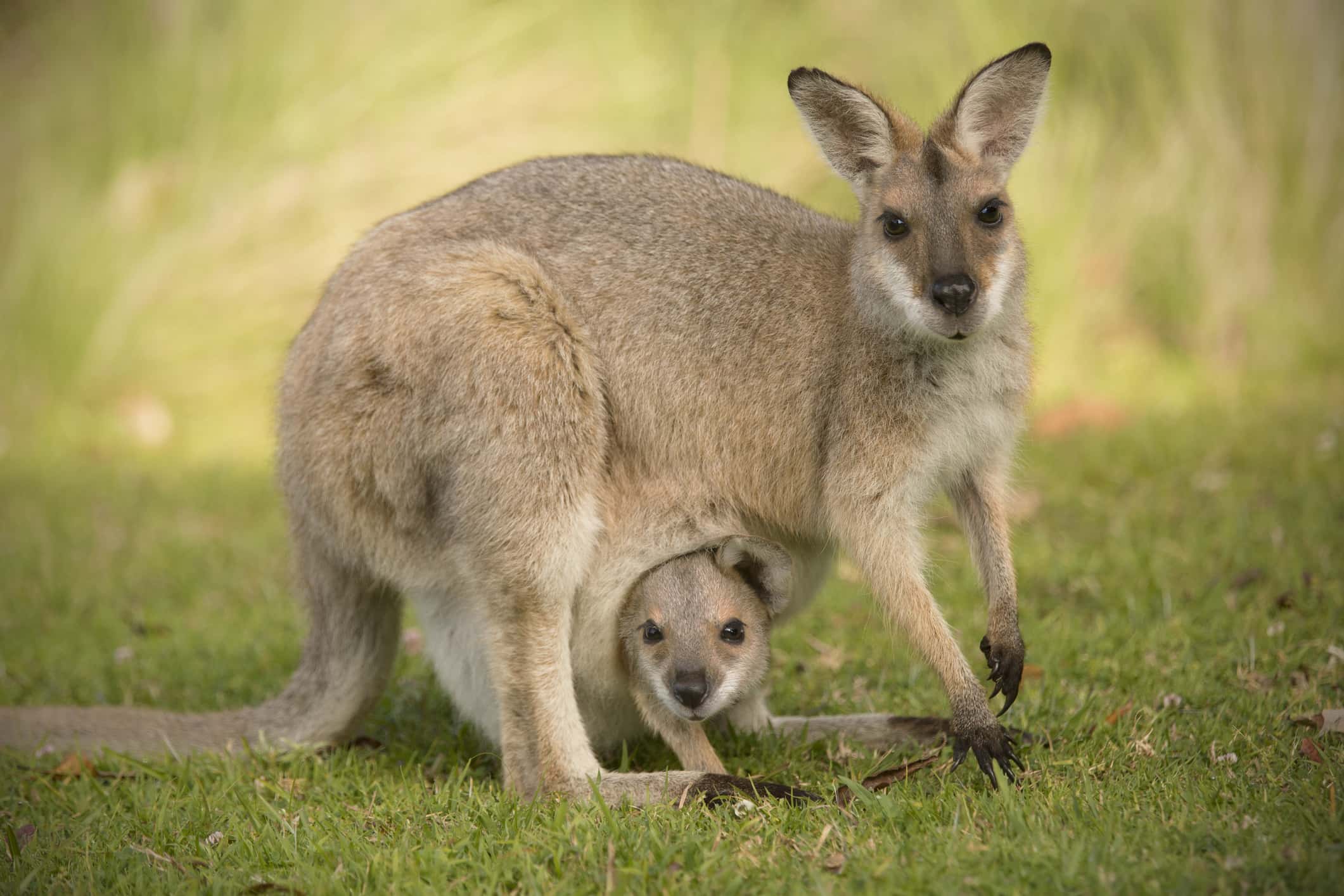
Like all marsupials, wallabies are capable of delaying the development of a fetus.
©Glen Fergus / Creative Commons – Original
Mating season for most species occurs during January and February. Females become sexually mature at around 12 months of age, and the gestation period before their offspring are born is approximately 28 days. These averages vary by species, however.
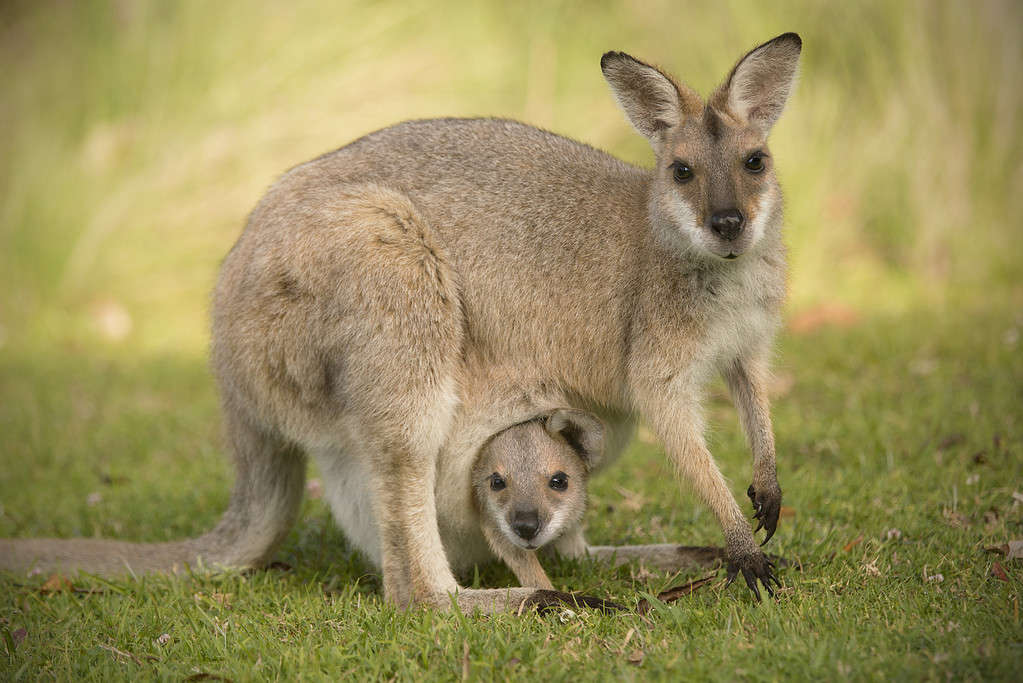
When they are born, joeys are around the size of a jellybean. Only a single joey is born at a time. Like kangaroo joeys, they are born completely helpless and undeveloped, and they immediately crawl into their mother’s pouch upon emerging. There, they latch onto a teat. Joeys typically remain in their mother’s pouch for around 250 days. Even after they leave, they leap right back in when threats arise.
It is technically possible for a female to become pregnant again while a joey is still in her pouch. When this happens, the development of the new embryo is paused until the existing joey vacates the pouch. This phenomenon is embryonic diapause, and it is unique to marsupials.
The average lifespan for these animals is about nine years. However, wallabies that live closer to areas of human habitation, which tend to include dogs, cats, and other predators, don’t tend to survive as long.
Population
Wallaby populations vary by species. Many species of wallaby have been largely unaffected by humans through the years, so their populations have remained stable. However, many species are now endangered. One significant factor has been the introduction of non-native, feral animals, including dogs, cats, and foxes, which hunt wallabies.
Another problem has been the introduction of non-native herbivores like cattle, sheep, rabbits, and goats, which now compete with wallabies for grasses, leaves, herbs, and other plants. Finally, humans also hunt wallabies for their meat and fur. This practice isn’t quite as common as it once was, but it still occurs and still affects population levels.
Wallaby Pictures
View all of our Wallaby pictures in the gallery.

Millie Bond - Copyright A-Z Animals
Sources
- David Burnie, Dorling Kindersley (2011) Animal, The Definitive Visual Guide To The World's Wildlife / Accessed January 25, 2010
- Tom Jackson, Lorenz Books (2007) The World Encyclopedia Of Animals / Accessed January 25, 2010
- David Burnie, Kingfisher (2011) The Kingfisher Animal Encyclopedia / Accessed January 25, 2010
- Richard Mackay, University of California Press (2009) The Atlas Of Endangered Species / Accessed January 25, 2010
- David Burnie, Dorling Kindersley (2008) Illustrated Encyclopedia Of Animals / Accessed January 25, 2010
- Dorling Kindersley (2006) Dorling Kindersley Encyclopedia Of Animals / Accessed January 25, 2010
- David W. Macdonald, Oxford University Press (2010) The Encyclopedia Of Mammals / Accessed January 25, 2010