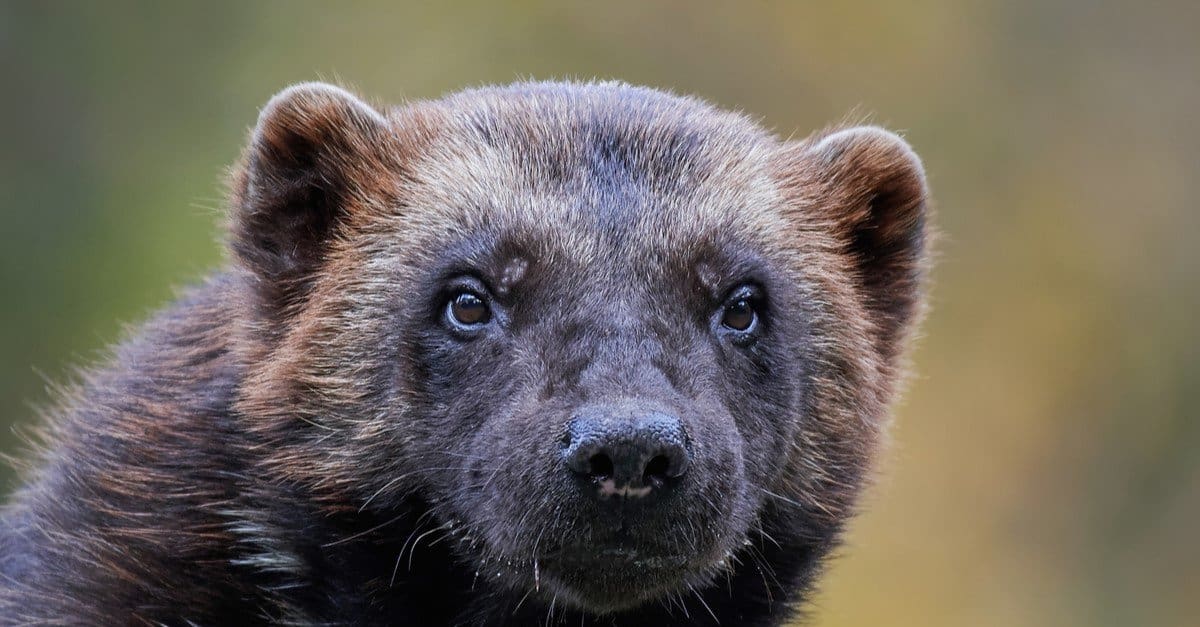
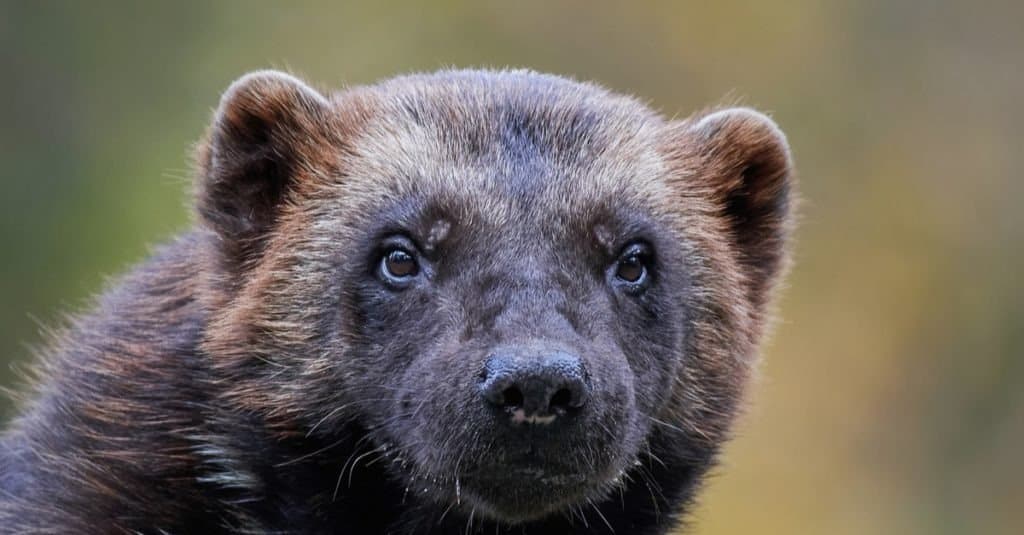
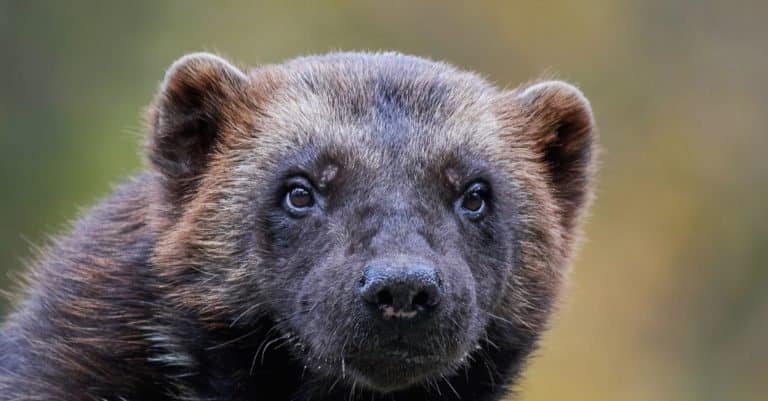
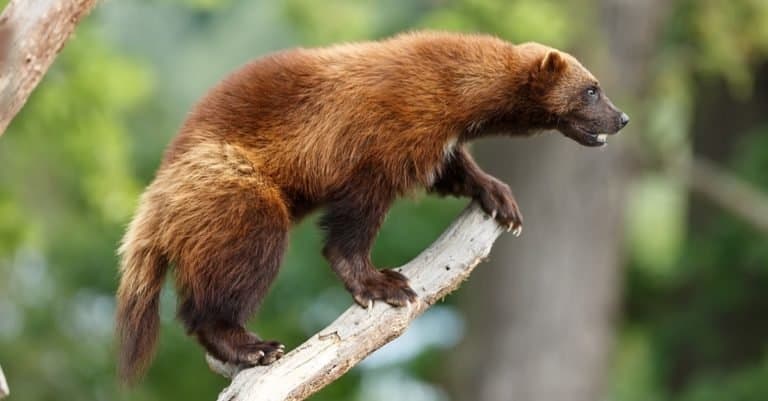
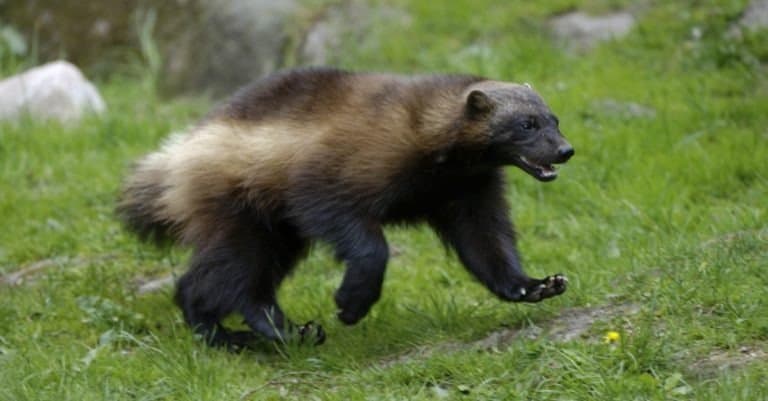
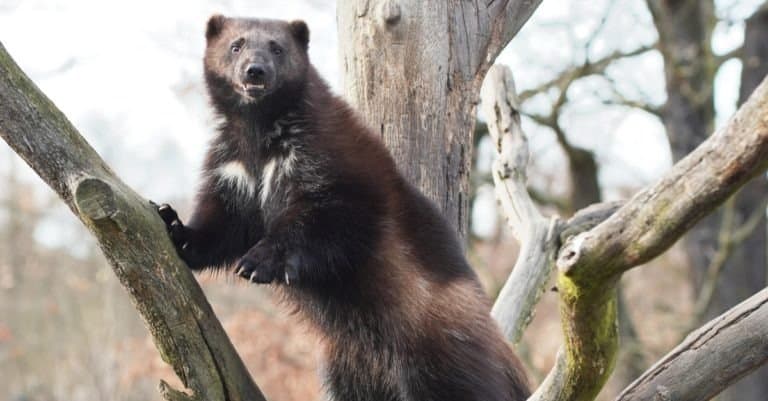
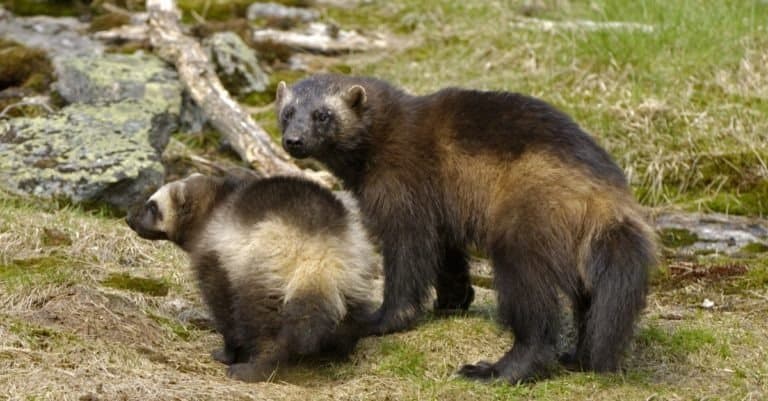

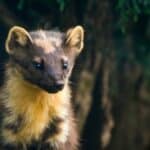

The wolverine is an aggressive carnivore that punches well above its weight.
Despite its small size, the wolverine is an animal that has earned a ferocious reputation as a top predator in the wild. This species looks like a small bear, but the facts suggest it is closely related to the weasel, another small but aggressive creature. Alternative names for this species include the skunk bear, the Indian devil, and the carcajou. It has adapted to thrive in the colder parts of the Northern Hemisphere over millions of years of evolution.
An Incredible Animal: 4 Wolverine Facts!
- The wolverine is often depicted as a trickster or conniving character in the various mythologies of the Algonquians and other native tribes.
- The wolverine is the official animal of the state of Michigan and the mascot for the University of Michigan sports teams, but evidence suggests that the species has never historically been present there in large numbers. The nickname probably came from the fact that Detroit was a major center for fur trading in colonial France and Britain.
- There are two distinct subspecies of the wolverine: the American and the Eurasian. Despite their geographical differences, both subspecies are similar in appearance and behavior.
- Despite its ferocious reputation, the wolverine actually has a rather average bite force compared to body size. According to one study, the palm civet, weasel, and Tasmanian devil all ranked well ahead of it in bite power. So the wolverine tends to use a combination of bite power and claws as its means of attack and defense.
To discover more wolverine animal facts, check out ’11 Amazing Wolverine Animal Facts.’
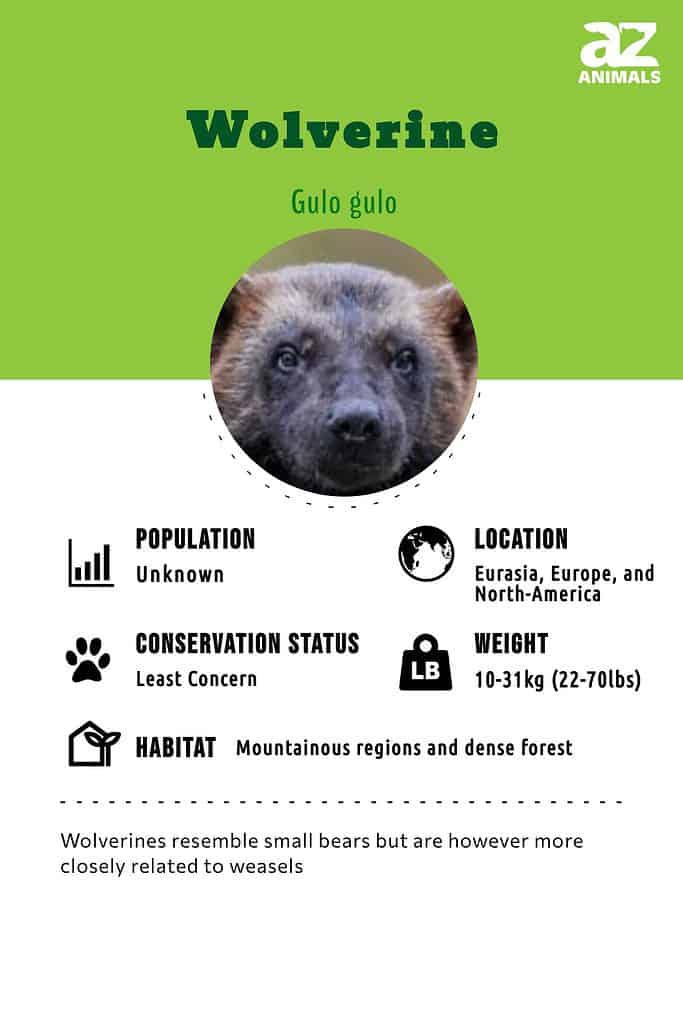
Scientific Name
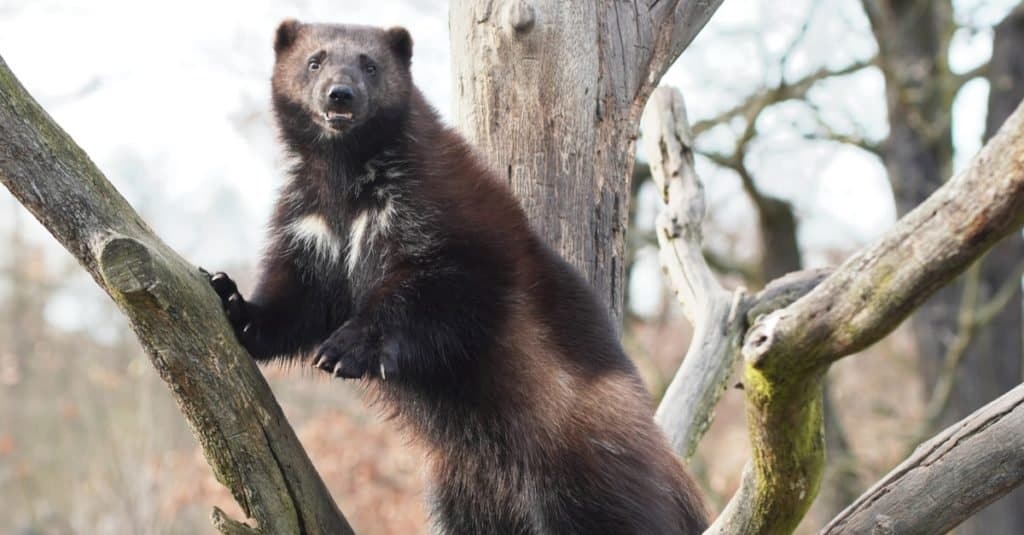
Wolverines are named for their voracious appetite
©Alexandr Junek Imaging/Shutterstock.com
The scientific name of the wolverine is Gulo gulo. This comes from the Latin gula, meaning gullet or throat, perhaps due to its voracious appetite. It is where we get the English word glutton. The wolverine is the only living member of the genus Gulo, but several extinct members are known from the fossil record dating as far back as five million years ago. More broadly, it belongs to the Mustelidae family along with badgers, weasels, otters, and minks.
Evolution and Origins
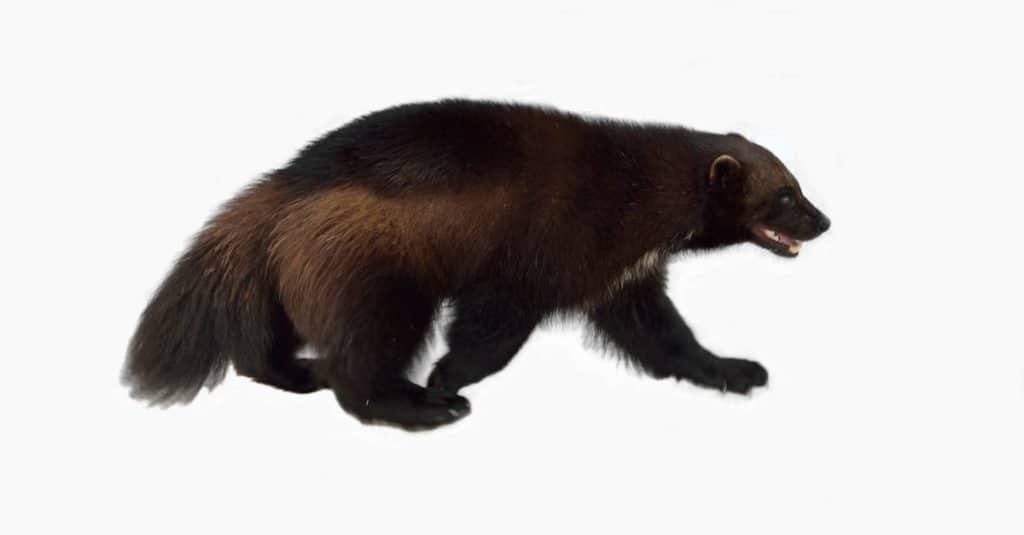
The ancestor of the wolverine is believed to have appeared 33 million years ago
©Popova Valeriya/Shutterstock.com
Wolverines belong to the mustelid family which is believed to have shown up on the evolutionary scene about 33 million years ago, during the Oligocene era. The Corumictis genus is the first recorded mustelid known to science. Consisting of a single species, Corumictis wolsani, it appeared in Oregon during the early Oligocene, between about 26 – 29 million years ago.
This mustelid, which was named for its species and location (corum, means northwest and mictis means weasel in Latin), is believed to have been equal in size to Mustela nivalis, the smallest member of the Mustela genus also known as the least weasel.
Additional fossils which belong to the Miocene era have also been discovered and it is believed wolverines just like other mustelids simply headed across the Bering land bridge to get to America.
Types
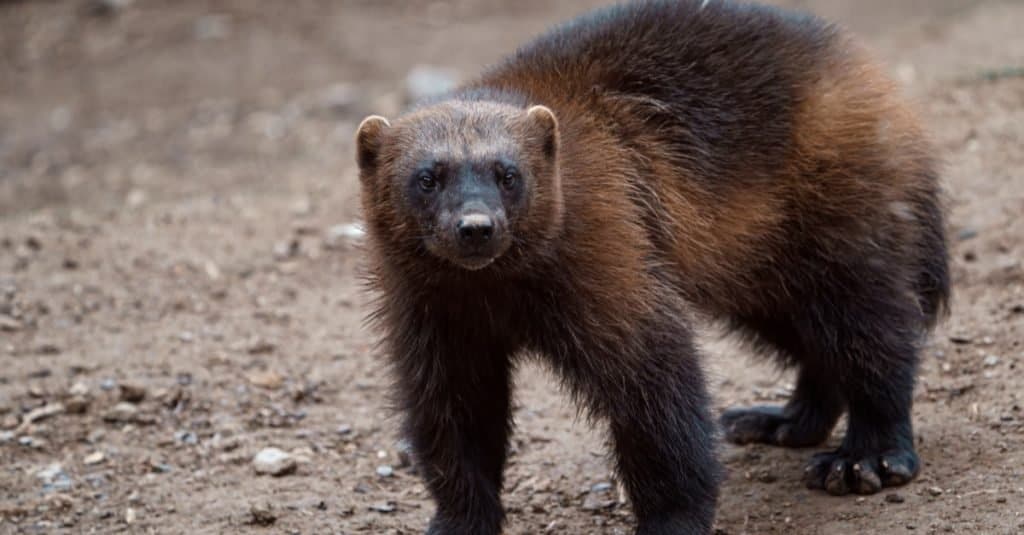
Both wolverine subspecies are similar in appearance with no significant physical differences between them
©Lubos Chlubny/Shutterstock.com
There are two subspecies of wolverine:
- The Eurasian wolverine (Gulo gulo gulo): The Eurasian variety, it can be found in Finland, Norway, Russia, and Sweden.
- The American wolverine (Gulo gulo luscus): This subspecies lives in Alaska, Idaho, Oregon, Montana, Washington, and Wyoming.
Appearance
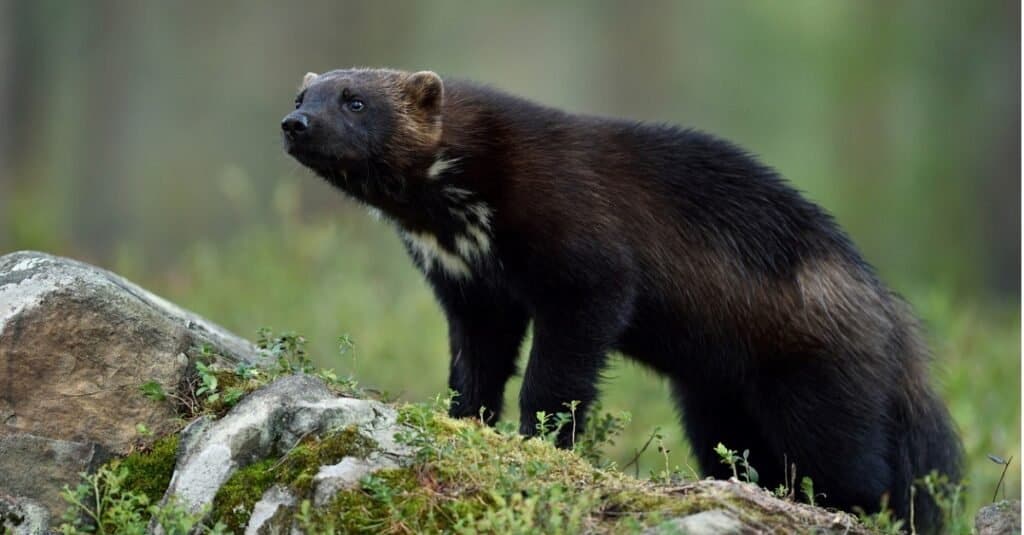
Wolverines are said to resemble small bears with powerful, stocky limbs, short muzzles, and unique patterns on their faces, chests, and necks
©iStock.com/ErikMandre
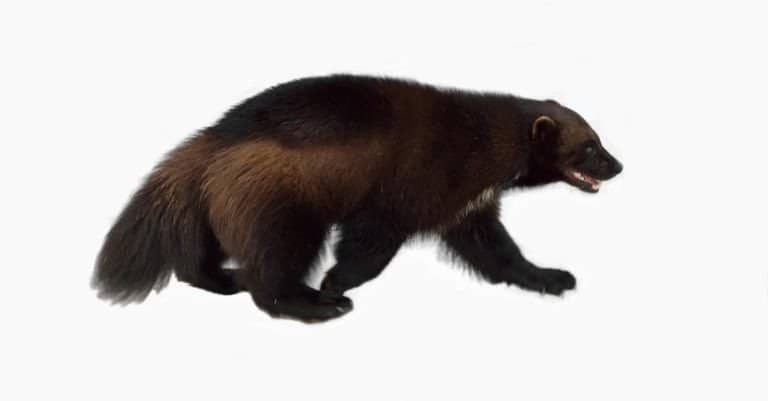
The wolverine is an animal with a stocky, muscular build that has drawn obvious comparisons to a miniature bear. Other important features include short but powerful limbs, five toes on each paw, sharp semi-retractable claws, and a moderately powerful bite to help them hunt for prey. The fur color is brown or black with a yellow or gold stripe extending from the head to the rump. The patterns on the face, neck, and chest are entirely unique to the individual.
The wolverine’s body measures some 26 to 34 inches, plus an additional 7 to 10 inches with the tail. The moderately sized body, weighing about 24 to 40 pounds, makes this about the same size as some dog breeds like the miniature Aussie Shepherd. Females tend to be around 10% smaller in length and 30% smaller in weight compared with the males.
Behavior
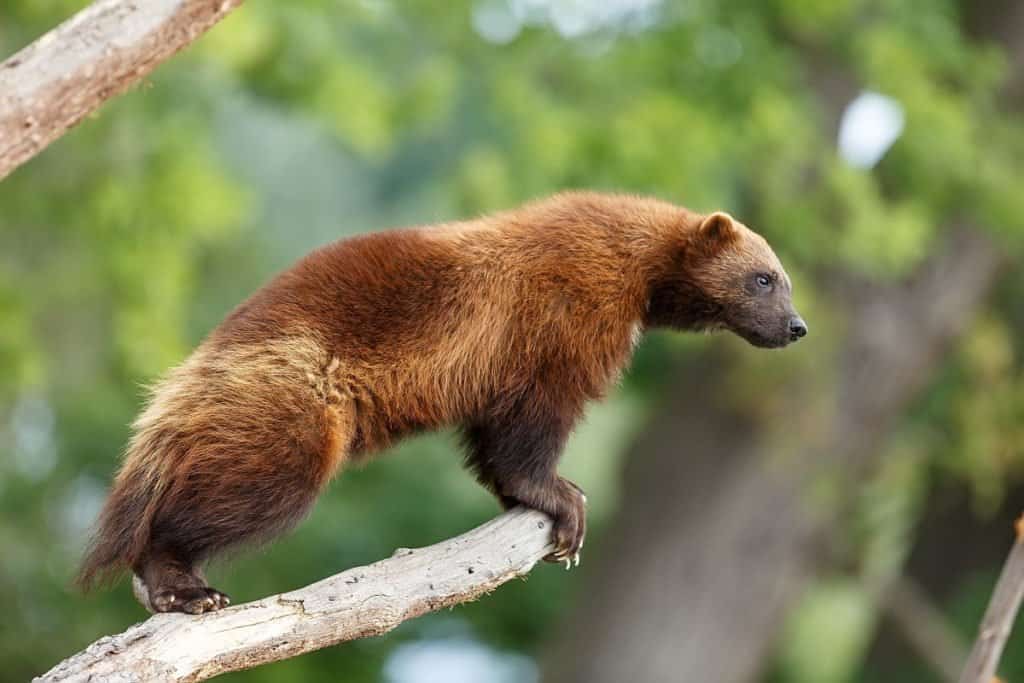
Wolverines are skilled climbers and strong swimmers, qualities which enable them to escape predators
©Michal Ninger/Shutterstock.com
The wolverine is a highly independent species that prefers a life of solitude. They almost never get along with members of the same sex, and the breeding season is the only time they tolerate members of the same species. The den, which is the central nexus of the wolverine’s life, usually consists of a small cave, rock crevice, fallen tree, or pre-existing burrow in which it can create a rough bed of grass and leaves.
A single wolverine requires a massive amount of territory to roam around in some 200 to 400 square miles for a typical male and no more than 135 square miles for a female. The wolverine can travel 15 miles per day in search of food, plus some six to nine miles at a time without stopping to rest. The facts suggest that this species is active throughout the entire day, but in areas with long periods of light, it can alternate between activity and sleep in spurts of three to four hours at a time.
With its thick coat of fur and large toes, the wolverine is well-adapted for life in the harsh northern climates. The creature’s strong body build and movement pattern allow it to walk surprisingly well across the snow (but much less well on the bare ground) at speeds up to 30 mph (or 48 kph). The wolverine is also a capable swimmer and climber, which sometimes helps it escape from predators.
Scent is the main means through which the wolverine communicates. With its anal gland, this species marks its territories and vital food caches with a rather pungent smell to discourage other creatures from approaching or stealing. It complements this with a very good sense of smell to scavenge for food. It also has good hearing but poor vision. The wolverine makes few vocalizations except for the occasional grunts and growls to express its irritation.
Some studies suggest that the wolverine is quite a canny and intelligent animal. It has been known to play with toys and objects. It can follow human roads that have minimal traffic to speed up its travel time. And it has the ability to sneak baits out of traps that are set by scientists for the purpose of collaring the animal.
Habitat
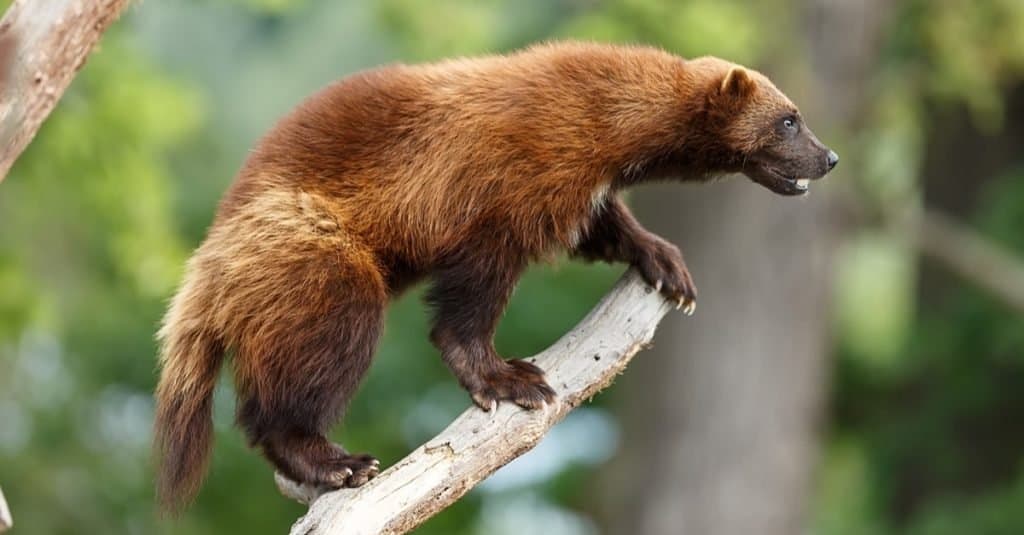
Wolverines live in vast boreal forests and tundra where they are free to roam
©Michal Ninger/Shutterstock.com
The wolverine currently lives in cold, high latitude regions across vast stretches of Canada, Russia, and Scandinavia. It is no longer endemic to the United States except for Alaska and some sporadic and isolated sections of the Rocky Mountains and the Sierras of California. The huge, uninhabited boreal forests and tundra are most suitable for its lifestyle because they offer the most territory to roam around in.
Predators and Prey
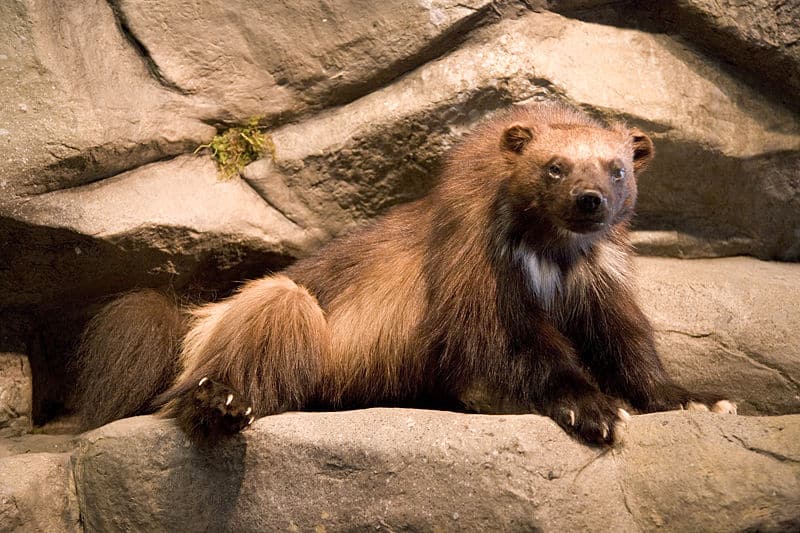
Wolverines were once hunted for their fur in North America and Europe
©Hillebrand, Steve, Public domain, via Wikimedia Commons – Original / License
The wolverine is an apex predator throughout most of its range. Besides occasionally falling prey to random predators, the greatest threat is humanity. The wolverine was once hunted and killed throughout North America and Europe for its fur. This practice is much less common today, but it has yet to recover in some parts of its former range, perhaps due to habitat loss. In the future, as the Arctic warms, climate change could alter some parts of its natural habitat in complex ways.
What eats the wolverine?
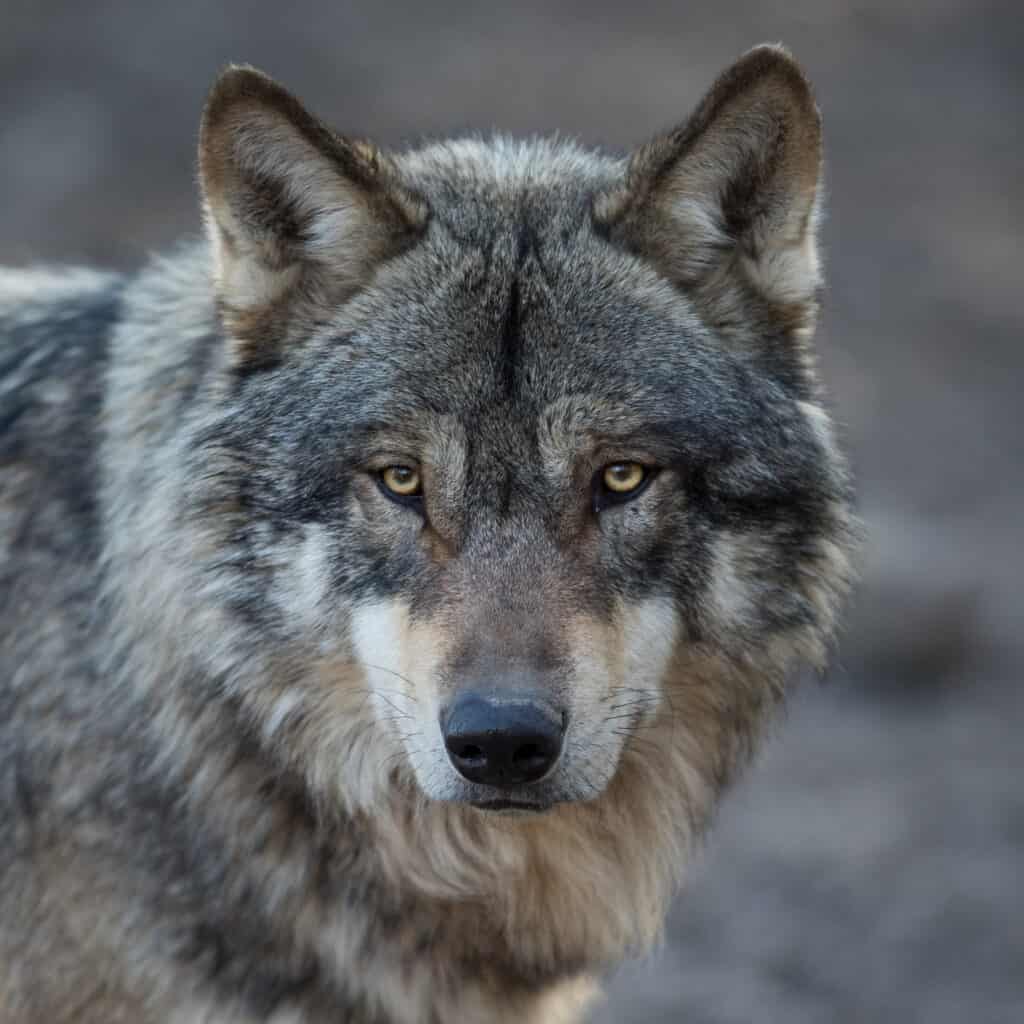
Wolves are known to prey on wolverines in packs
©AB Photographie/Shutterstock.com
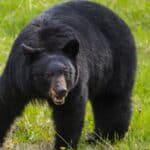
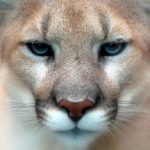
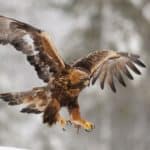
Despite its relatively smaller size, the wolverine has few other natural predators. The sharp claws and ferocious attitude will deter most other animals from threatening it. The wolf is probably the closest thing it has to a regular predator because an entire pack has the ability to pin down a wolverine and prevent it from escaping. In fact, wolverines and wolves sometimes don’t even appear in the same territory together. Bears, eagles, and mountain lions may also target a young wolverine and kill it.
What does the wolverine eat?
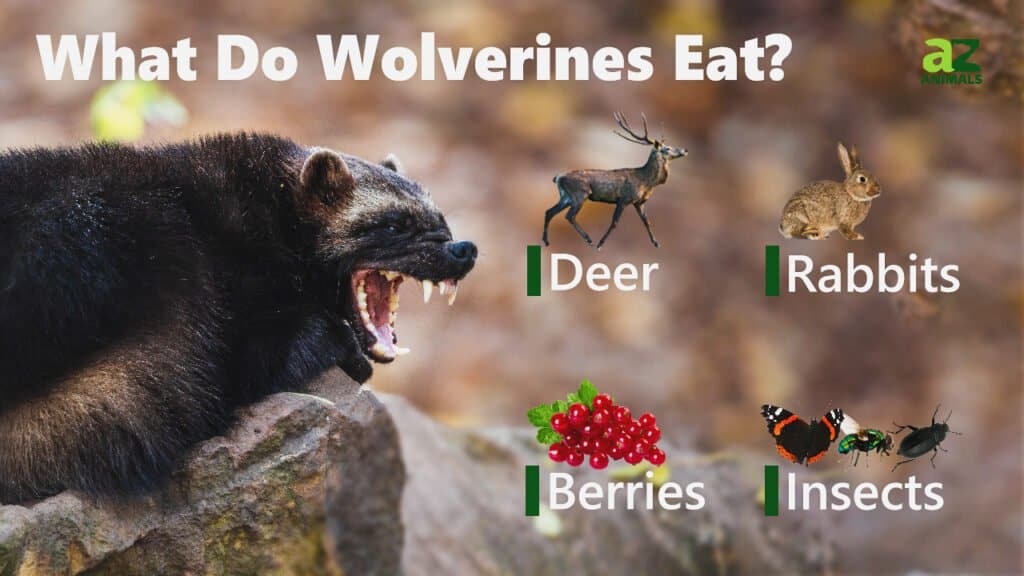
The wolverine is best described as an omnivorous species that can opportunistically change its diet based on season and location. Berries and plants are the main fare in the summer season, while rabbits, rodents, and leftover carrion constitute the bulk of its diet for the rest of the year, particularly in the sparse winter months.
The wolverine is so tenacious that it can take on prey up to five times larger than itself, usually when the prey is wounded or stranded in deep snow. The wolverine kills its prey with a bite to the neck, which severs the tendons and crushes the throat.
The wolverine is a clever animal that will look for any way to steal a kill from other predators to avoid expending time and energy on the hunt. It has been known to drive away much larger animals such as bears and cougars and then take over and consume the carcass of the animal they killed.
For a complete analysis on what wolverines eat, we’ve published ‘What Do Wolverines Eat? Their Diet Explained.’
Reproduction, Babies, and Lifespan
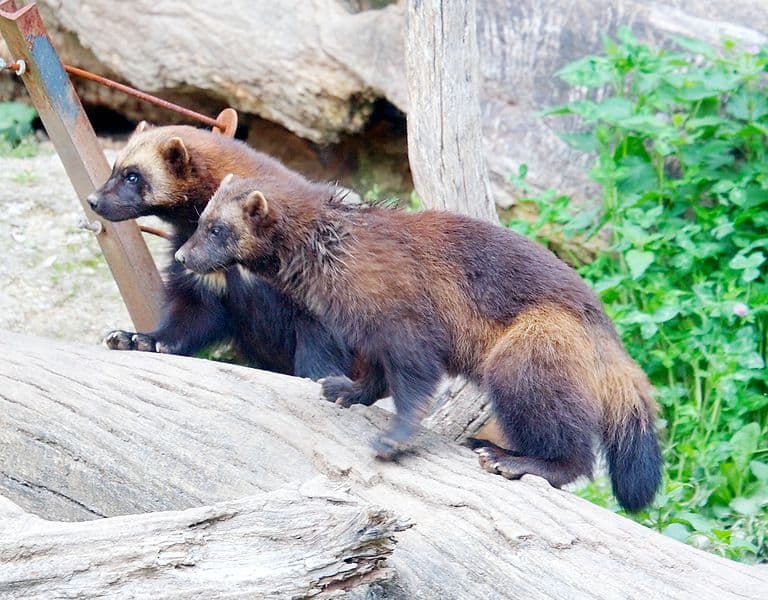
Wolverines become independent by the time they reach their fifth or seventh month
©User: MatthiasKabel, CC BY-SA 3.0, via Wikimedia Commons – Original / License
During its breeding season, the wolverine is a polygamous species that tend to pair up with any member of the opposite sex living inside or overlapping with its territory. This breeding strategy is highly asymmetrical though. Some wolverines may mate multiple times, while others may mate barely at all.
The female is the one who first initiates the mating session, starting with the breeding period between May and August. Once they hook up with each other, the pair spends a few days alone to copulate and then goes their separate ways. The female has the ability to delay the implantation of the eggs until a more fortuitous moment in the late winter or early spring. The actual gestation period only lasts some 30 to 50 days.
Once safely hidden inside of her den, the mother gives birth to three kits at a time. She raises them entirely on her own, while the father plays almost no role. Although completely dependent on the mother at birth, these kits soon begin to grow quickly. They are fully weaned off their mother’s milk at the three-month mark. The kits are then fully capable of foraging for themselves at around five to seven months.
It takes a year to reach full size but some two to three years to achieve sexual maturity. Because of the longer development times, the female only mates every other year. The wolverine has an average life expectancy of some seven to 12 years in the wild. However, females in captivity have lived for as long as 17 years.
Population
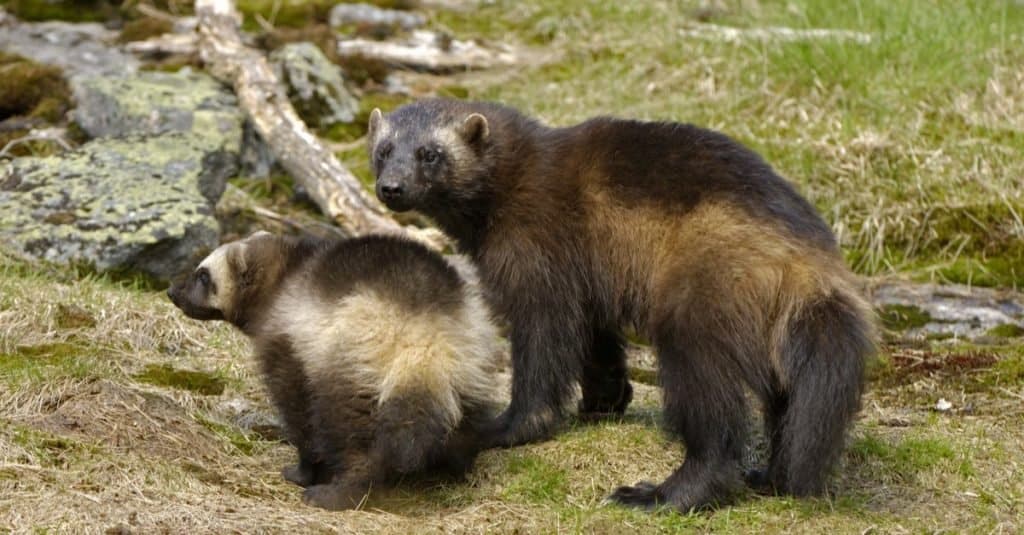
Wolverines are rated least concern by the IUCN
©Bildagentur Zoonar GmbH/Shutterstock.com
Exact population numbers have not been estimated, but the IUCN Red List currently classifies the wolverine as a species of least concern. It might not have always been in good health, because the wolverine was once heavily hunted in the southern-most parts of its range. Although protection is currently extended to it, numbers appear not to be recovering in these areas. Because of its large territorial needs, the wolverine has a low population density.
Animals in the Zoo: Where to find the Wolverine
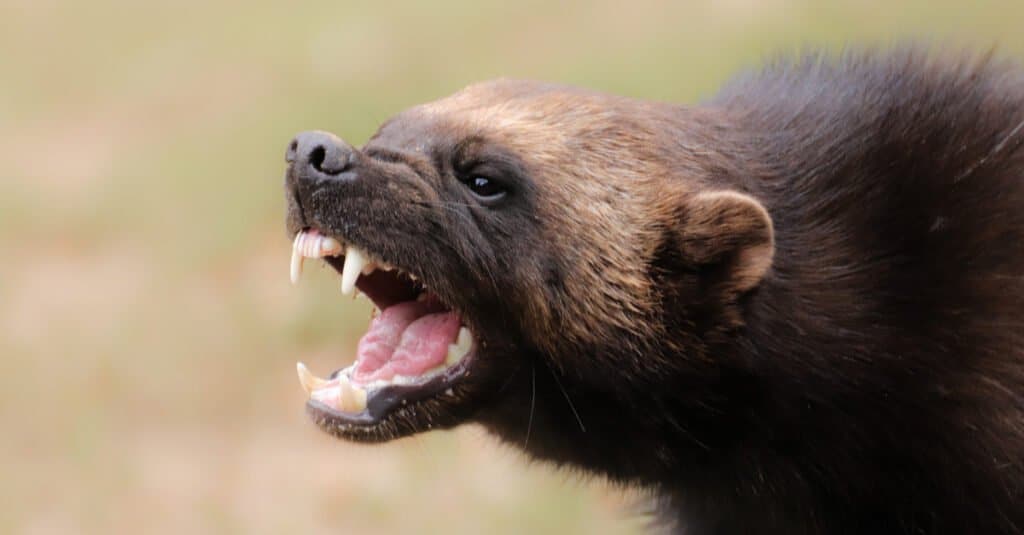
Wolverines are a popular attraction in several North American zoos
©DenisaPro/Shutterstock.com
The wolverine is a popular exhibit at many American zoos, including the Columbus Zoo, San Francisco Zoo, Zoo New York, Zoo Montana, the Minnesota Zoo, and the Detroit Zoo, many of which are involved with conservation and breeding programs. The Woodland Park Zoo in Seattle runs the Washington Wolverine Project in conjunction with the US Forest Service and the Washington Department of Fish and Wildlife in an effort to rehabilitate populations in the state.
Wolverine Pictures
View all of our Wolverine pictures in the gallery.

iStock.com/Denja1
Sources
- Animal Diversity Web / Accessed December 11, 2020
- National Geographic / Accessed December 11, 2020
- Mentalfloss / Accessed December 11, 2020