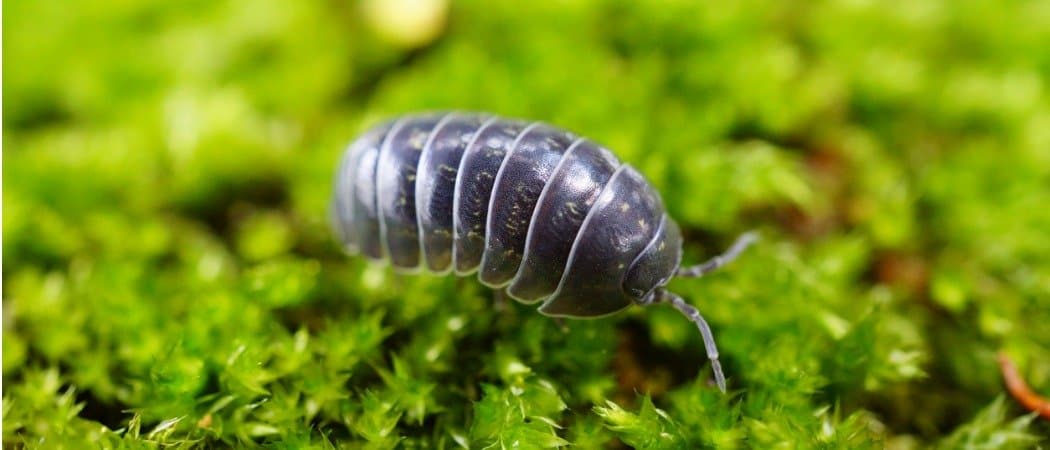
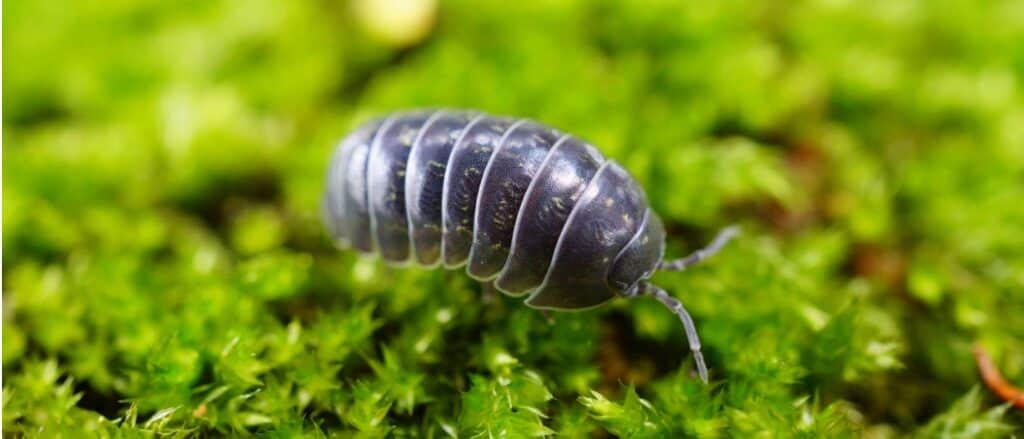
“A female pill bug has a pouch on her belly where she carries as many as 200 fertilized eggs.”
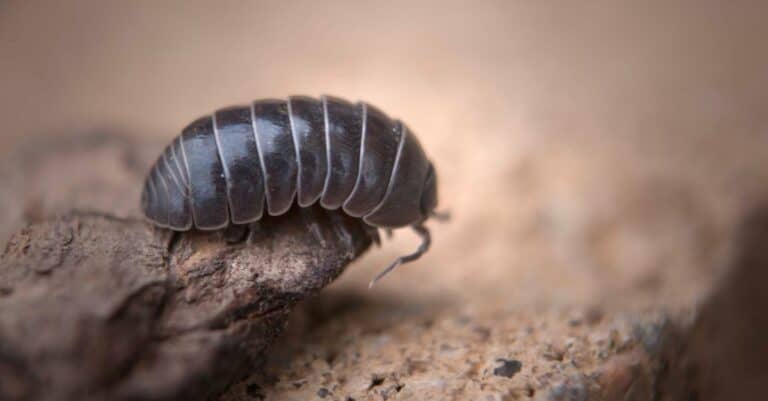
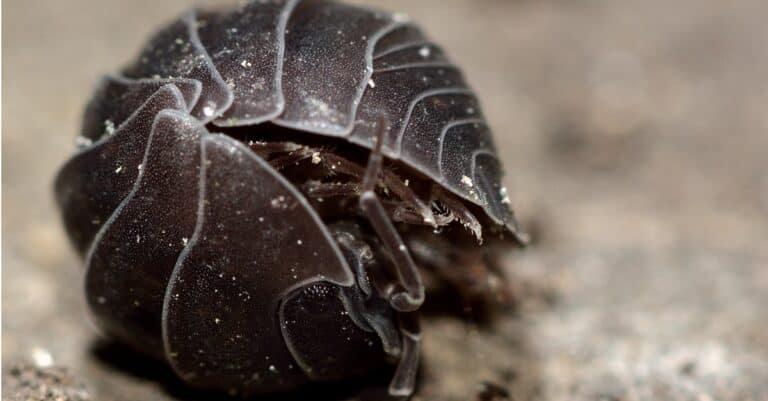
When a woodlouse feels threatened or in danger, it rolls its body up into a ball so only its shell is visible. A rolled-up woodlouse looks kind of like a pill. That’s how it earned the name pill bug. One of the most surprising facts about a woodlouse is that it’s a terrestrial crustacean and not an insect.
These tiny creatures feed on mildew, fungus, decaying leaves, and materials found in a compost pile. By eating this decaying material, woodlice help to release nutrients into the soil. During their lifespan of two to three years, they are of great importance to the ecosystem.
4 Incredible Woodlouse Facts!
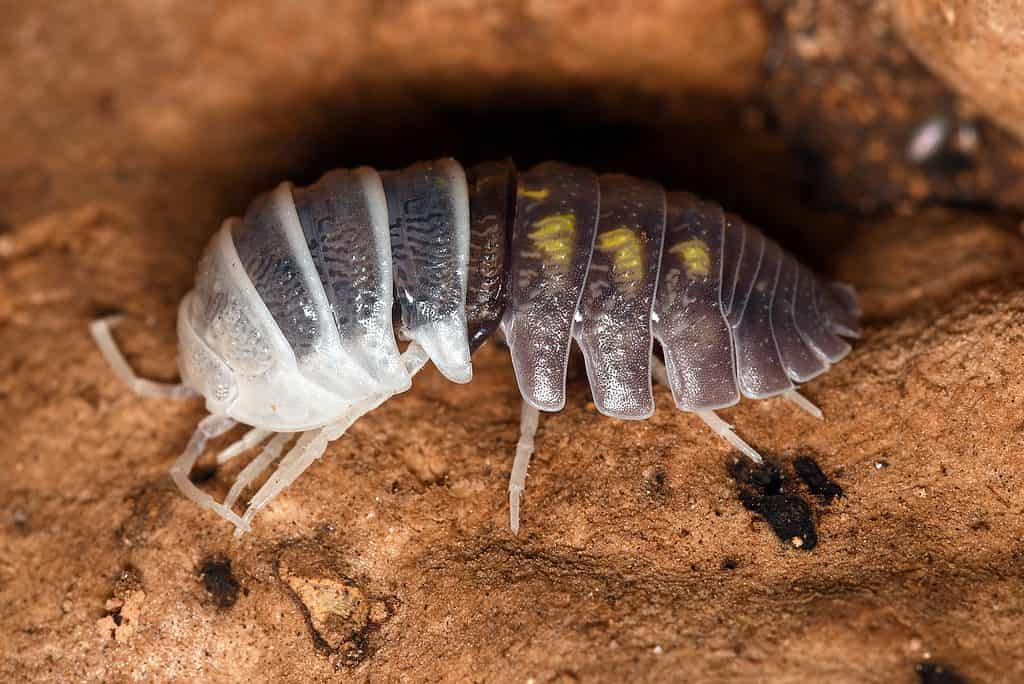
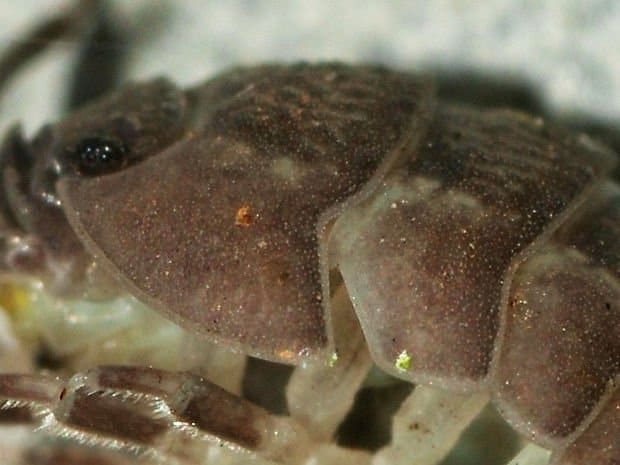
The molt of the exoskeleton’s anterior half of a terrestrial isopod Armadillidium granulatum (pill woodlice).
©Guillermo Guerao Serra/Shutterstock.com
- A woodlouse has 14 legs!
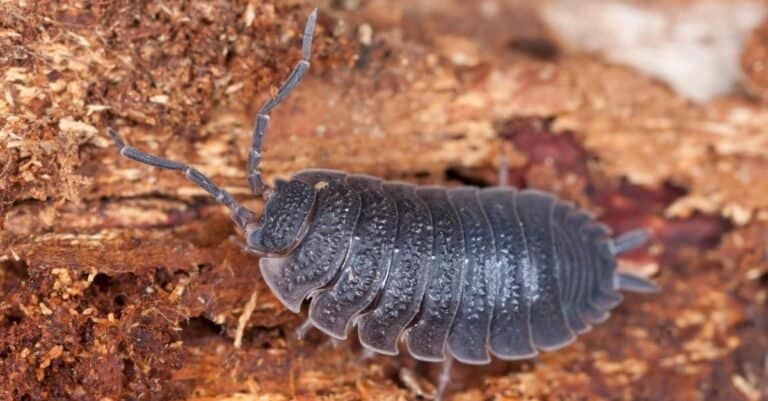
- Its exoskeleton, or outer shell, has the appearance of armor.
- Most of the time, they are found in a damp, dark environment.
- The life cycle of this crustacean includes these stages: eggs, baby (manca), juvenile, and adult. Their lifespan is two to three years.
Species Types and Scientific Names
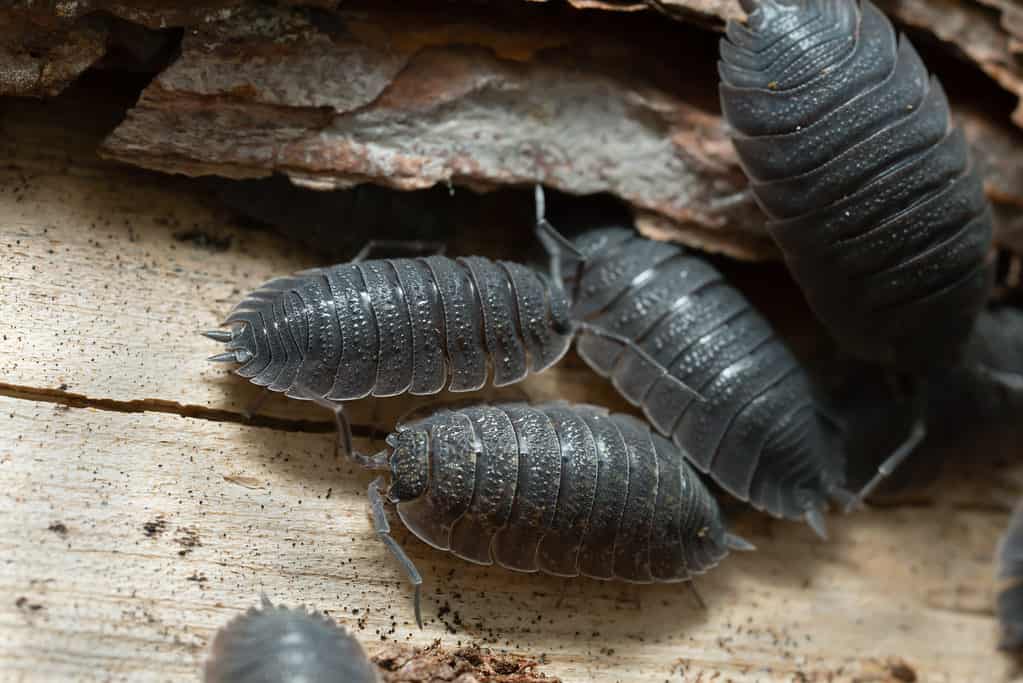
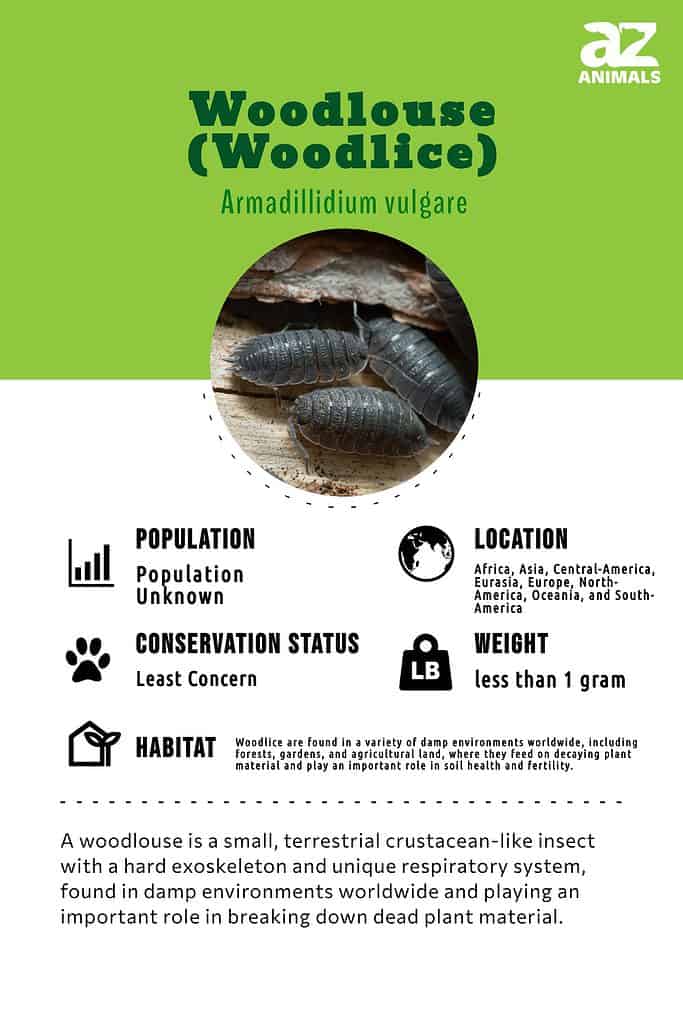
Armadillidium vulgare is the scientific name of the woodlouse.
©Henrik Larsson/Shutterstock.com
Armadillidium vulgare is the scientific name of the woodlouse. The Latin word Armadillidium translates to little armadillo. This refers to the armor-like shell of this crustacean. They belong to the Order Isopoda and the Family Armadillidiidae. There are 3,500 plus species of woodlouse.
Some types of woodlouse are:
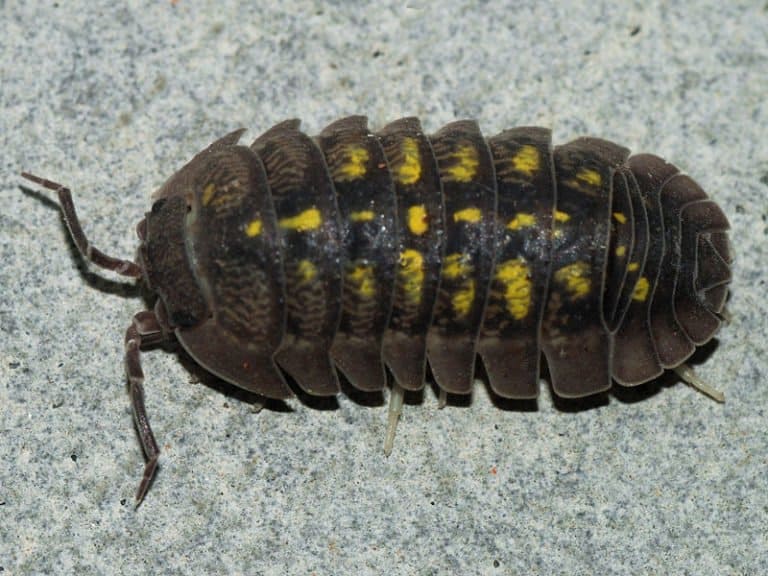
- Armadillidium pictum
- Armadillidium granulatum
- Armadillidium nasatum
- Armadillidium lagrecai
- Armadillidium depressum
Additional species includes:
- Roly-poly
- Common rough woodlouse
- Common woodlouse
- Platyarthrus hoffmannseggii
- Porcellionides pruinosus
- Porcellio laevis
- Asellus aquaticus
- Ligia oceanica
- Armadillidium klugii
- Eleoniscus helenae
- Trichoniscus pusillus
- Armadillidium depressum
- Common striped woodlouse
- Armadillidium nasatum
- Androniscus dentiger
- Porcellio spinicornis
- Trachelipus rathkii
- Armadillidium pulchellum
- Haplophthalmus montivagus
- Armadillidium pictum
- Hyloniscus riparius
- Ballodillium pilosum
- Porcellio dilatatus
- Trichoniscus pygmaeus
- Cyphodillidium absoloni
- Armadillidium granulatum
- Miktoniscus patiencei
- Cylisticus convexus
- Thermosphaeroma subequalum
- Ligidium hypnorum
- Alloniscus perconvexus
- Philoscia affinis
- Trichorhina tomentosa
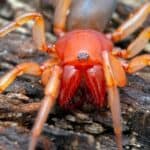
- Woodlouse spider
- Venezillo parvus
- Armadillidium ruffoi
- Venezillo arizonicus
- Atlantoscia floridana
- Porcellio monticola
- Armadillidium subdentatum
- Trichoniscoides sarsi
- Armadillidium brevicaudatum
- Trichoniscoides helveticus
- Trichoniscoides albidus
- Armadillidium variegatum
- Porcellio alpinus
- Armadillidium opacum
- Trichoniscus provisorius
- Porcellionides floria
- Trichoniscus alemannicus
- Metatrichoniscoides nemausiensis
The Evolution and Origins of Woodlouse
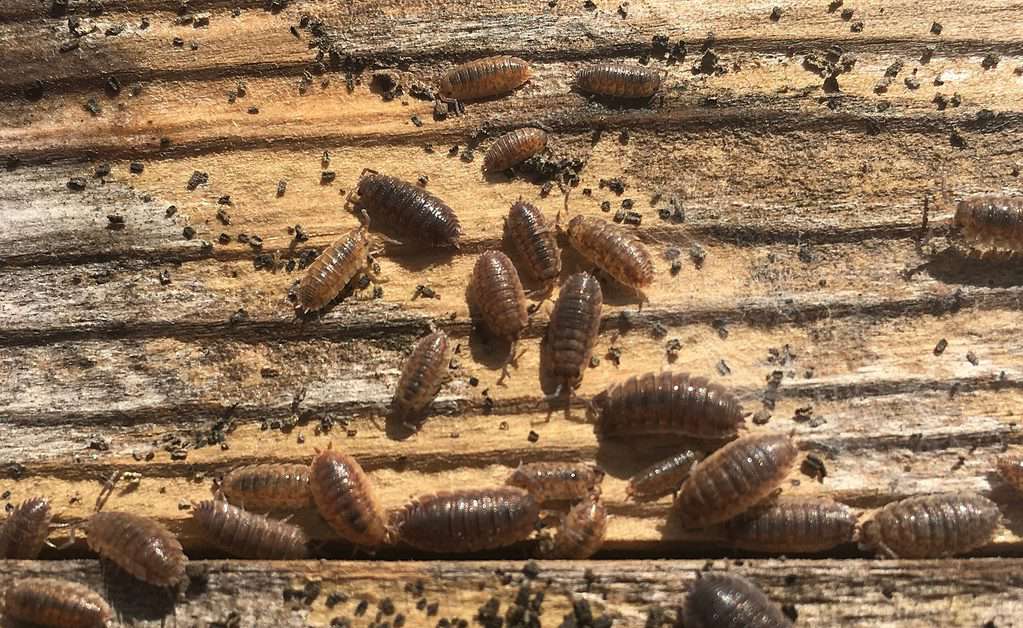
Adult and baby woodlice woodlouse scattering after being disturbed pill bug sow bug walking along a grainy textured plank of wood
©Ellianne/Shutterstock.com
Woodlice are a group of small, crustacean-like insects that belong to the order Isopoda. They have been around for over 300 million years, making them one of the oldest groups of terrestrial animals. Woodlice are found all over the world, and they occupy a wide range of habitats, from damp forests to urban gardens.
The evolution of woodlice can be traced back to their aquatic ancestors, which lived in the seas and oceans during the Silurian and Devonian periods. Over time, some species of isopods evolved to live on land, adapting to the harsh conditions of the terrestrial environment.
Woodlice have a hard exoskeleton that helps to protect them from predators and environmental stress. They also have a unique respiratory system, which allows them to breathe air without drying out, and they are capable of surviving in a wide range of temperatures and humidities.
The adaptability and versatility of woodlice have allowed them to thrive in many different habitats, from damp forests to urban gardens. They feed on decaying plant material, and their presence is an important indicator of soil health and fertility.
To summarize, woodlice are an ancient and fascinating group of insects that have evolved and adapted to survive in a variety of environments. They play an important role in many ecosystems, breaking down dead plant material and recycling nutrients, and providing valuable insights into the evolution of life on land.
Appearance
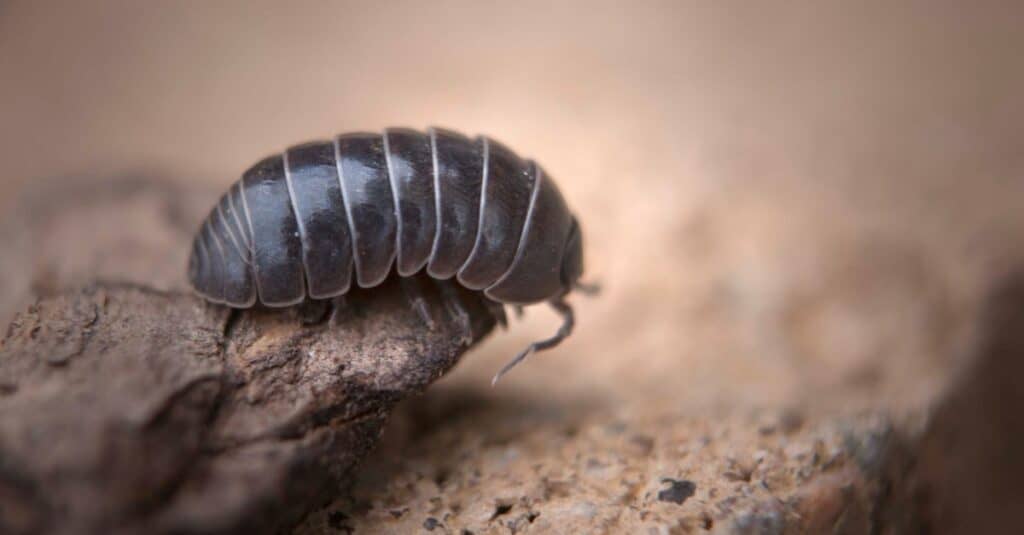
These animals live everywhere in the world except the continent of Antarctica.
©iStock.com/Werhane
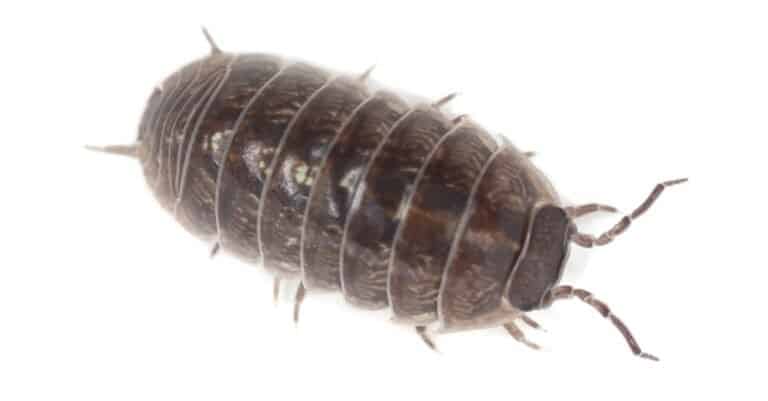
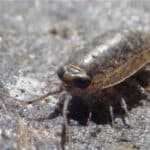
A woodlouse has a shell that is dark gray or black. One of its most well-known features is its armor-like exoskeleton made up of seven plates. They have two legs on each of these seven plates making a total of 14 legs on this little creature. Its body measures from 0.7mm to 18mm in length and is approximately 5mm wide. This crustacean has two short antennae on its head.
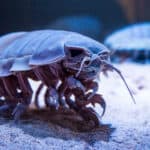
A sea slater is a crustacean very similar to a woodlouse. A sea slater has the same flat, dark body with an exoskeleton divided into segments. However, a sea slater at three centimeters in length is bigger in size than a woodlouse.
The main defensive behavior of a woodlouse is to roll into a ball at the first sign of a threat. This is a way to cover its vital organs to protect them from a predator. It can also make an odor-filled chemical in its body that is repellent to its predators. In addition, the gray or black color of this crustacean helps it to blend into its moist, dark habitat.
The lifespan of this creature is two to three years, so its defensive behavior is certainly effective!
Woodlice live in groups. If you lift a rock in a garden or look into a compost pile, you’re likely to see dozens of woodlice. Each individual of this type is called a woodlouse. Two or more of them are known as woodlice. A group of these crustaceans is called a colony.
Habitat
One of the most amazing facts to remember about woodlice is they live in all places in the world except Antarctica. They live in temperate to tropical climates. Gardens are a common habitat of this crustacean. Woodlice and their eggs are also found under piles of leaves, rocks, downed trees, and in the soil. Moisture and darkness are the two main features of its habitat.
Sometimes woodlice find their way into homes especially if there is a welcoming habitat near the structure. Picture a group of woodlice living in a pile of rotting wood near the wall of a home. It wouldn’t be a surprise if a few woodlice made their way inside the house from time to time. They would only stay in a home if they found the mold.
Diet
Generally, the diet of a woodlouse is herbivorous. But scientists categorize it as a detritivore because of the specific material it eats. The word detritus is in the word detritivore. Detritus is decaying or rotting material in the environment.
What does a woodlouse eat?
The diet of a woodlouse includes decaying leaves, fungus, mold, and even the droppings of other animals. So, now you see why they are called detritivores!
What eats a woodlouse?
The predators of a woodlouse include frogs, shrews, centipedes, and spiders. All of these predators share the same habitat as the woodlouse. Baby woodlice are even more vulnerable to these predators because their shell is not as sturdy.
Prevention
If you see one or two woodlice in your home, know that they are not harmful in any way. But, if you notice several of them including baby woodlice, it may mean they are feeding on mold or mildew inside your home. You may have some rotting wood due to water damage in a ceiling or floor.
Fixing the damage is going to remove any reason for woodlice to be in your home. They would rather be in your garden!
Woodlouse Pictures
View all of our Woodlouse pictures in the gallery.

iStock.com/Henrik_L
Sources
- University of Florida IFAS / Accessed October 8, 2021
- St Louis Zoo / Accessed October 8, 2021
- Wikipedia / Accessed October 8, 2021
- The Wildlife Trusts / Accessed October 8, 2021
- Earth Life / Accessed October 8, 2021