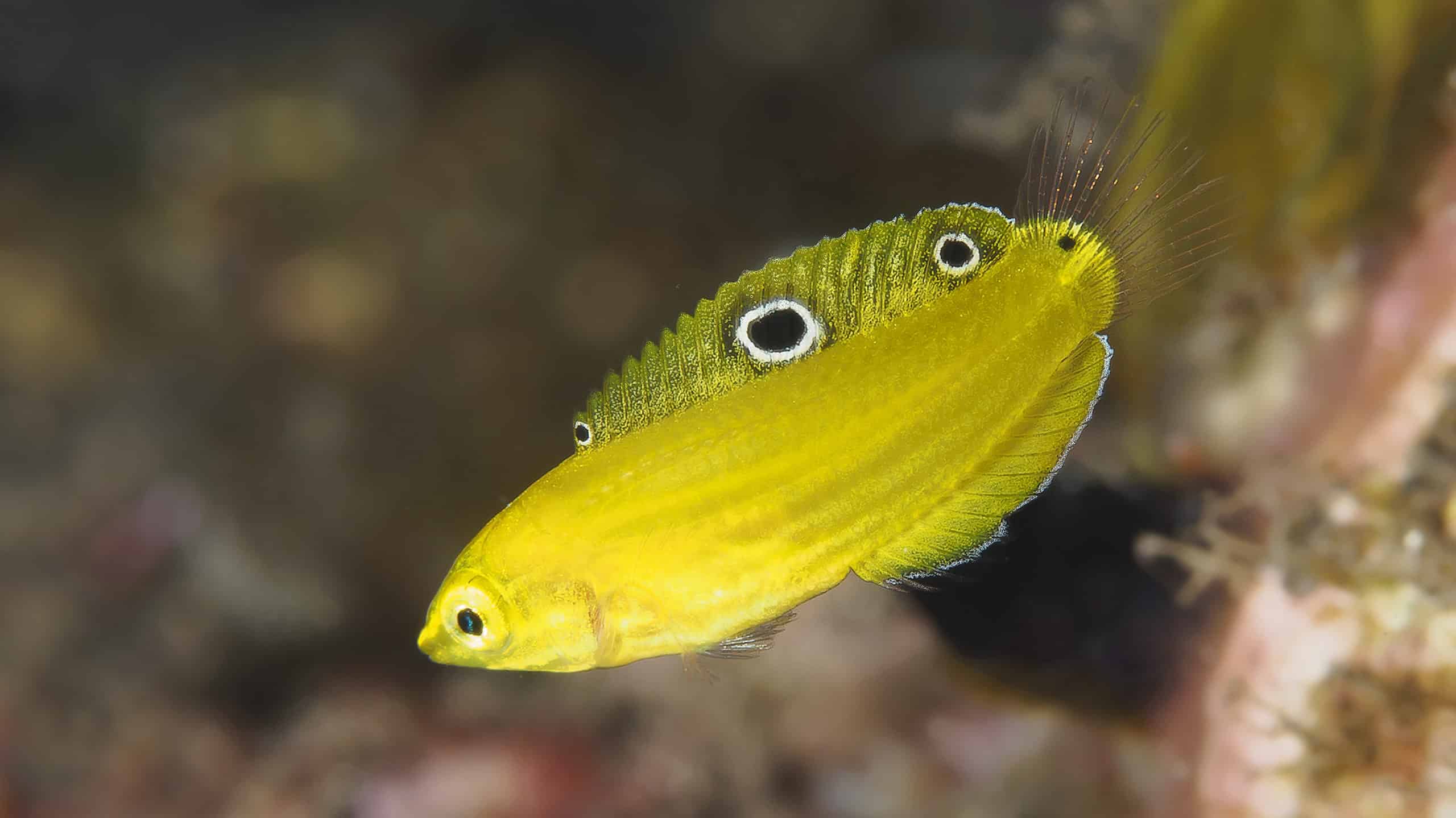
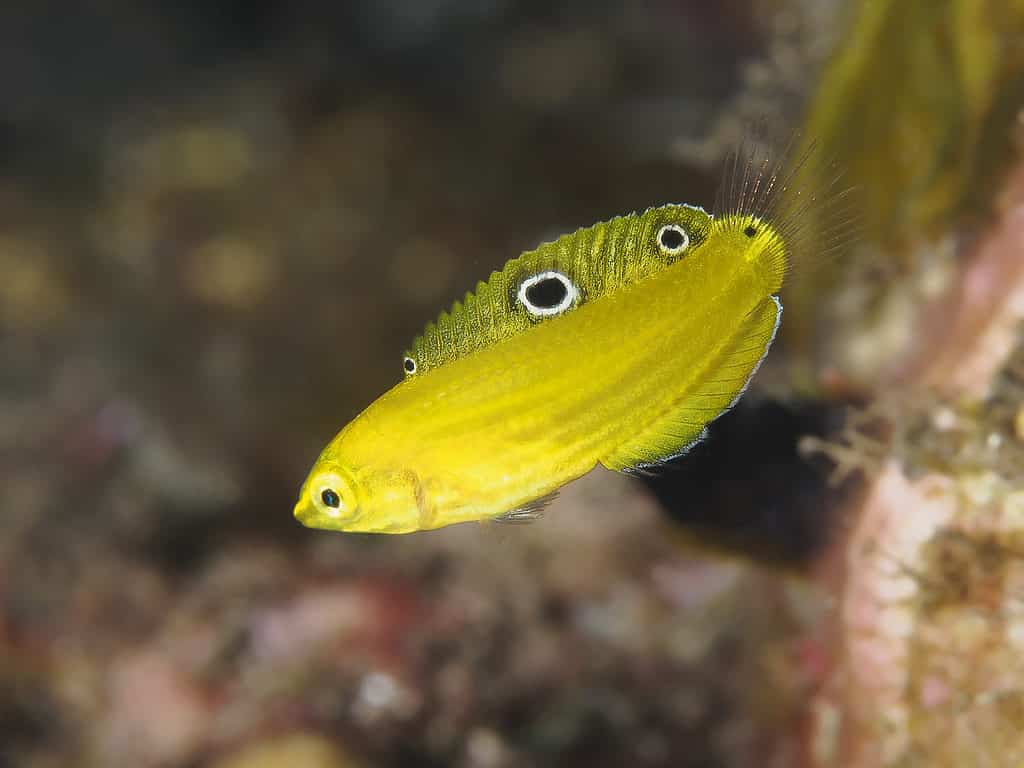
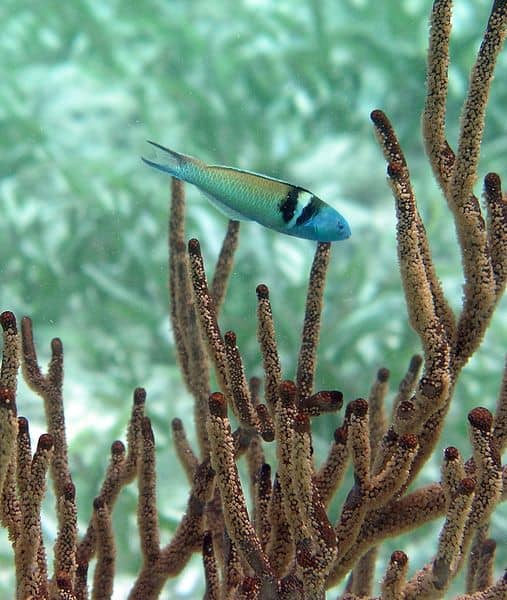
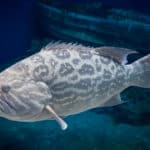


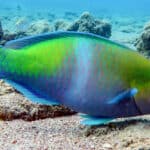
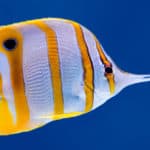
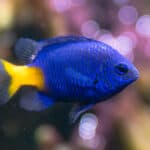
Wrasse are among the most fascinating fish on Earth — they are colorful, curious, and full of personality. These active daytime hunters help maintain reef health. They exhibit an astonishing range of shapes, sizes, and colors. With more than 600 species worldwide, wrasses represent one of the ocean’s most diverse animal families.
6 Incredible Wrasse Facts
- Diurnal: These fish are diurnal in nature, which means that they are most active during the day and sleep through most of the night.
- Carnivorous: These fish are carnivorous, and their diet primarily consists of meat and other non-vegetarian foods.
- Strong teeth: These fish have small mouths but very strong teeth.
- Very large family: These fish collectively combine to form a very large family that comprises about 600 different species of fish that are subdivided into 9 groups or tribes.
- Aggressive: These fish are sometimes very aggressive, especially when new fish are introduced into their environment.
- Solitary social life: These fish usually live alone and do not exhibit group behaviors at all. They are alone most of the time and hardly come together with other members of the family.
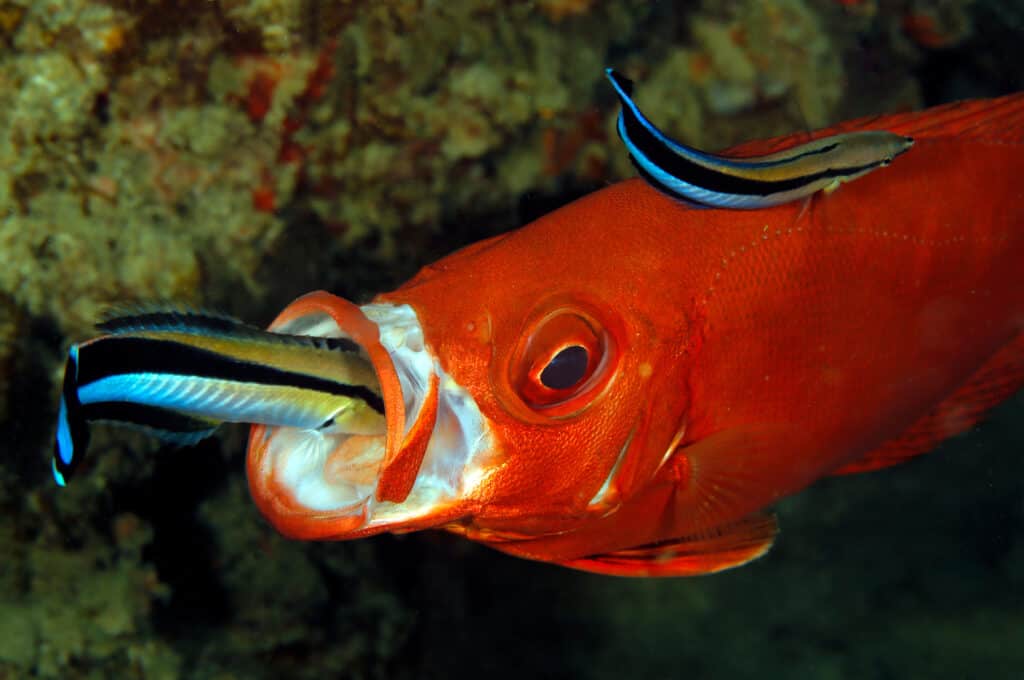
Two Cleaner Wrasse on a Lunar-tailed Bigeye, one inside the mouth.
©Daniel Lamborn/Shutterstock.com
Classification and Scientific Name
Wrasse are classified in the Labridae family, which comes from the Latin word labrum, which means lip or edge. The name is likely due to their thick lips since their teeth come out when they need them.
These fish belong to the kingdom Animalia and phylum Chordata. As a family (Labridae) within the Chordata phylum, there are over 600 species. They come from the class Actinopterygii and order Labriformes.
Species
The wrasse fish form a large family that comprises over 600 different species. These different fish are then distributed into 81 different genera and are subdivided into nine different groups or tribes. Some of the well-known wrasse species include:
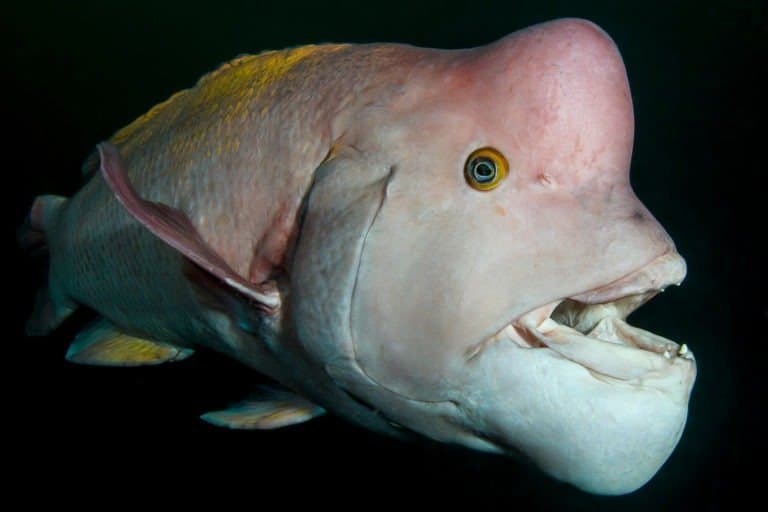
- Humphead wrasse (Cheilinus undulatus): This incredibly large wrasse is endangered, residing within the coral reefs of the Indo-Pacific Ocean. They are served as a luxury dish in some parts of Asia.
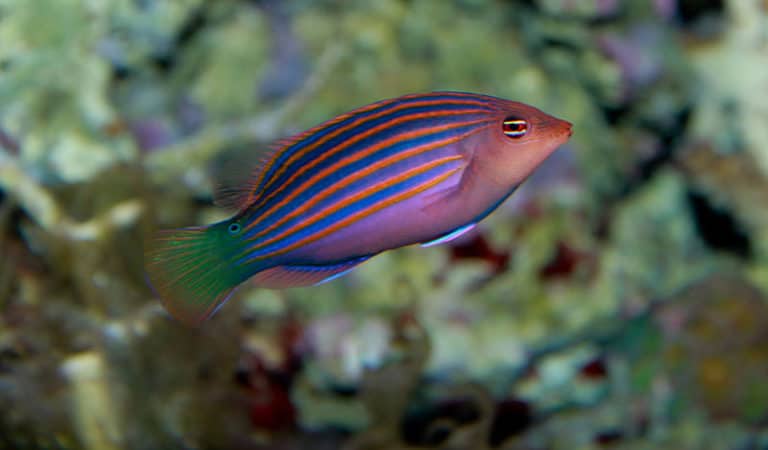
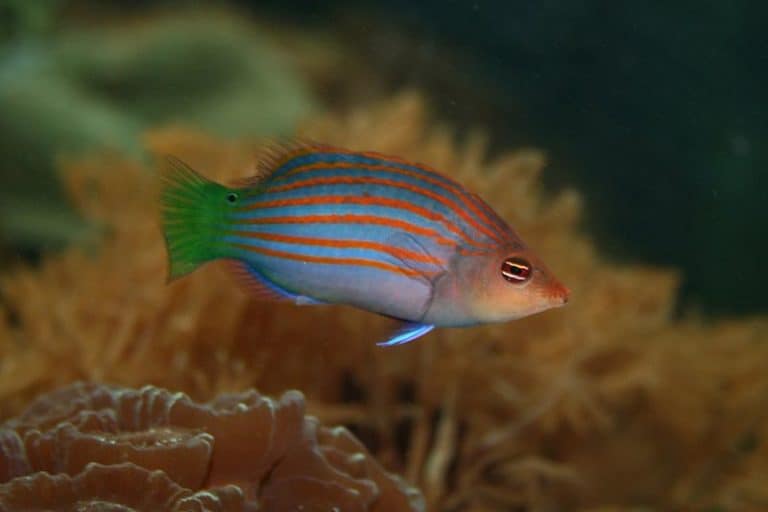
- Six-line wrasse (Pseudocheilinus hexataenia): With bright fuchsia and blue stripes, this wrasse can be found along the coast of Fiji. They are considered to be jumpers, so anyone who keeps them as pets will need to keep a cover on their home aquarium.
- Melanurus wrasse (Halichoeres melanurus): The melanurus wrasse prefers to make its home along the rocky shoreline of the western Pacific. It is one of the smaller fish in the wrasse species, only measuring 12 cm at its largest size. The bright red-orange stripes pop against the blue-green background of its body.
- Leopard wrasse (Macropharyngodon meleagris): The leopard wrasse can become stressed rather easily, so it can be hard to keep in an aquarium at home. Sometimes, they will hide away for over a week to feel safe again.
Appearance
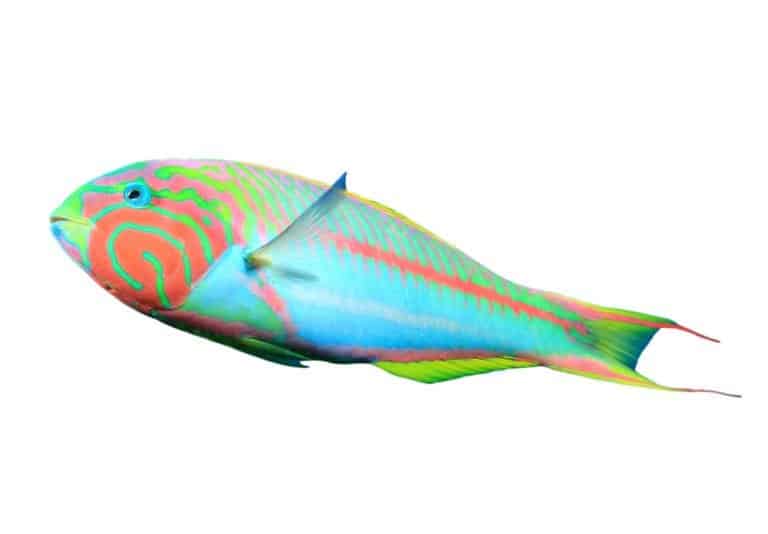
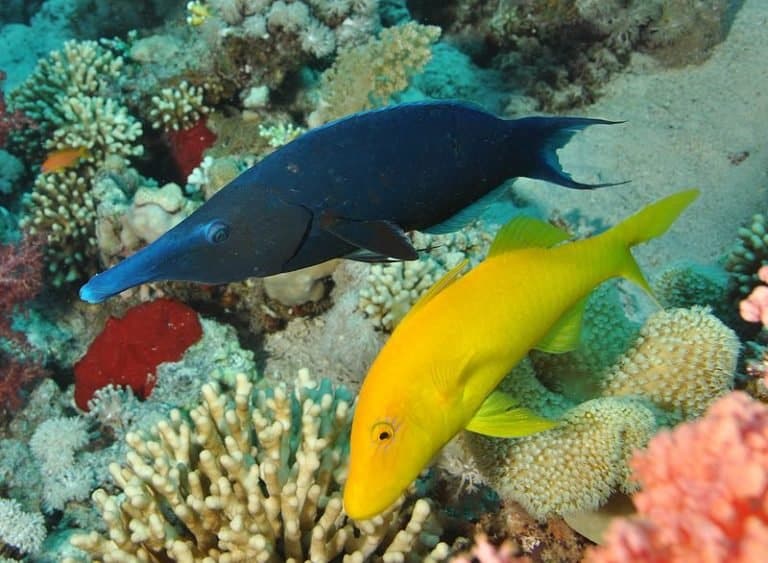
Wrasse have longish bodies that are usually about 1.9 inches to 6.6 feet long, varying greatly with the many different species in the family. They exist in a variety of colors like yellow, orange, white, blue, green, purple, and gray, combined with stripes and bars against solid colors. These markings are made with smooth scales.
Along with their long dorsal and anal fins, wrasse have a pointed snout and are especially distinguished by thick lips. After all, their family name comes from the Latin word for “mouth” or “lip,” making it quite descriptive of this feature.
The teeth of wrasse are protractile, meaning that they come out as part of a jaw that projects forward when they need to catch food. There are two rather large teeth that many species have at the front of their jaws.
The largest member of the wrasse family can grow up to about 24.6 feet and can weigh up to 420 pounds.

Wrasse are brightly-colored fish.
©Rich Carey/Shutterstock.com
Distribution, Population, and Habitat
Wrasses usually exist in the tropical as well as the subtropical waters and can be found in the Pacific Ocean, the Indian Ocean, and the Atlantic Ocean. They inhabit the temperate waters and can also be found in Norway.
The species conservation status varies, considering that many species are not considered endangered. However, the humphead has many threats as part of the fish trade, leading it to become endangered. Once known as the “king of the coral reef,” this species has lived up to 30 years before, but the Coral Triangle has made it a highly coveted and expensive fish to buy for food.
To encourage fishers to seek out humphead wrasse less frequently, the World Wildlife Foundation works with other organizations to buy back the fish. Current data shows that almost 900 humphead wrasse have been returned to the ocean in the last ten years.
Predators and Prey
The Wrasse fish face threats from the lionfish, dogfish, and large sharks, but the predators that they face vary with the particular species. The biggest threat that the larger wrasse face is over-fishing, which means that humans are their largest predator.
As far as food, the species will determine the kind of food that it eats. While the humphead wrasse seeks out crustaceans, smaller variations of wrasse will look for small fish to eat. They sometimes even attach themselves to a host that allows them to consume parasites in a symbiotic relationship with other sea life. Eels, groupers, and snappers are just a few of the fish that allow wrasse companions to clean them.
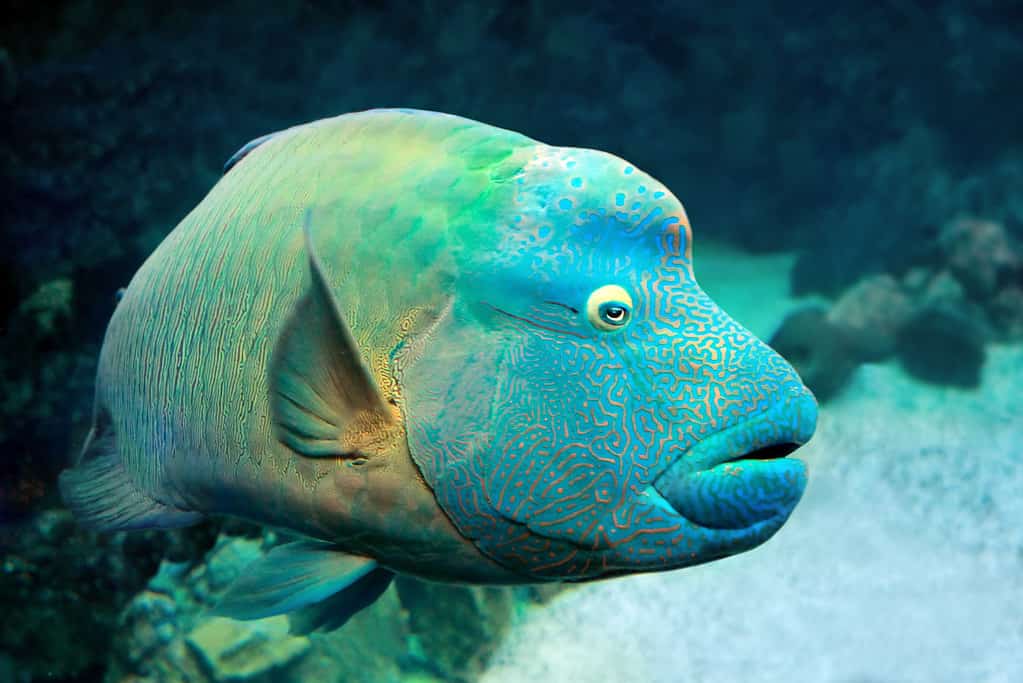
Napoleon Wrasse (Cheilinus undulatus) has excellent vision and can turn their eyes 360 degrees.
©TatianaMironenko/iStock / Getty Images Plus via Getty Images
Reproduction and Lifespan
These fish mate through a process called broadcast reproduction. While eggs are released by the female into the water, the male releases sperm into the water as well. The sperm released seek out the eggs, fertilizing them to grow into wrasse. Broadcast spawning is rather common among bony fish, as well as many other sea animals.
These species must be cared for by the parents to survive, since many predators may seek them out. Though the incubation period is a mere 24 hours, the lifespan of some wrasse species can usually be about 30 years.
Interestingly, any bluehead wrasse is a female when it first hatches. Some of the fish will turn into males as a way to preserve the population of the species.
Wrasse in Fishing and Cooking
Catching some of the endangered species of wrasse is discouraged, but they are still served as a delicacy in many areas. For that reason, many websites encourage consumers to only buy or fish for what they need for a particular meal, seeking out the larger fish for more meat.
Wrasse Pictures
View all of our Wrasse pictures in the gallery.

Sources
- Wikipedia / Accessed September 10, 2018
- Biological Diversity / Accessed September 10, 2018
- British Sea Fishing / Accessed September 10, 2018
- The Dallas World Aquarium / Accessed September 10, 2018
- The Spruce Pets / Accessed September 10, 2018
- World Wildlife Federation / Accessed September 10, 2018
- Soft Schools / Accessed September 10, 2018
- Oceana / Accessed September 10, 2018
- Sea Angling Ireland / Accessed September 10, 2018
- Deeper Blue / Accessed September 10, 2018
- Merriam-Webster / Accessed September 10, 2018
- Brittanica / Accessed September 10, 2018