


Zebra sharks are gentle fish that hang around coral reefs in tropical oceans. They spend their days sleeping and their evenings leisurely hunting around the sea floor and eating. Zebra shark numbers have declined significantly due to climate change and human activity, but recent conservation efforts are underway to help stabilize and recover populations.
A global conservation initiative, including the StAR Project and ReShark, is underway to restore zebra shark populations, particularly in Indonesia, and public support for these programs can make a difference.
Five Fascinating Zebra Shark Facts
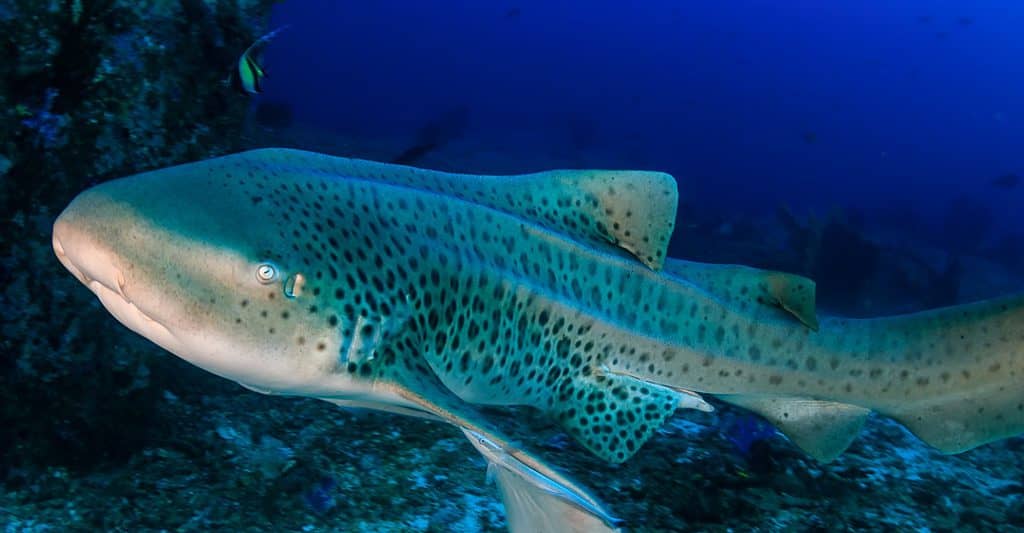
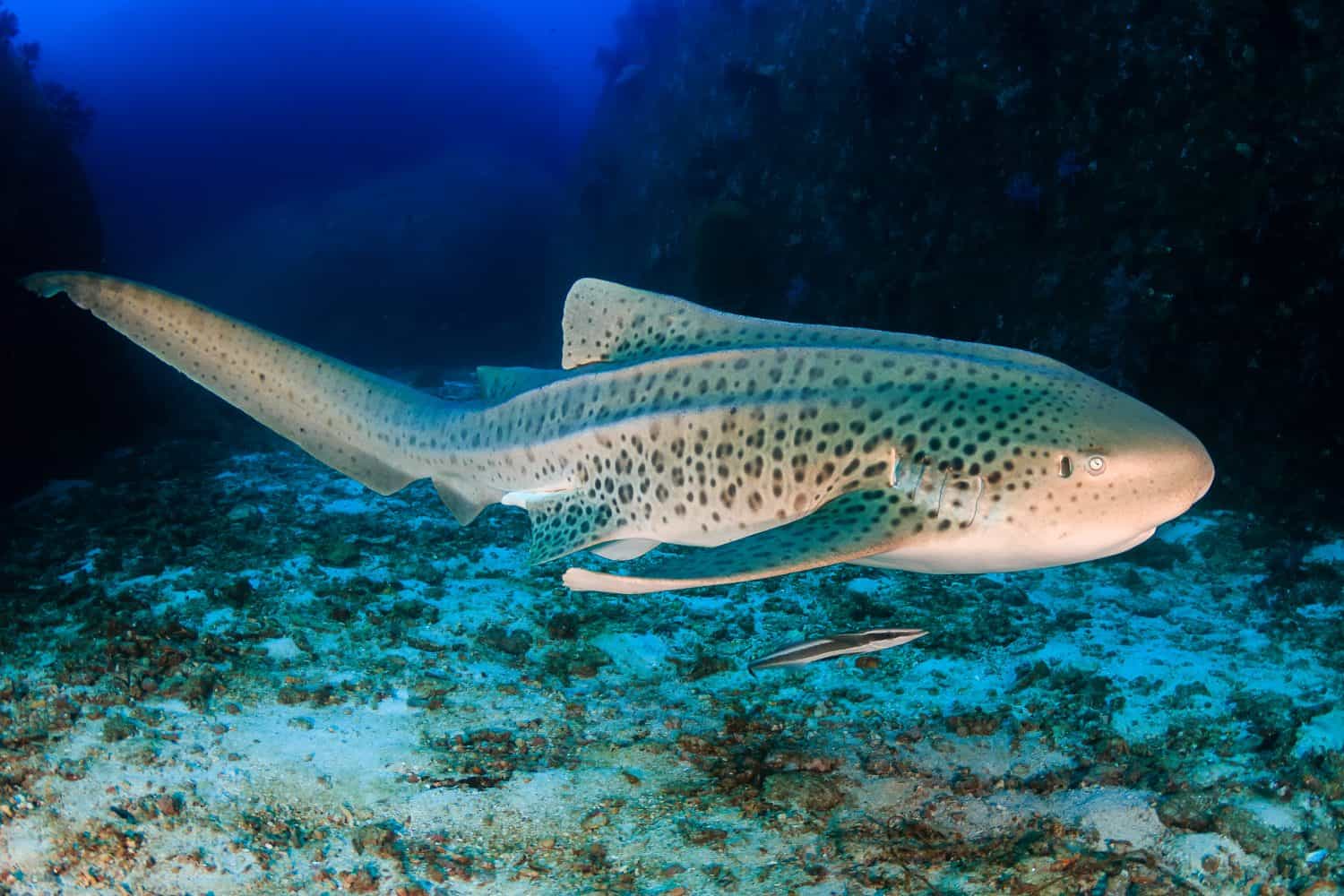
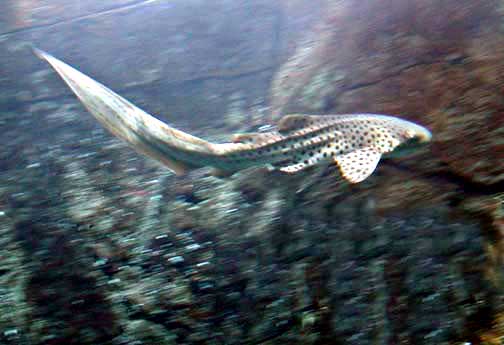
Leopard sharks and zebra sharks are frequently mistaken for one another by people.
©iStock.com/WhitcombeRD
- For years, a population of zebra sharks has been gathering at an annual summer summit that continues to mystify scientists to this day.
- Female zebra sharks don’t need males to reproduce. They can do it on their own!
- People often confuse leopard sharks and zebra sharks.
- The longest zebra shark ever recorded was 11 feet long.
- Zebra sharks are incredibly flexible and slim, and can forage in narrow crevices.
Evolution and Origins
Zebra sharks are found in the warm tropical waters of the Indo-Pacific region, which includes areas ranging from South Africa to the Red Sea, Madagascar, the Maldives, India, Southeast Asia, Taiwan, Japan, New Caledonia, and Tonga.
Classification and Scientific Name

In the realm of marine taxonomy, determining the correct scientific name for zebra sharks is akin to the age-old “tastes-great-vs-less-filling” beer argument.
©Peter Halasz / Creative Commons – Original
The proper scientific name for zebra sharks is like the tastes-great-vs-less-filling beer debate of the marine taxonomy world. The majority of scientists use Stegostoma fasciatum. However, another school of thought believes Stegostoma varium is the right choice. As of 2026, the accepted scientific name for the zebra shark is Stegostoma tigrinum, in accordance with recent taxonomic consensus.
Stegostoma is a portmanteau (a word formed by combining two other words) of the Greek words “stego” and “stoma,” meaning “covered” and “mouth,” respectively. Fasciatum also derives from Greek and means “banded,” a reference to baby zebra sharks’ stripes.
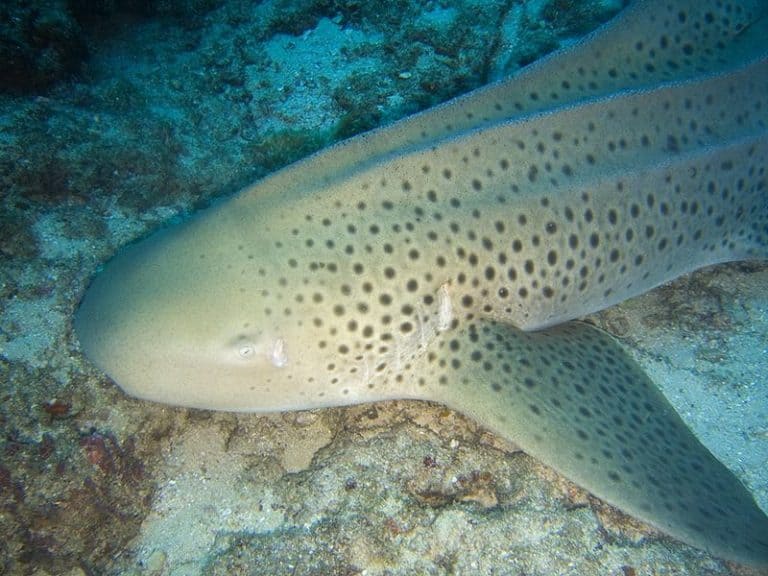
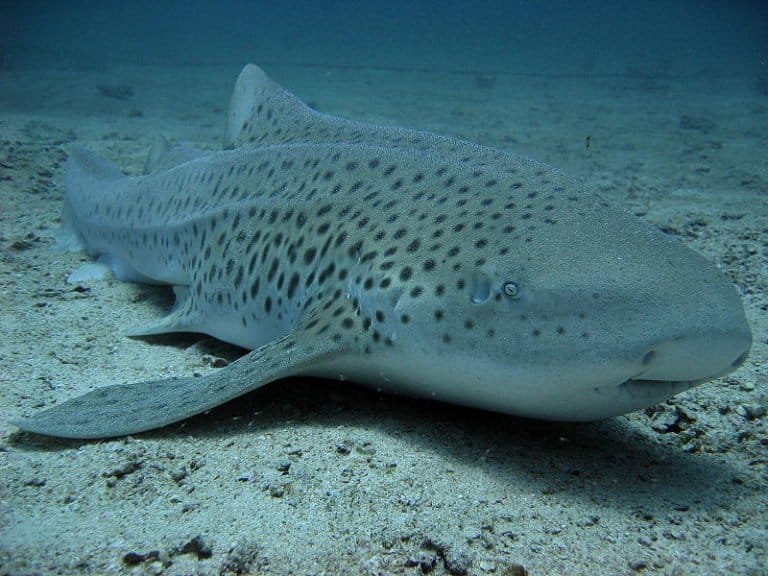
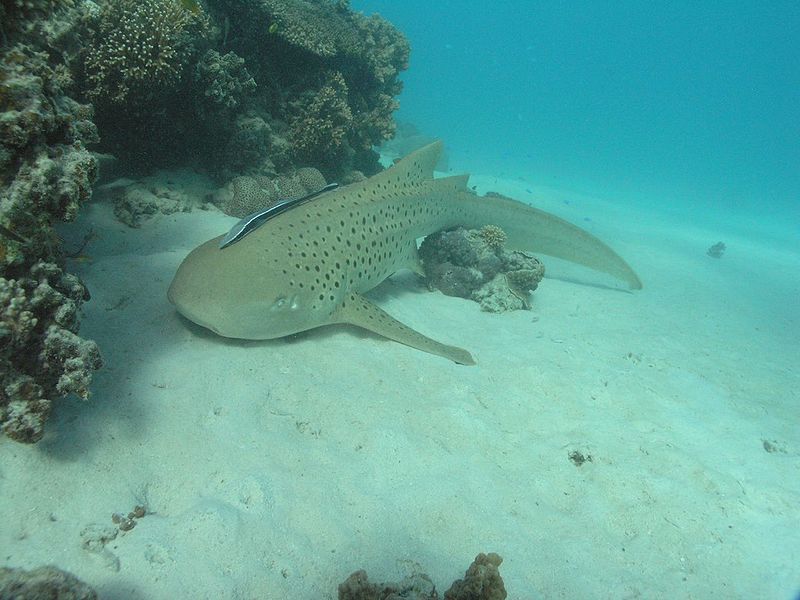
Zebra sharks are sometimes mistaken for and called “leopard sharks” because adults of the species lose their stripes and gain spots.
Appearance and Behavior
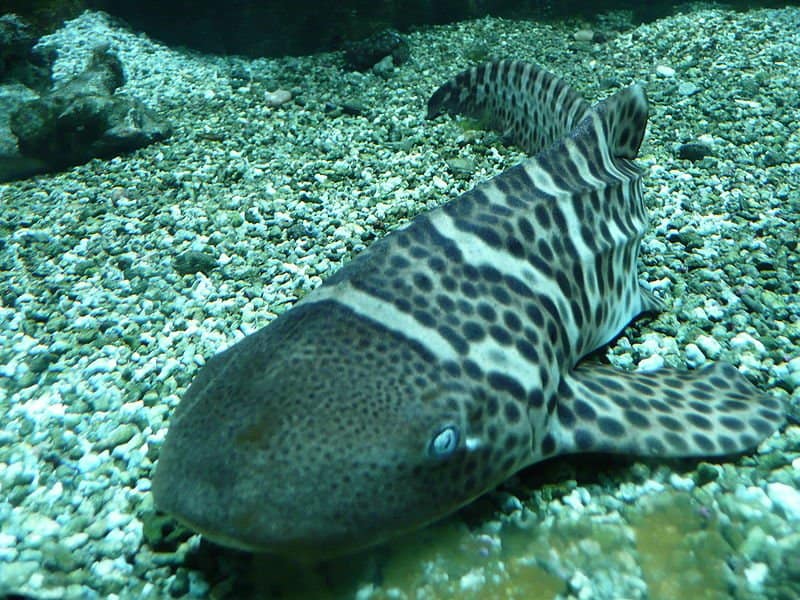
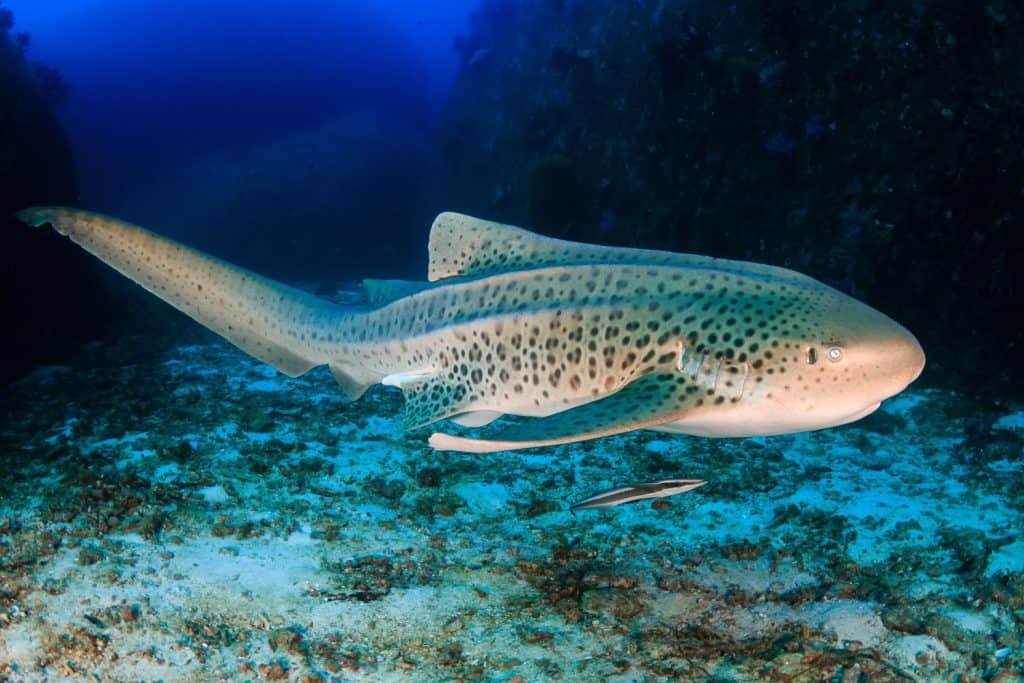
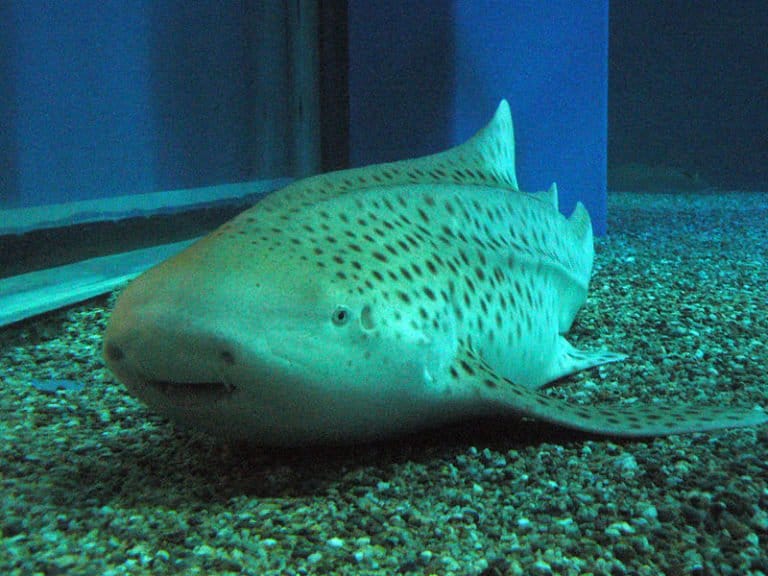
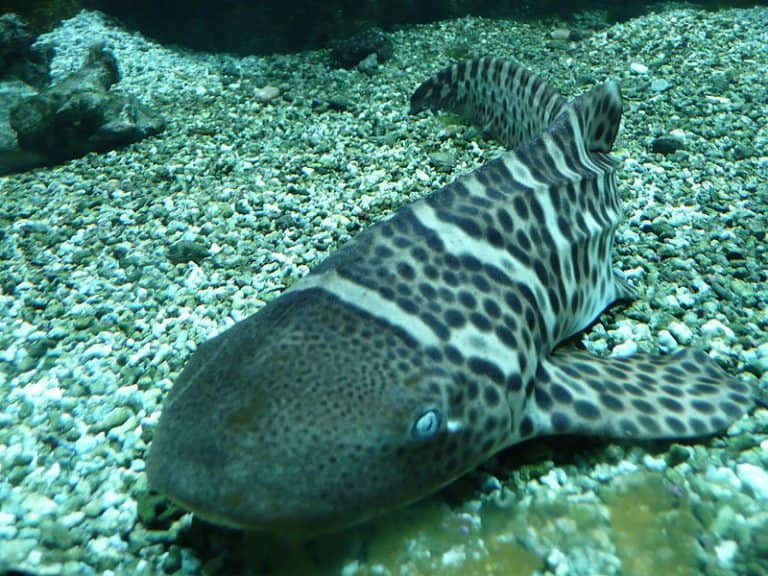
Zebra sharks possess flat heads with tiny eyes on either side, short snouts filled with 50 to 65 teeth, and cylindrical bodies capable of acrobatic twisting and turning.
©Line1 / Creative Commons – Original
Appearance
Zebra sharks have flat heads with itty-bitty eyes on either side, short snout mouths jammed with 50 to 65 teeth, and cylindrical bodies that can twist and turn like an acrobat.
They typically grow to a length of 2.5 meters (8.2 feet), and the current record for the longest adult is 3.5 meters (11 feet) — twice the height of actor Danny DeVito!
At birth, zebra sharks sport dark brown skin on top, yellowish bellies, and vertical yellow stripes. As they grow, the stripes separate into spots. Marine biologists believe the stripes serve as camouflage for newborns.
Behavior
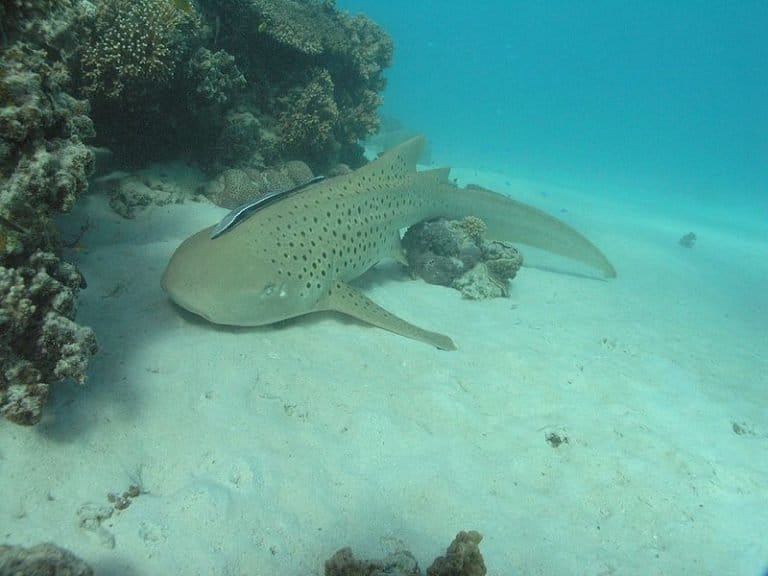
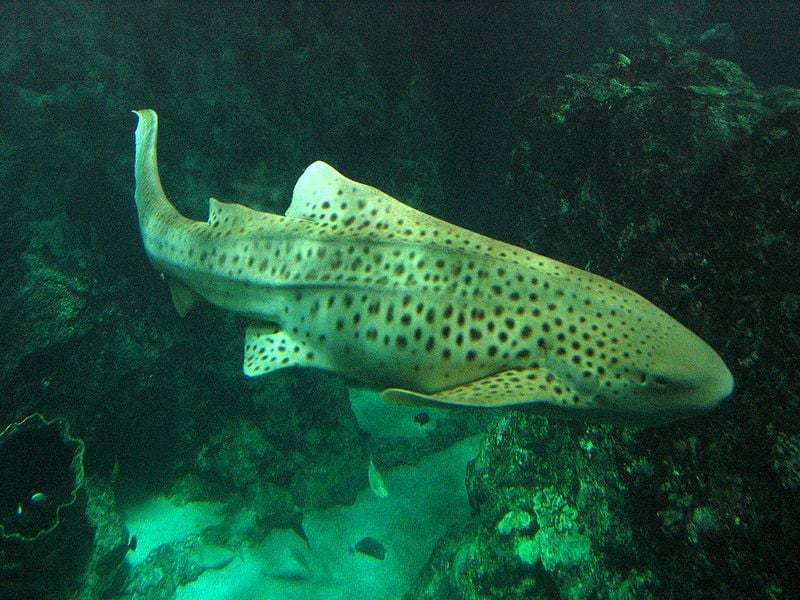
We generally think of sharks as aggressive and deadly, but zebra sharks mellow to a chiller vibe. They spend most of the day snoozing on the ocean floor and face the current to facilitate low-effort breathing. Then, at dusk, zebra sharks sluggishly rise and spend the night slowly swishing around in search of food.
For the most part, zebra sharks are loners who gather together every once in a while. Every summer, zebra sharks aggregate in shallow waters off the coast of Queensland, with females outnumbering males. Recent research suggests these gatherings are related to seasonal behaviors, and some mating activity has been observed.
Zebra sharks are generally gentle with humans and let us get close. They’ll even take food right out of a diver’s hands and let themselves be petted. Just don’t take it too far; they can become aggressive when annoyed.
Unlike many other species, zebra sharks adapt well to captivity and are prominent features in many large aquariums around the world.
Thanks to their agile bodies, zebra sharks are capable of squeezing into tight spaces, gaps, and crevices within coral reefs in search of concealed prey. Once they find food, the shark’s small mouth, thick throat, and strong gill muscles allow it to suction the prey in.
Habitat
Zebra sharks roam the tropical waters around Madagascar, the Maldives, India, Indonesia, the Philippines, Palau, Taiwan, Japan, New Caledonia, Tonga, and Australia. As bottom-dwelling animals that can live up to depths of 200 feet, they mostly hang out around coral reefs, sandy areas, and marine rubble. Zebra sharks primarily live in ocean water but have been spotted tooling around freshwater basins on occasion.
Diet
What do zebra sharks eat?
Shelled mollusks, snails, sea urchins, crabs, squid, crustaceans, small bony fish, and sea snakes are on the zebra shark menu. And thanks to their flexible and svelte bodies, zebra sharks can slink into nooks and crannies when foraging for them.
Zebra sharks don’t just chew their food. Instead, their mouths are equipped with powerful suction mechanisms that act as vortex vacuums that suck in prey in one gulp. To uncover food, they have whisker-like organs on their snouts called “barbels” that serve as sustenance sensors.
Predators and Threats
Save for a few large shark species — like tiger sharks and bull sharks — zebra sharks have few natural predators. Humans, however, are a huge threat. In some regions, poachers have free rein to hunt them for fins and liver oil. The former is for a delicacy called “fin soup”; the latter is used in vitamins.
Habitat encroachment presents another fatal problem for zebra sharks, as does the erosion and degradation of coral reefs.
Reproduction, Babies, and Lifespan
In the mating season, male zebra sharks pursue females and demonstrate their attraction by nipping at their tails.
©mjwinoz / Creative Commons – Original
Reproduction
During mating season, male zebra sharks chase females and show interest by snapping at their tails. When a match meets, the male grasps the female’s pectoral fins, and they attach. The pair then lies still together for a while on the ocean floor. Eventually, the male wraps himself around the female and inserts one of his claspers (modifications of the pelvic fins) into her cloaca for a few minutes.
Females lay about four brown or purplish eggs at one time, which are ringed with a light layer of hair that clings to the nesting surface. Each breeding season, a single female may lay up to 46 eggs over 112 days.
Depending on the temperature, eggs incubate for five to six months and burst into the world as 20- to 30-centimeter-long (7.9- to 14.2-inch-long) hatchlings.
Fascinatingly, zebra shark females can reproduce without males. It’s called parthenogenesis, which means reproduction without fertilization. Two well-documented incidents involve Leonie, a female zebra shark in Australia, and Zebedee, the lady resident zebra shark in a restaurant aquarium at the world’s most luxurious resort in Dubai. Both females haven’t been around males for years, but managed to lay eggs that successfully hatched.
Babies
Baby zebra sharks are called “pups” and come into the world looking very different than what they’ll grow up to be. At hatching, they’re between 20 and 30 centimeters (7.9 to 14.2 inches) long and are sometimes mistaken for baby bullhead sharks that also sport yellow stripes on brown skin.
Lifespan
What is the lifespan of a zebra shark? When spared from habitat destruction and other fatal conditions spawned by human encroachment, zebra sharks can live between 25 and 30 years. Recent data indicate that zebra sharks can live up to 27–28 years in captivity, which is similar to their lifespan in the wild.
Population
Zebra sharks are under threat from overfishing and habitat loss. The International Union for Conservation of Nature classifies the species as Endangered, except for the Australian coastal population, which doesn’t face poaching or overfishing threats and is therefore listed in the Least Concern category.
In 2008, the AZA Marine Fish Taxon Advisory Group urged zoos and conservation programs to develop species survival plans and managed breeding programs for zebra sharks. Interested parties took to the task and implemented collaborative initiatives. As a result, international collaborative breeding and rewilding programs, such as the StAR Project, now help zoos and aquariums coordinate efforts to maintain genetic diversity and restore wild populations.
Zebra Shark Pictures
View all of our Zebra Shark pictures in the gallery.

Sources
- David Burnie, Dorling Kindersley Animal, The Definitive Visual Guide To The World's Wildlife / Accessed November 2, 2009
- Tom Jackson, Lorenz Books The World Encyclopedia Of Animals / Accessed November 2, 2009
- David Burnie, Kingfisher The Kingfisher Animal Encyclopedia / Accessed November 2, 2009
- Richard Mackay, University of California Press The Atlas Of Endangered Species / Accessed November 2, 2009
- David Burnie, Dorling Kindersley Illustrated Encyclopedia Of Animals / Accessed November 2, 2009
- Dorling Kindersley Dorling Kindersley Encyclopedia Of Animals / Accessed November 2, 2009