
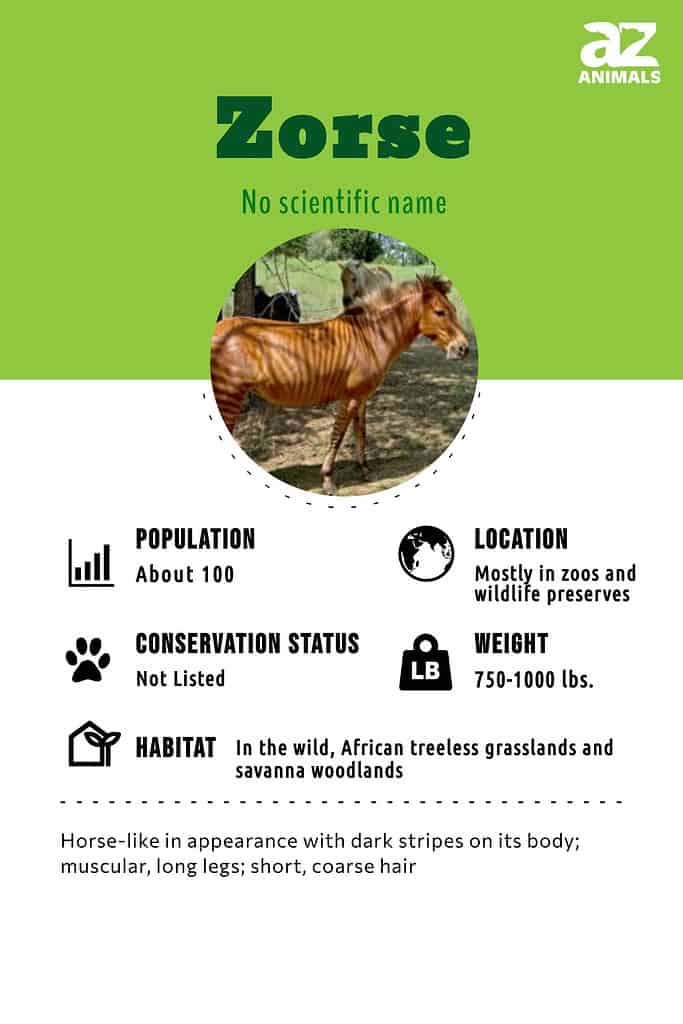
Classification and Evolution
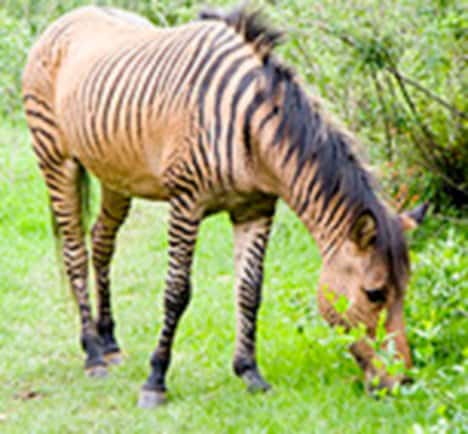
The Zorse is one of a number of equine hybrids that are known as Zebroids.
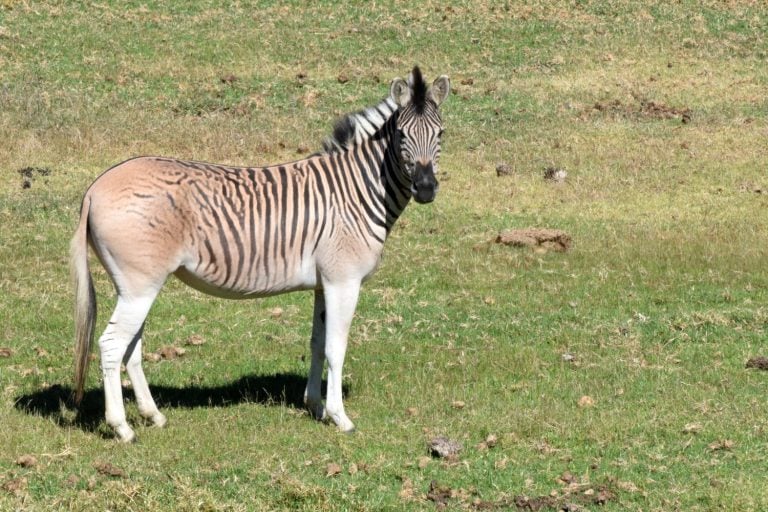
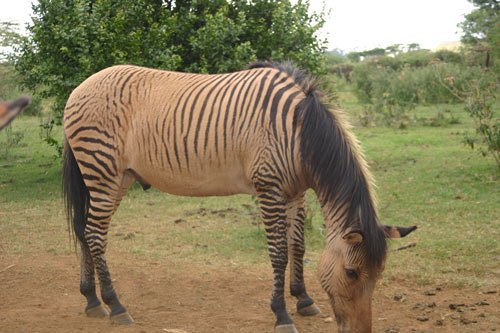
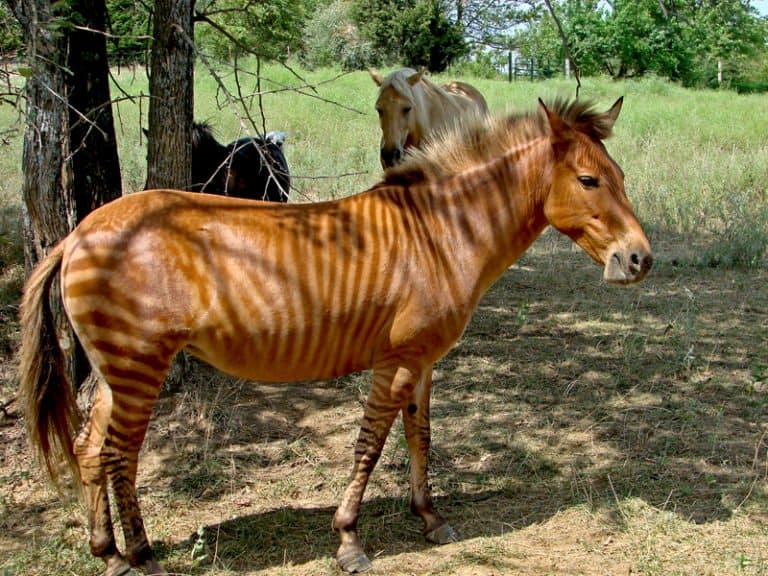
The Zorse is one of a number of equine hybrids that are known as Zebroids, which is the name given to an equine hybrid that has Zebra ancestry. The Zorse is the result of cross-breeding a generally male Zebra (stallion) with a female Horse (mare) to produce an animal that looks more like a Horse than a Zebra but has stripes.
Related: 12 Hybrid Animals That Are Actually Real
The Zebra part also gives the Zorse resistance to certain pests and diseases that normally affect both Horses and Donkeys, meaning that they are not only sturdy but also very hardy animals. Due to the fact that there are not only three different sub-species of Zebra but also nearly 300 different breeds of domestic Horse, the Zorse can vary quite dramatically, particularly in size and color, depending on its parents.
Anatomy and Appearance
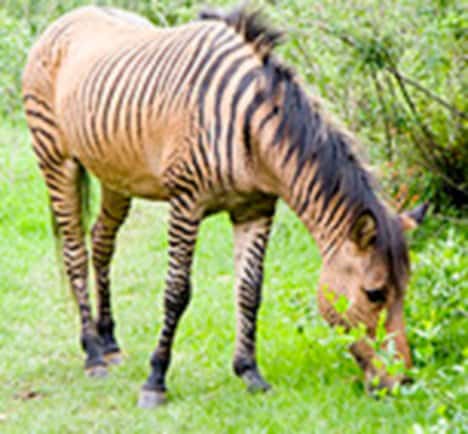
The Zorse is very Horse-like in appearance since it inherits its shape, size, color and temperament from its mother. One of the Zorse’s most notable features is the dark stripes that are boldest on its legs and rear, along with also commonly being found on the rest of the body, neck and head. The Zorse is an animal that tends to have short, coarse fur that can range in color from tan to brown to black, with a darker mane and tail (although the exact characteristics of the Zorse are dependent on the breed of the female Horse). Zorses have a large head with a long muzzle, pricked-up ears and large, dark eyes with long eyelashes that help to stop things from getting into their eyes. Zorses have long, thin legs that are incredibly muscular and end in generally black (but sometimes white) colored hooves that are made from horn and allow the Zorse to be more sturdy when moving through various different terrains.
Distribution and Habitat
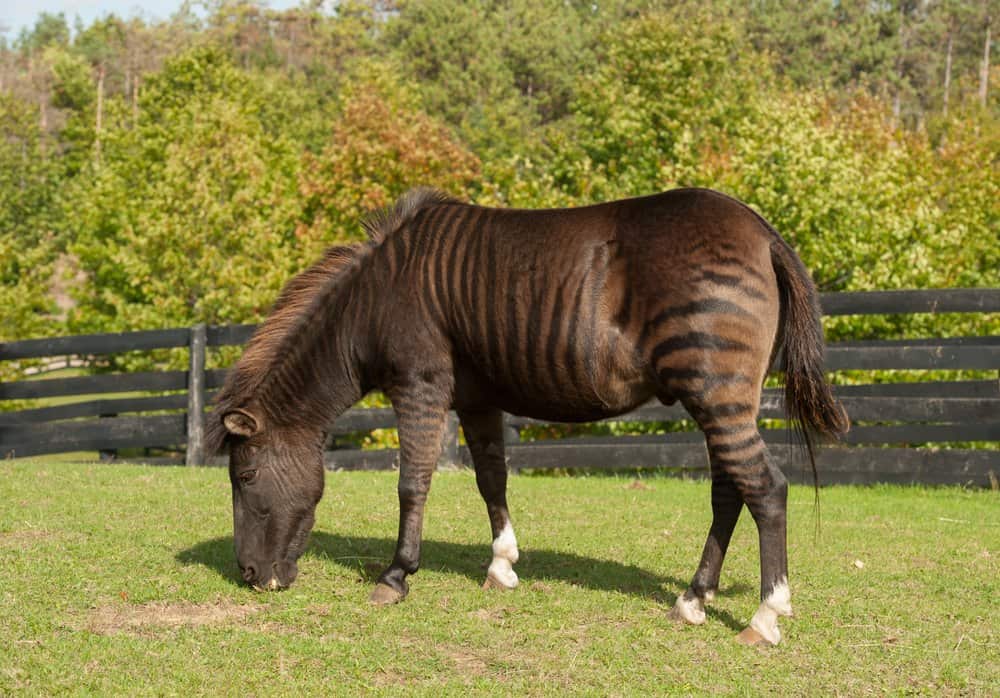
The Zorse is the result of human intervention, that is, iintentional crossbreeding that does not happen in the wild.
©Shawn Hamilton/Shutterstock.com
Unlike the case with the Zonkey where there have been a number of wild Zonkey sightings reported, it is almost impossible for a fully wild Zorse to occur without human intervention of some kind. There are three different sub-species of Zebra that are found in eastern and southern Africa on the vast open grasslands and savannah, but the incredibly rare wild horse is historically native to parts of Europe and Asia meaning that the two species would not come together naturally in the wild. In parts of Africa though where human settlements are either close to or intrude on the Zebra’s natural habitat, it is possible for a semi-wild Zorse to occur with the mating of a wild Zebra with a domestic horse. Nearly all of the world’s Zorses however, are found either in zoos or animal institutes around the world, with a number also being used as work horses particularly in parts of North America.
Behavior and Lifestyle
In the wild, both Zebras and Horses roam throughout their natural environment in herds that can contain anywhere from two to more than two hundred individuals, making Zorses relatively sociable animals that prefer to live with other equines. Their temperaments however, are generally similar to those of their mother, including their strong flight response which is heightened by their Zebra side. Zorses are strong and muscular animals that spend the majority of their lives grazing, and along with the fact that theyhave better night vision than people, they are known to have almost 360 degree vision with the exception of a blind spot in front of their nose and directly behind them. The Zorse’s large, pricked ears give it incredible hearing, and their large nostrils mean that they also have a keen sense of smell.
Reproduction and Life Cycles
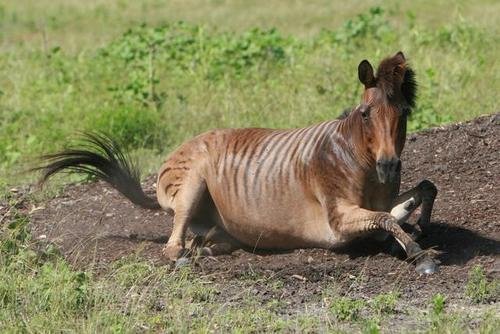
Zorses, like other hybrid animals, are sterile and thus unable to produce offspriing of their own.
©Kumana / Creative Commons – Original
Zorses are animals that are produced when a male Zebra mates with a female Horse. After a gestation period that usually lasts for around 11 months, the female Horse gives birth to a single Zorse foal. Like the offspring of numerous other hoofed-herbivores, the Zorse is able stand up within an hour after birth and begins to canter a few hours after that. Although they are much smaller in size than their parents, the Zorse is born with incredibly long legs that are actually nearly their adult length already. As with other hybrid animals, including both Zonkeys and Mules, Zorses are sterile, meaning that although they still display normal breeding behavior, they are unable to produce offspring of their own. Zorses tend to be very healthy and hardy animals that can live to be more than 30 years old.
Diet and Prey
Like other equines including both Zebras and Horses, the Zorse is a herbivorous animal meaning that it only consumes plants and plant matter in order to gain all of the nutrients that it needs to survive. They spend almost all of their time grazing and like Horses, the Zorse has an advanced sense of taste which allows it to sort through grasses and grains in search of its most favourable foods. The Zorse primarily eats grasses, herbs and flowers that grow on ground level, along with leaves, fruits and berries that it has to pull from the trees or finds on the floor. Zorses generally will not eat plants that are poisonous, but are known to resort to eating plants that contain toxins when there is not an adequate supply of more nutritious food. Oddly enough the Zorse’s digestive system is designed to have food flowing through it almost continually, allowing them to graze nearly all day if they can.
Predators and Threats
On the African plains, Zebras are an important source of food for a number of large carnivores including large felines such as Lions, Leopards, and Cheetahs along with Hunting Dogs and Hyenas. Zorses tend to be slightly larger in size than Zebras (depending on the size of their mother) and so would be a bit harder for these powerful predators to kill. In their native habitats, wild Horses are preyed upon by Wolf packs or Bears that try to single out a generally smaller or weaker individual from the herd. The biggest threat to both wild Horses and Africa’s Zebra populations, though, is habitat loss either in the form of growing human settlements or to clear land for agriculture, with populations declining throughout much of their natural ranges.
Interesting Facts and Features
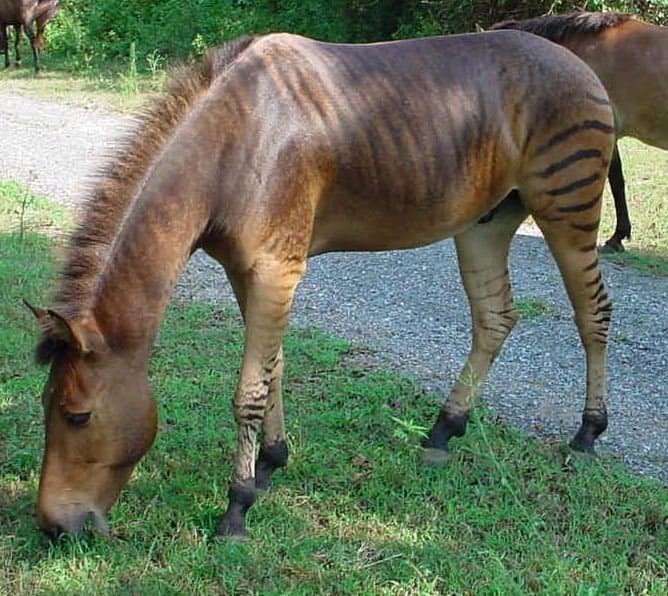
The pattern of the Zorse’s stripes is unique to each animal.
©Kumana / Creative Commons – Original
The Zorse is a cross between a Zebra stallion and a domestic mare, but it is also possible to use a Zebra mare and a domestic stallion. This is not that common, however, because owners of valuable Zebra mares don’t want to waste a year of their breeding life trying to produce a hybrid when they could be producing a Zebra foal instead. In Africa, Zebras and Horses are often crossbred to create Zorses that are used as trekking animals to transport both people and goods up and down the mountains. As with their Zebra father, the pattern of the Zorse’s bold stripes is unique to each animal (much like the fingerprint of Humans), meaning that they can be easily distinguished from one another, and if they were found naturally in the wild it could give them some form of camouflage into their surrounding environment.
Relationship with Humans
The Zorse was originally bred in England and Africa to try and produce a domestic Horse-like animal that was resistant to diseases spread by the Tse Tse Fly in Africa (Zebras have a natural resistance where domestic Donkeys and Horses do not). The experimental crosses were actually becoming popular until early in the 20th century when the ever-improving car industry meant that fewer and fewer people were using Horses for transport. At that point crossbreeding was largely abandoned until a revival of interest came in the early 1990s, with just about every breed of domestic horse imaginable being tried. Zorses are bred and kept today for riding, as work animals, and as attractions in zoos and animal institutes around the world.
Conservation Status and Life Today
Due to the fact that the Zorse is a crossbred animal and that it cannot continue a population, it is not listed by the IUCN. The three Zebra species, though, are all listed, with the Plains Zebra as Least Concern, the Mountain Zebra as Vulnerable, and the Grevy’s Zebra as Endangered. The Przewalski’s Horse, which is the only species of wild Horse remaining, is actually Critically Endangered with populations falling so low that reintroduction schemes began reintroducing captive individuals back into their natural environment.
Zorse Pictures
View all of our Zorse pictures in the gallery.

Oliver - Public Domain
Sources
- David Burnie, Dorling Kindersley (2011) Animal, The Definitive Visual Guide To The World's Wildlife / Accessed September 15, 2009
- Tom Jackson, Lorenz Books (2007) The World Encyclopedia Of Animals / Accessed September 15, 2009
- David Burnie, Kingfisher (2011) The Kingfisher Animal Encyclopedia / Accessed September 15, 2009
- Richard Mackay, University of California Press (2009) The Atlas Of Endangered Species / Accessed September 15, 2009
- David Burnie, Dorling Kindersley (2008) Illustrated Encyclopedia Of Animals / Accessed September 15, 2009
- Dorling Kindersley (2006) Dorling Kindersley Encyclopedia Of Animals / Accessed September 15, 2009
- David W. Macdonald, Oxford University Press (2010) The Encyclopedia Of Mammals / Accessed September 15, 2009
- Zorse Appearance / Accessed September 15, 2009
- Zorse Information / Accessed September 15, 2009
- Zorse Profile / Accessed September 15, 2009