


Quick Take
- The anhinga is a water bird with a fatal flaw that actually makes it a deadlier hunter, and this surprising advantage has everything to do with its feathers. See the hunting advantage →
- Anhinga males build their nests before finding a mate, and the reason behind this behavior reveals something unexpected about how they compete for one. Explore nest-building behavior →
- Crocodiles and alligators hunt anhingas, but there's one specific moment when the bird is almost completely safe from attack. See when anhingas are safe →
- The anhinga goes by three completely different nicknames, and each one hints at a different bizarre feature of the same bird. Discover the three nicknames →
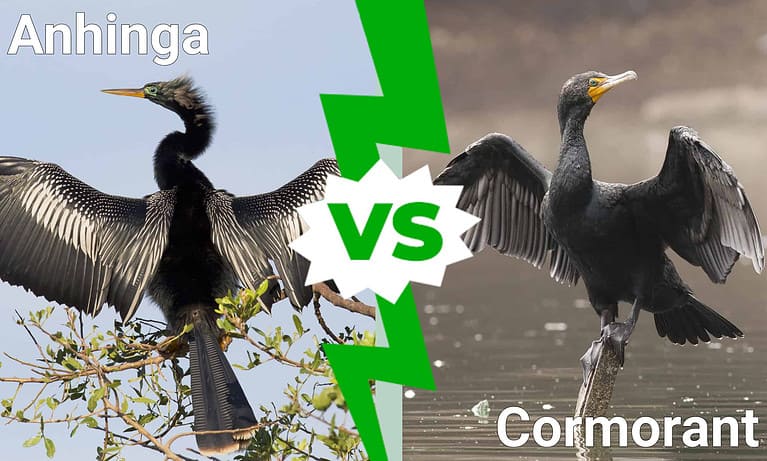
The anhinga is a type of water bird known for its snake-hunting abilities. Some of its other names are snakebird, American darter, or water turkey — all of which refer to some aspect of its unique personality and appearance. Anhingas are often mistaken for cormorants due to their similar appearance. Because of their ability to thrive in a variety of areas, they’re known to represent adaptability.

Where to Find Anhingas
The best place to find them is in South America. They can be found year-round in all of Brazil, French Guiana, Suriname, and Guyana, as well as occasionally in some of the surrounding countries such as Peru, Venezuela, Colombia, and Argentina. Further north, year-round populations can be found along the coastal areas of Mexico and the southeastern United States. In the United States, the best place to find an anhinga any time of the year is in Florida. You can, however, find them further north into Texas and coastal Georgia during their summer breeding months.
When you’re setting out to find one, it’s best to look around freshwater sources. Anhingas prefer shallow, slow-moving water, such as in marshes. Here, you can find them swimming or sunbathing. They are also seen flying occasionally.
Anhinga Nests
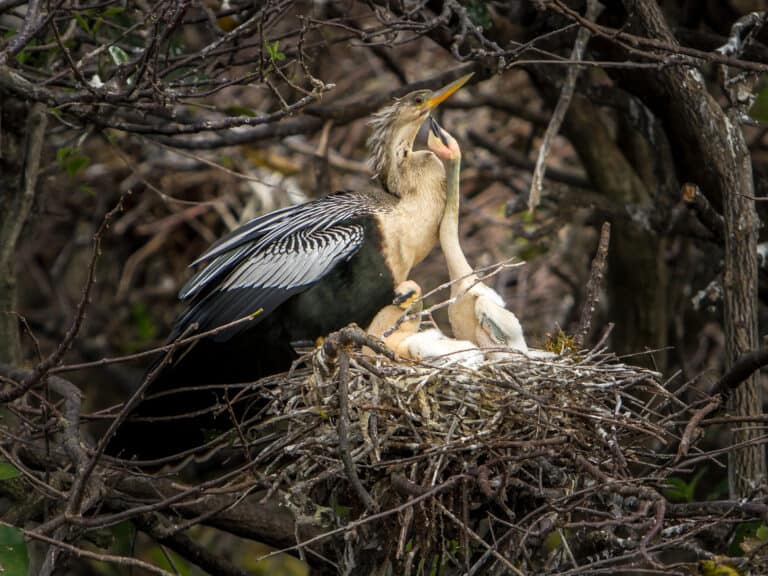
You’ll be surprised to learn that they are actually colony-based birds. They often nest in groups of pairs, which can sometimes include hundreds of individuals. Not only will they nest around other anhingas, but they’ve also been known to nest around other types of colonial birds, like waterfowl.
Males build their nests even before they have a mate. Typically, these nests are in trees that are close to the water, or even hanging over the water. The base of the nest is compact and made of sticks. However, they line it with softer materials, such as leaves, twigs, and cattails. If the nest has been used for a while, its exterior may have a white coating from their waste.
Anhinga Scientific Name
The anhinga’s scientific name is Anhinga anhinga. There are two subspecies: A. a. anhinga and A. a. leucogaster. Its class is Aves, as with many other birds, and it belongs to the family of Anhingidae.
Anhinga Size, Appearance, & Behavior
The anhinga is a rather large bird. They have a length of around 35 inches, and they weigh up to three pounds. Their wingspan is around 3.7 feet. A. a. anhinga is larger than A. a. leucogaster, though both subspecies have similar average sizes.
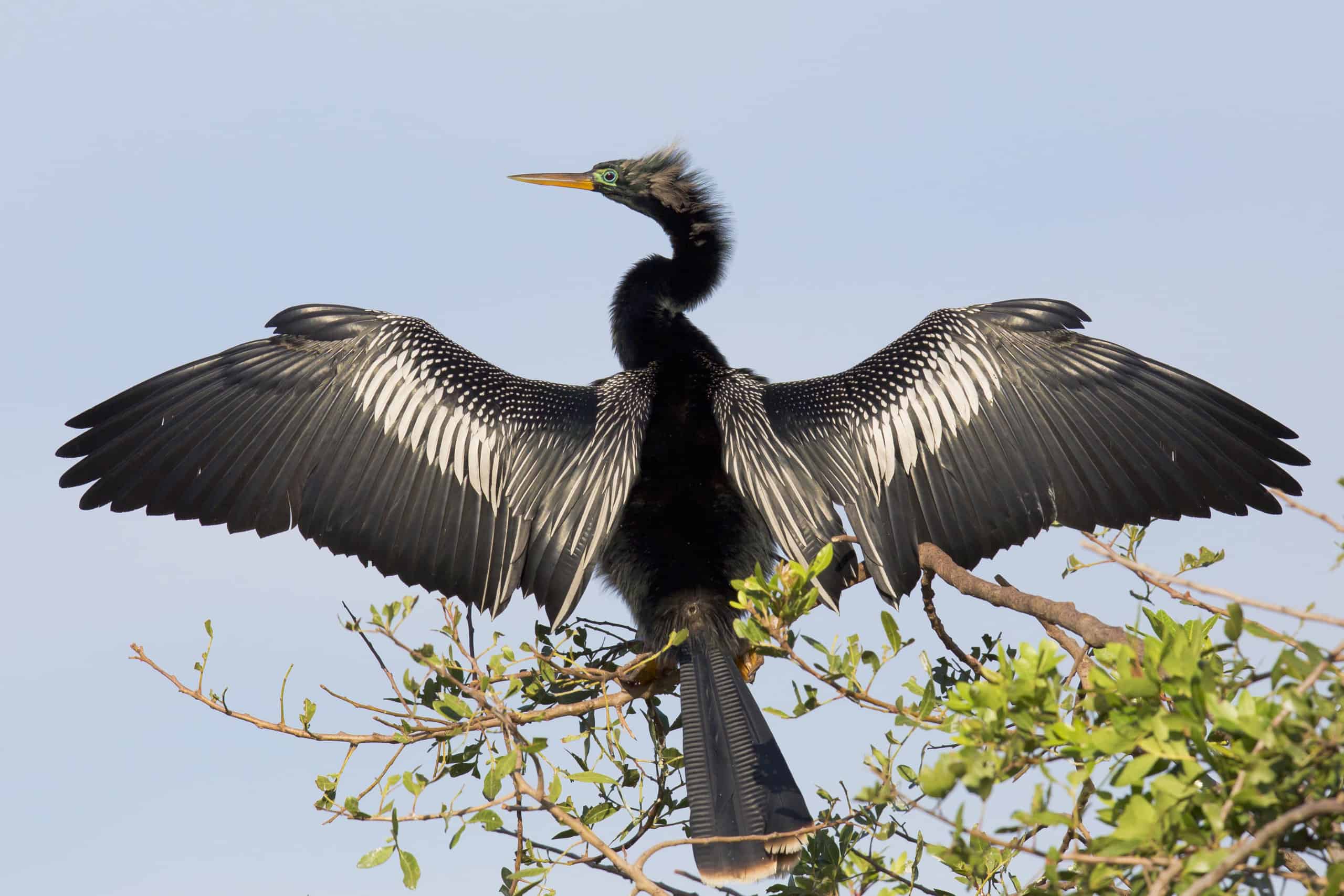
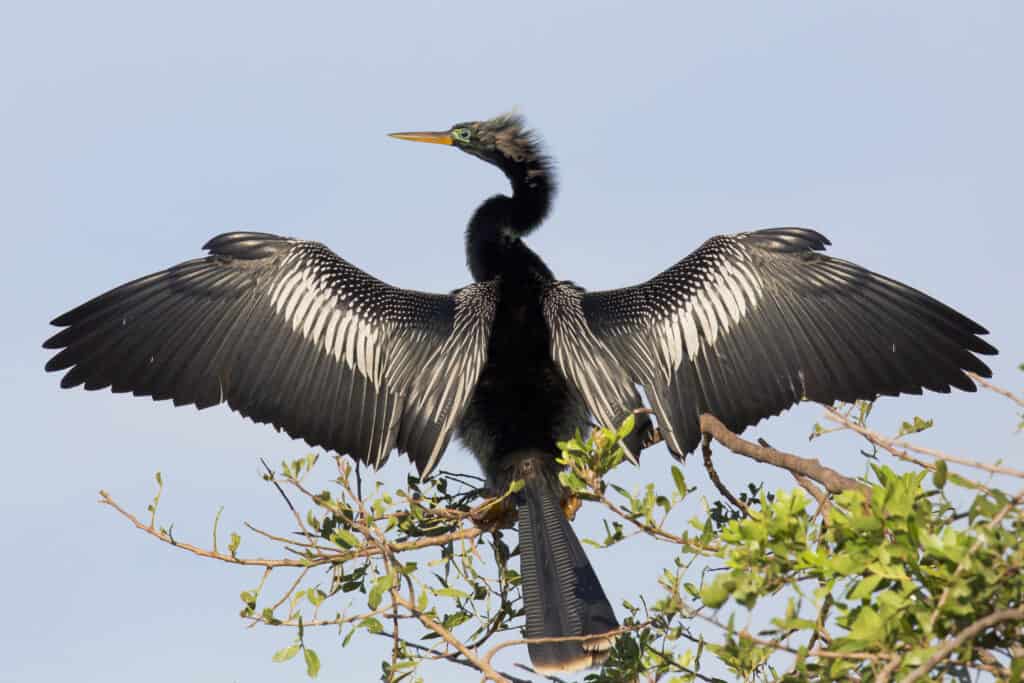
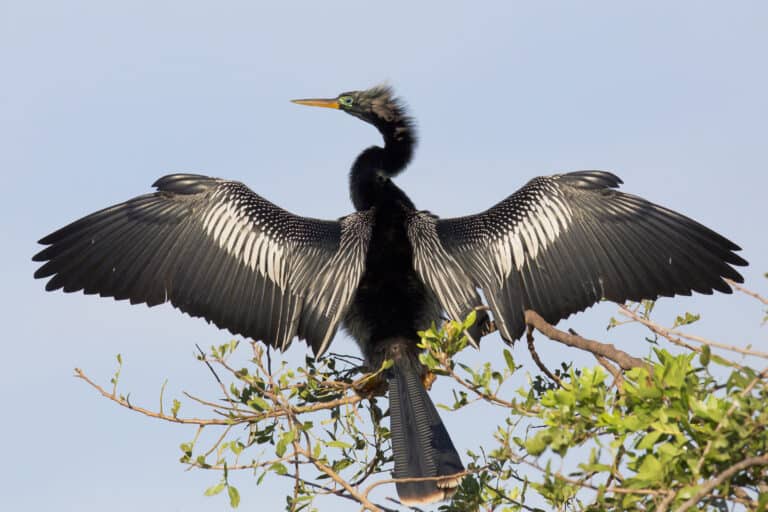
Anhingas have many notable features. First, they have a large bill that can be twice as long as their head. It comes to a sharp point that helps them to hunt, and it can easily be seen thanks to its yellow color. As water birds, they also have yellow webbed feet.
They display sexual dimorphism, which means males and females look different. Males are a glossy black with blue and green hues, much like a crow or raven. In certain areas, such as the base of their wings and tails, there is less of a green hue. The upper body and neck have white streaks, which may have a purple hue. Females are similar, but have a lighter, buff or tan neck and head, while the rest of their body is similar to the male’s. Hatchlings’ first set of down is brown. It is replaced by a second white down before turning into brown feathers. As they reach maturity, they will develop the right colors depending on whether they are male or female.
The anhinga is named for its long, snake-like neck. However, it has also garnered common names referring to its wide, fanned tail that resembles that of a turkey.
Migration Pattern and Timing
Migration is not common in anhingas. This is because a majority of the population is situated in year-round areas. However, during their breeding season, they may travel further north into the United States. This means that, rather than being found only around the coasts, they can be found deeper into Central Texas and along the southeastern coast in Georgia.
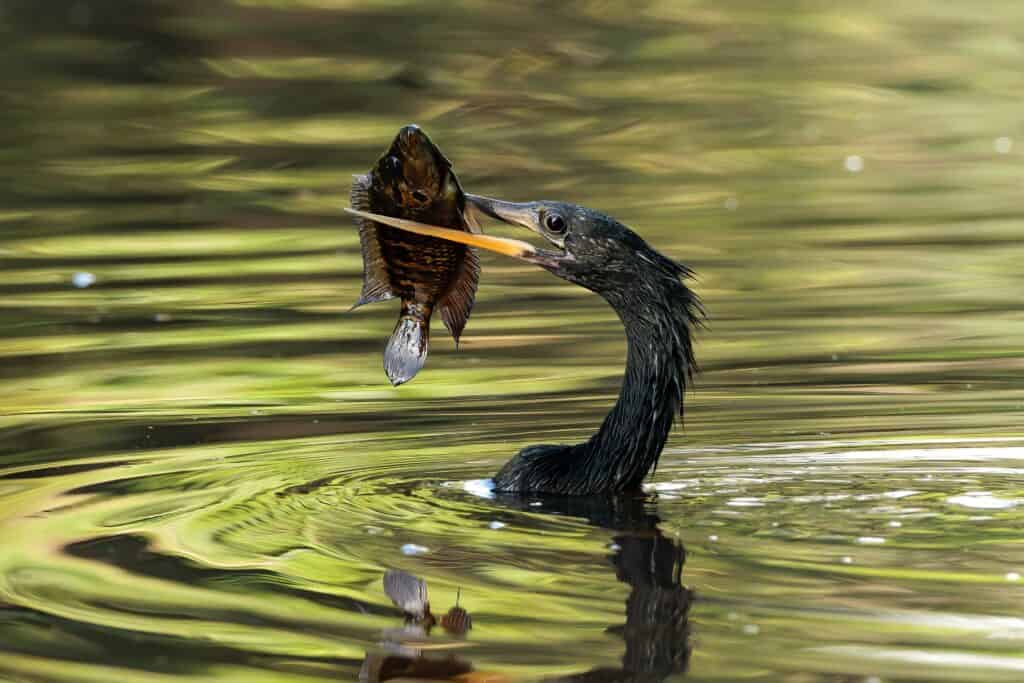
They don’t have waterproof feathers. This allows them to fully submerge themselves underwater to hunt.
©Jean-Baptiste Toussaint/Shutterstock.com
Anhinga Diet
The anhinga is different than most water birds. It has dense bones and no waterproof coating on its feathers. This allows them to fully submerge in water and dive for their prey.
What do anhingas eat?
Anhingas eat most of the common prey found in their choice of water sources. This includes snakes, crawfish, catfish, black bass, mullets, sunfish, crabs, shrimp, and tadpoles.
Anhinga Predators and Threats
The anhinga is considered to be a species of least concern. However, their population was last assessed in 2016 and was determined to be declining.
There are two main non-natural threats currently impacting the anhinga population in the western hemisphere. This includes loss of resources and pollution. Urbanization and overfishing have greatly reduced the food and space available to the anhinga, while pollution can cause illness in the ecosystems where they live.
Some natural predators also pose a risk for anhingas.
What eats anhingas?
As large predatory birds, there are not many predators of the anhinga. For the young, they are at risk of other large birds, especially hawks. However, anhingas at all stages of life are preyed on by crocodiles and alligators.
While the parents are away hunting, hawks can easily swoop into the nest and steal away young anhingas. For those hanging over the water, alligators and crocodiles may be able to jump up and capture the young as prey. Adults are also at risk of being attacked by large reptiles. This most often occurs while they are submerged in the water and hunting. Due to their neutral buoyancy and dense bones, anhingas cannot float for long on top of the water. As a result, attacks rarely occur on the surface.
Anhinga Reproduction, Babies, and Lifespan
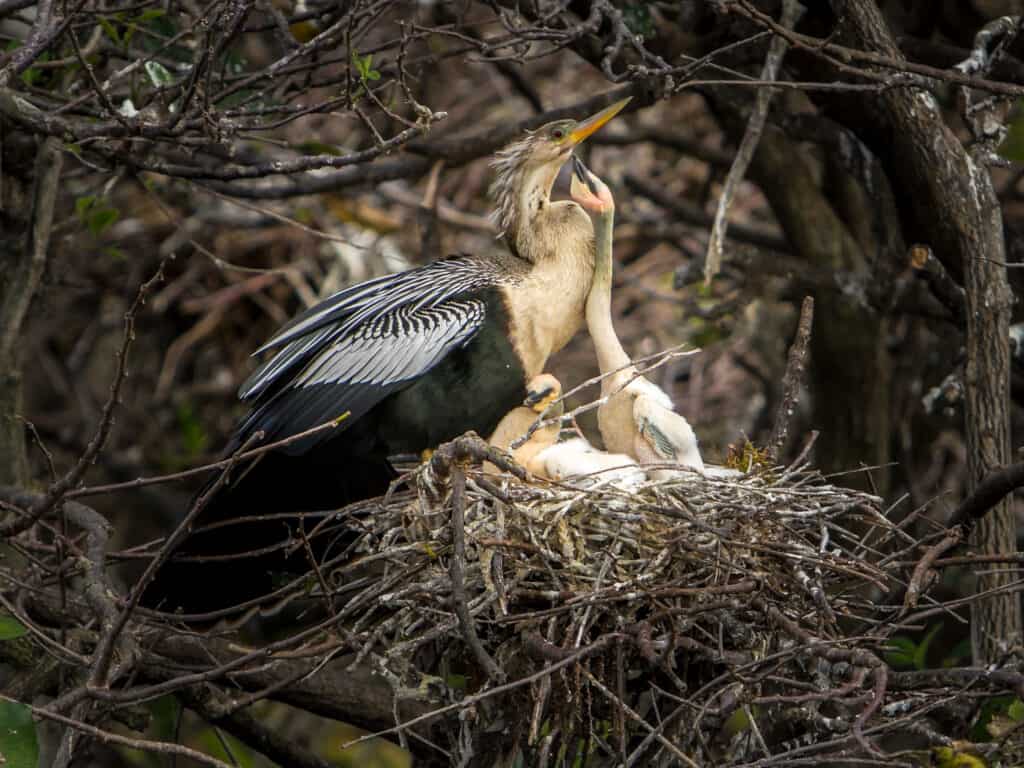
They often nest in groups of pairs, which can sometimes include hundreds of individuals.
©Bob Pool/Shutterstock.com
Anhingas lay anywhere from 2 to 6 eggs per clutch. Their eggs are pointed on one end and have a greenish-blue hue. The eggs are longer than they are wide, with the largest of eggs measuring around 2 inches long and 1.5 inches wide.
The incubation period for anhingas is around 26 to 30 days. After this, the hatchlings emerge and are completely dependent on their parents. They begin to grow their down and feathers, and, at three weeks, they can gain mobility and move around the inside and outside of the nest. They become fledglings at around six weeks old.
However, even after fledging, young anhingas won’t leave the nest for several more weeks. They reach sexual maturity at around two years of age, at which time they will begin to construct their own nests and lay eggs.
Anhingas are monogamous and will mate for life. The oldest anhinga ever was 12 years old.
Anhinga Population
Although past assessments have shown the anhinga population to be of the least concern, there are no exact numbers of individuals. It is estimated that there are as many as two million individuals. However, due to the impact of the loss of habitat, their population is considered to be in decline.
Anhinga Pictures
View all of our Anhinga pictures in the gallery.

Sources
- IUCN / Accessed November 8, 2022