













Quick Take
- Most people assume snakes came first and lizards evolved from them, but the actual evolutionary relationship is the opposite, and it changes how we understand both creatures.
- That bearded dragon sitting in someone's living room shares a disturbing trait with one of North America's most feared venomous snakes.
- One lizard species was declared extinct, but something happened in 1990 that forced scientists to rewrite the story entirely.
- A lizard's sex isn't determined by genetics alone. Something in its environment during incubation makes the call instead.
There are more than 7,000 distinct lizard species in the world, and the number is constantly being revised upward. While one might assume that limbed lizards descended from limbless snakes, the opposite is true: lizards are the forebears of snakes, not the other way around. Some form of this reptile is found on every continent of the world except for Antarctica.

6 Incredible Lizard Facts
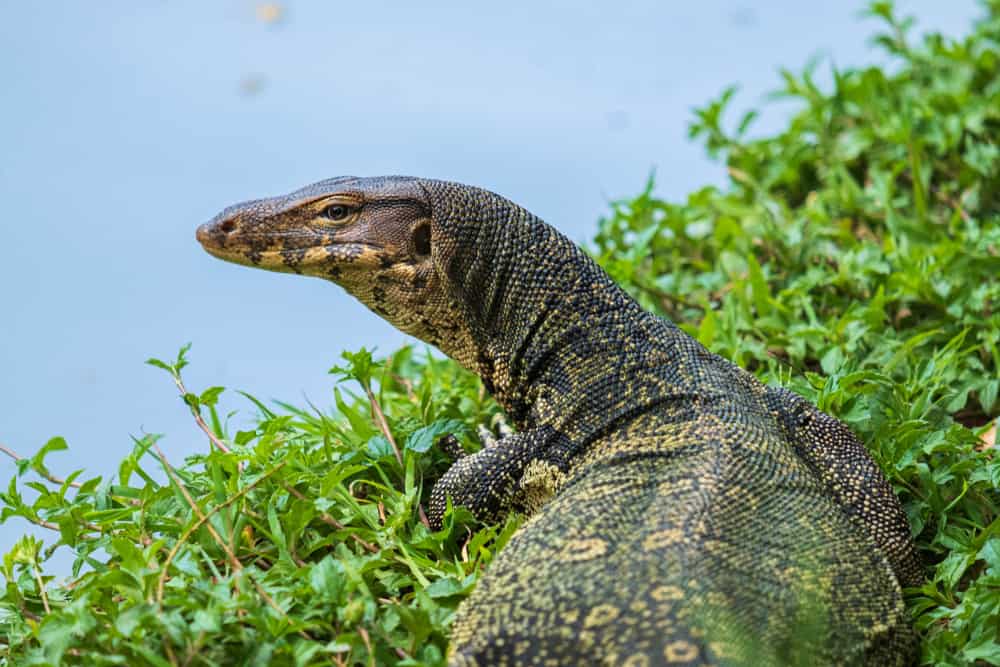
These reptiles are ectothermic, which means that their body temperature is not fixed as in mammals but is dependent on environmental conditions.
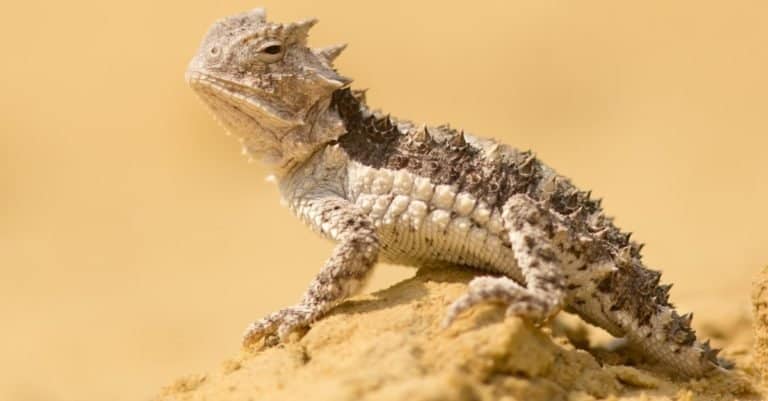
©Ruben PH/Shutterstock.com
- Adult lizards range in length from the 1.6 cm (0.6 inches) of the smallest geckos to the 3 meters (10 feet) of the monitor lizards and weigh anywhere from less than ½ gram (0.02 ounce) to 166 kg (365 pounds).
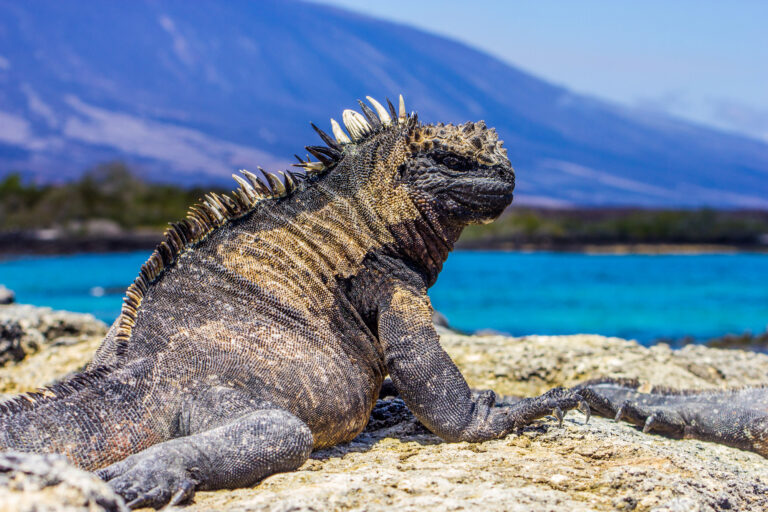
- With the sole exception of the Marine Iguana of the Galapagos Islands, all lizard species lack the ability to live and forage at sea. Even the Marine Iguana spends much of its time sunning itself on rocks.
- Among those of the venomous lizard classification, the Gila Monster of the Southwestern United States and the northwestern Mexican state of Sonora, and the Beaded Lizard, found from southern Sonora, Mexico, to Guatemala, are the most widely known. Some species of monitor lizards also possess various degrees of toxic venom.
- Several species possess the ability to voluntarily detach their tails, used primarily as a way of distracting predators, and then regenerate them at a later date.
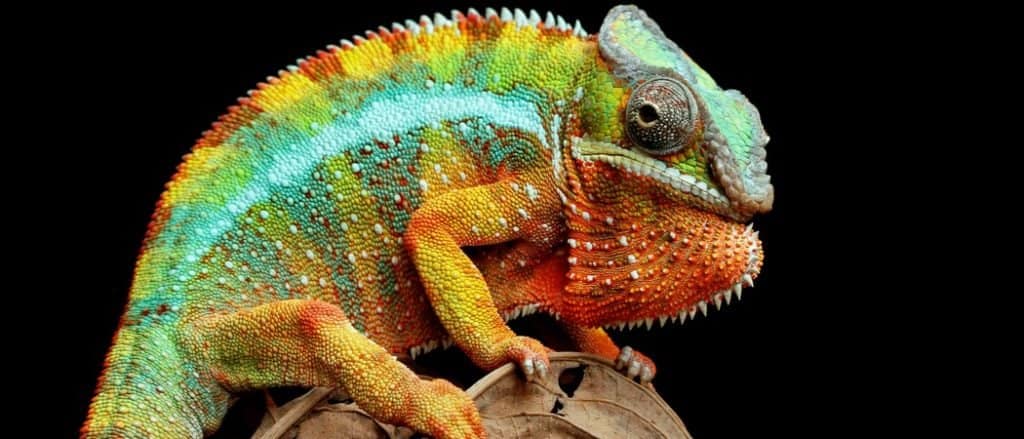
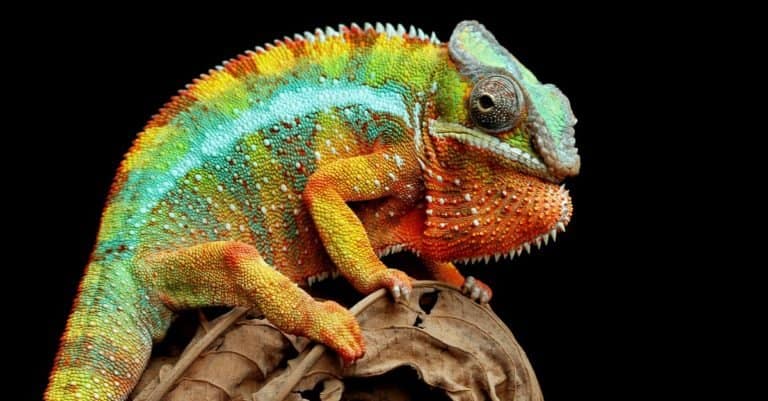
- A number of species can change color to camouflage themselves from predators or blend in with their surroundings to trap their own prey.
- As a general classification, these reptiles are ectothermic, which means that their body temperature is not fixed as in mammals but is dependent on the environmental conditions around them. Lizards all have ranges of ideal body temperatures where they function with maximum efficiency and are much less active when they cannot attain the proper degree of internal body heat.
Origin and Evolution of Lizards
Until the 13th century, lizards were categorized under the broad umbrella of reptiles, which included snakes, amphibians, and worms that laid eggs. In the early nineteenth century, James Macartney used the term Sauria, adapted from Sauriens, which was coined by Alexandre Brongniart to describe a class of reptiles that were essentially lizards and crocodiles.
Although the term may be new, the origin of lizards is not. The earliest known lizard fossil, Tikiguania, belonging to the iguanian species, was found in the Tiki Formation in India. However, there is doubt about the age of the fossil since it resembles modern-day agamid lizards.
They are related to Rhynchocephalia, a distinct reptile lineage whose only living species is the tuatara found in New Zealand.
Classification and Scientific Name
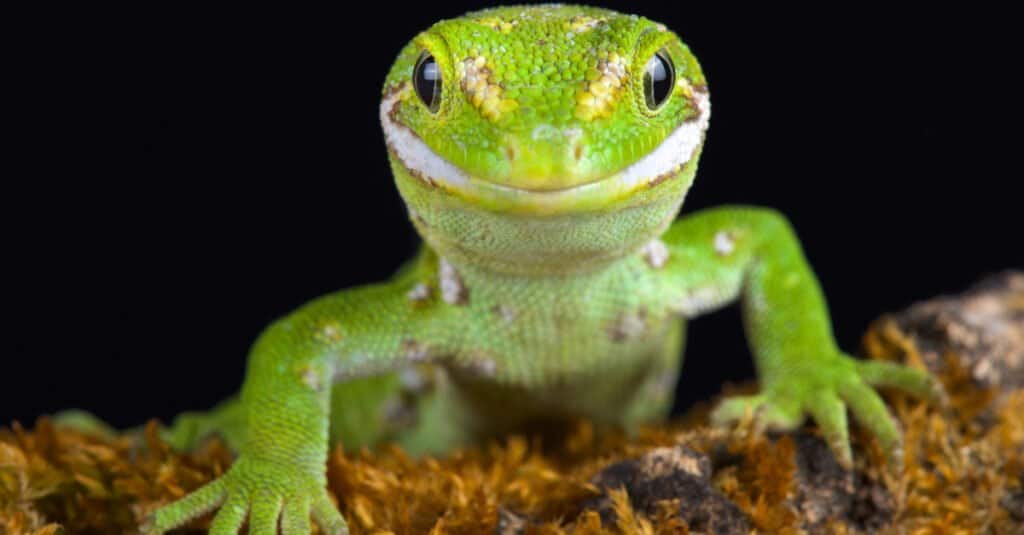
Lizards are reptiles of the order Squamata, which comes from the Latin ‘squamatus’, meaning scaly or having scales.
©reptiles4all/Shutterstock.com
Lizards are reptiles of the order Squamata, which comes from the Latin ‘squamatus’, meaning scaly or having scales. There are three suborders of Squamata: snakes, amphisbaenians (worm lizards), and lizards. Together, the three suborders comprise nearly 11,000 species and represent the largest order of reptiles on the planet today.
Characteristics of Lizards
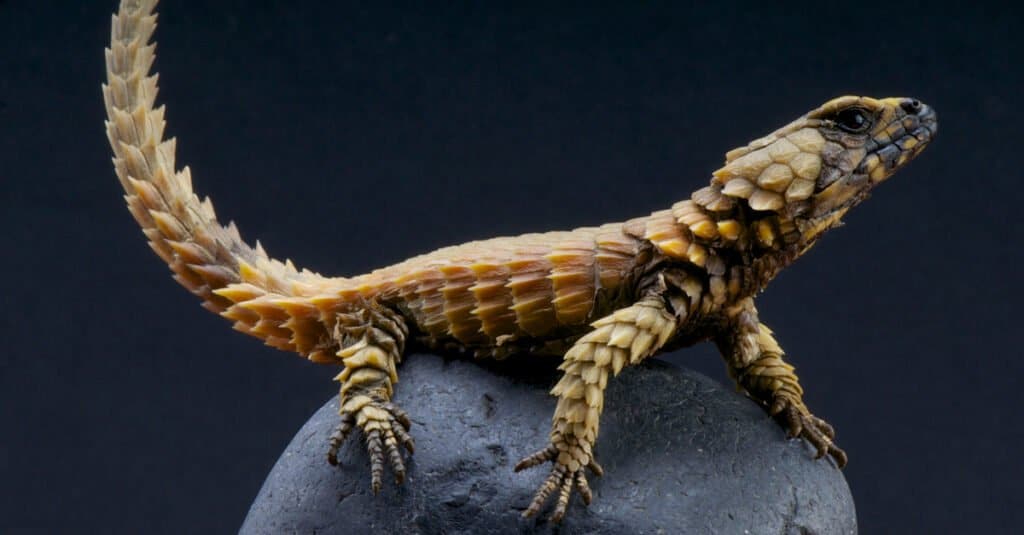
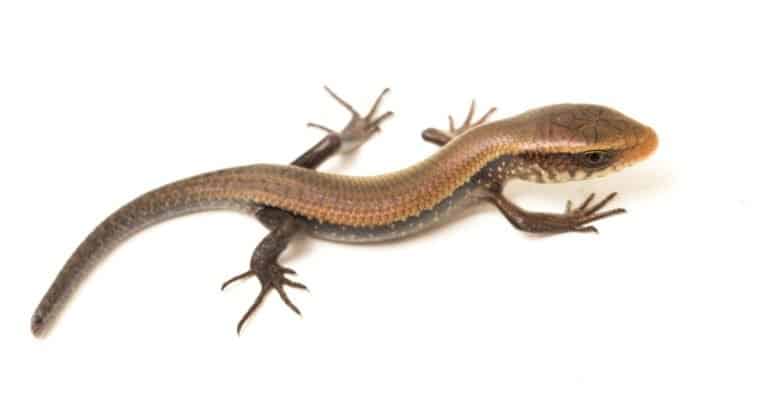
Lizards can range in size from less than an inch to 10 feet in length and have incredibly varied appearances.
©reptiles4all/Shutterstock.com
Scales and Appearance
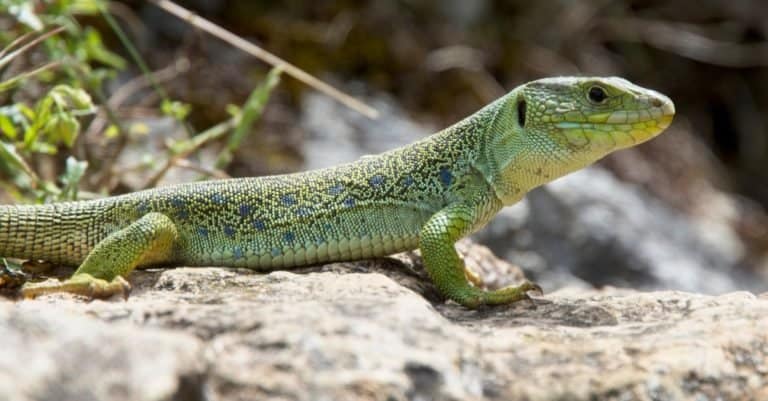
As their presence in order Squamata makes clear, the primary characteristic of these reptiles is their scaly skin. The scales themselves, made of keratin, act as an armor to seal in water that would otherwise evaporate and protect them from varied environments, such as dry deserts.
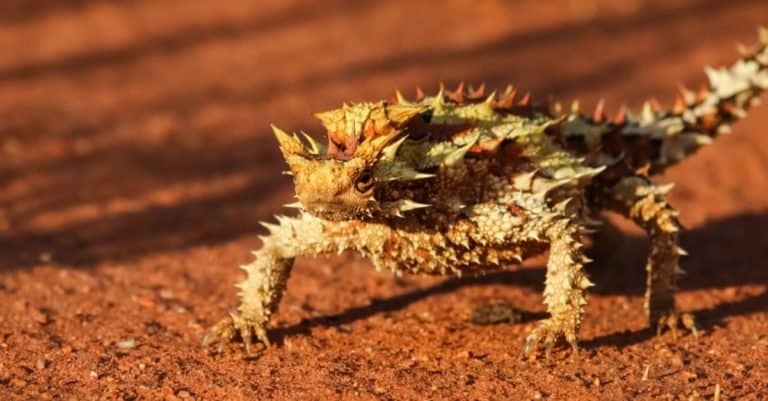
The scales can come in a variety of structures, such as plate-like, smooth and overlapping, and ossified. As a lizard grows, it will shed its tough skin in pieces. Some lizards have spiny scales that protect them from predators.
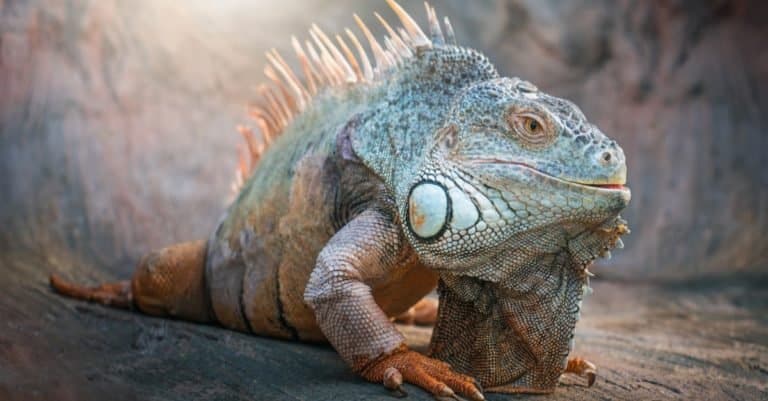
With some exceptions, lizards have four legs, long tails, external ear openings, and movable eyelids. Their bodies are rounded, their necks short, and their heads are elevated. A notable feature of this reptile, as well as all the other members of the order Squamata, is the ability to open both its upper and lower jaws. This allows them to swallow much larger prey than is possible among those animals with just a movable lower jaw.
The popular image of a lizard as a low-slung creature that either writhes slowly or scampers quickly along close to the ground only applies to a limited number of lizard species. Among the thousands of variants, there are also lizards with long hind legs that run as bipeds, others that glide with skin flaps extended as rudimentary wings, and even other species that have no limbs and move in the same manner as a snake.
Males often display various types of ornamentation, such as permanent horns and crests, as well as features of a temporarily deployable nature, such as large mane-like frills and crests that are designed to attract females or to frighten away predators by making the animal appear much larger and more threatening than it truly is.
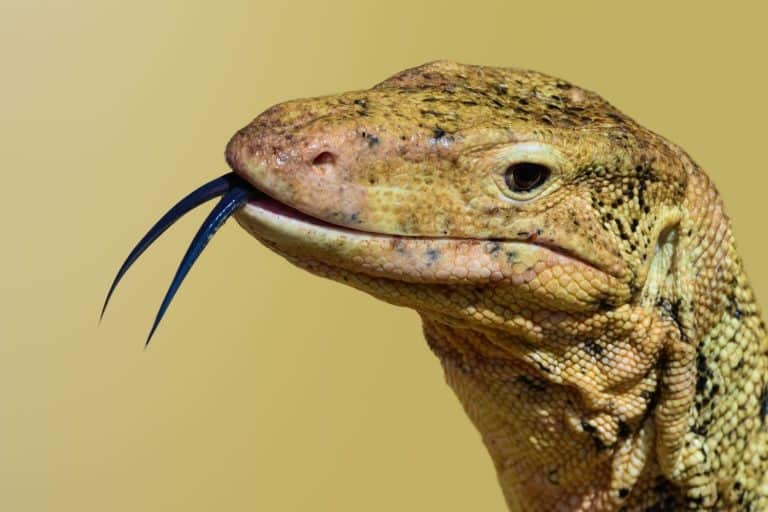
Long tongues are seen in many species. Some of these are intended for use as sensory probes employed in hunting, while other limited numbers of species that do not have eyelids use their lengthy tongues as something similar to a windshield wiper for their eyes.
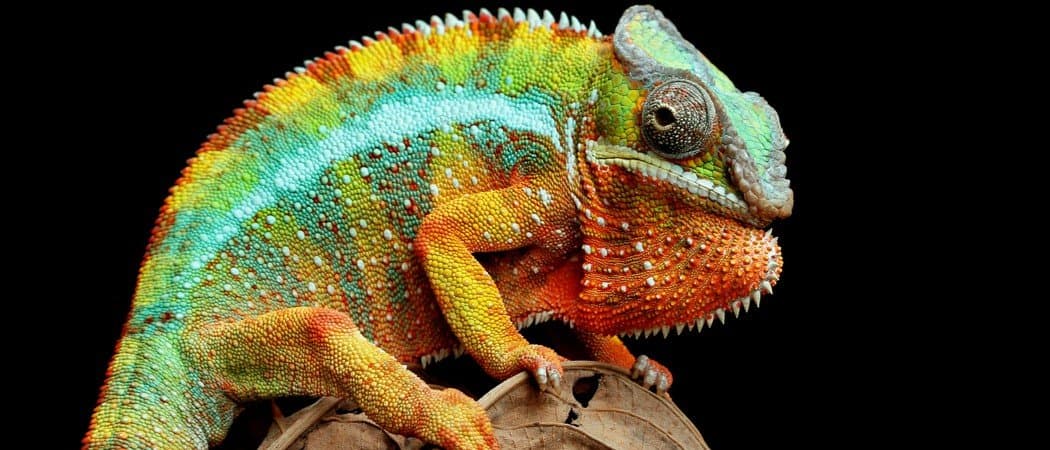
In general, lizards have very good eyesight. Of all lizard species, chameleons have some of the most developed eyesight. They can see in a 360-degree field of vision and also in a wide range of colors and into the UV spectrum.
These reptiles come in many different colors, including species with bands of color, species with a tail of a different color when they are young, and several species that are capable of changing their color to better blend in with their surroundings.
This last attribute, best known in the chameleon, is both an offensive and defensive attribute. It allows the lizard to evade predators and also to disguise itself so that prey can be lured within striking range.
Venom
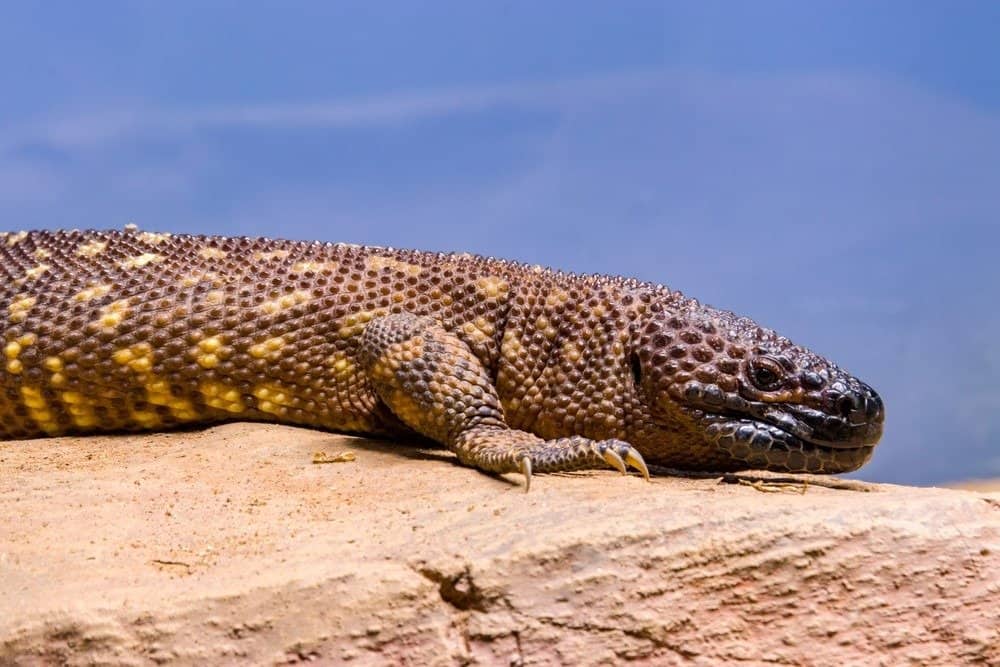
The Mexican beaded lizard is one of the two species of venomous beaded lizards found principally in Mexico and southern Guatemala.
©Danny Ye/Shutterstock.com
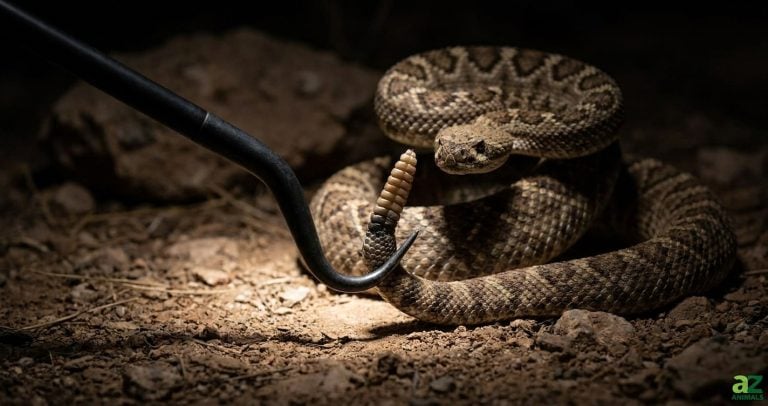
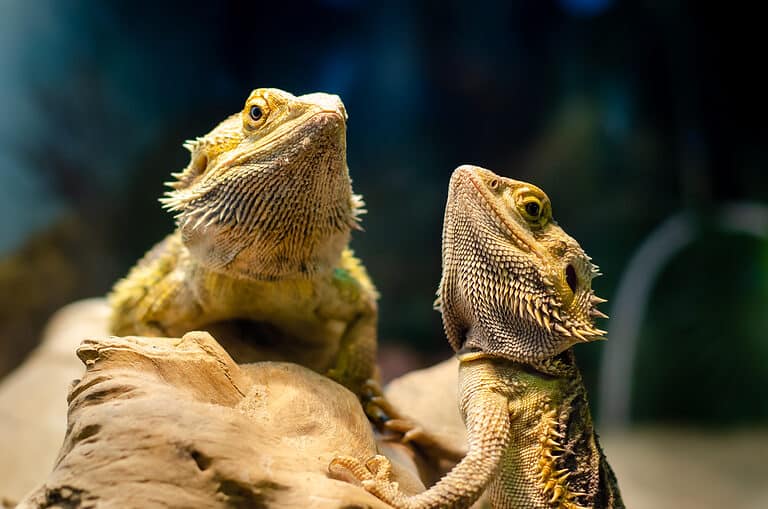
Some lizards produce venom in their oral glands. Nine different toxins that are produced by snakes can also be found in lizards. One example is the toxins found in rattlesnake venom — the same toxins are present in the venom of a bearded dragon, which is a popular pet among lizard enthusiasts. Other venomous lizards include the Komodo dragon, Gila monster, Mexican beaded lizard, iguana, and lace monitor.
Scientists originally thought that the harmful bacteria in the saliva in the mouths of some lizards gave them their toxicity, but recent studies have put more lizards in the category “venomous” than before.
Lizard venom is not as dangerous to humans as it is to animals that fall victim to a toxic lizard’s bite. Symptoms can include a sudden drop in blood pressure, loss of consciousness, hemorrhaging, kidney failure, nerve failure, and muscle breakdown, leading to the animal’s death.
Behavior
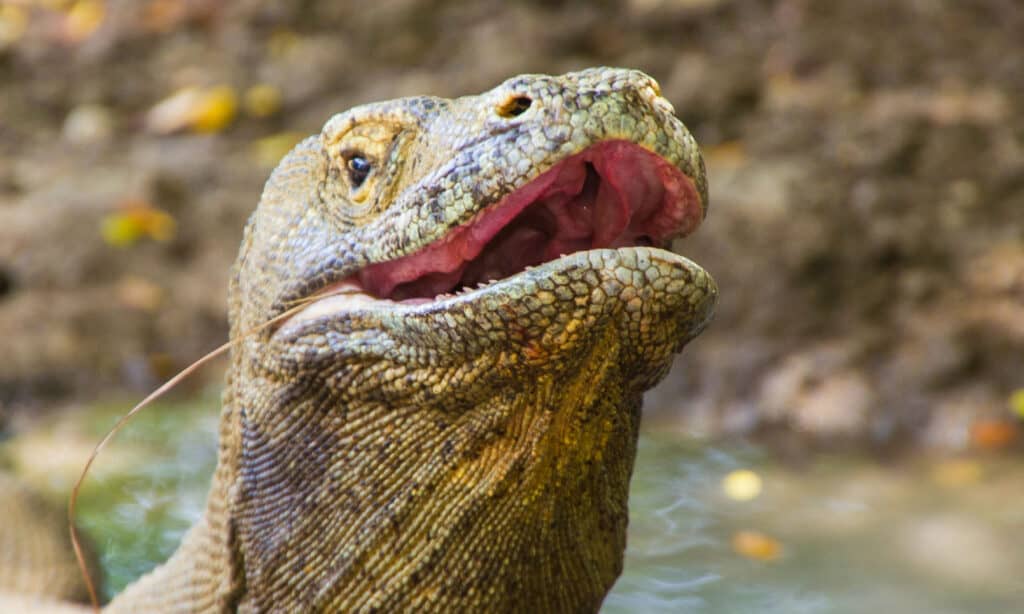
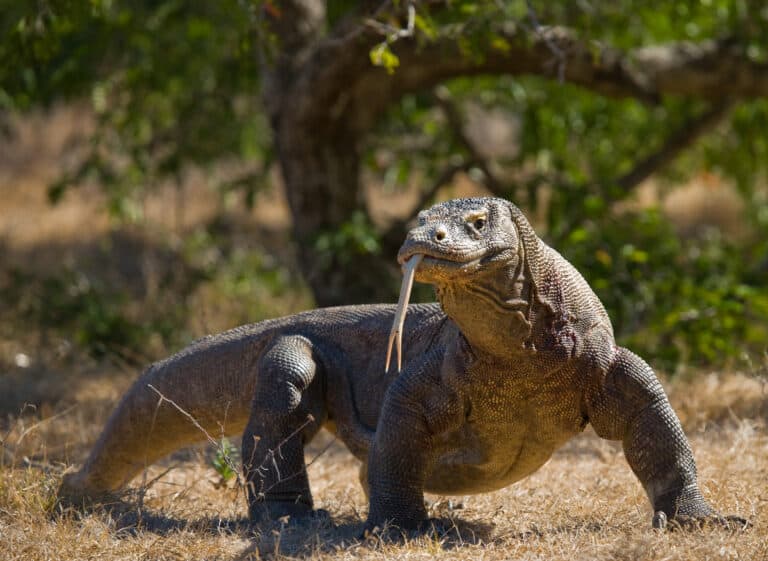
The Komodo dragon is one of the largest lizards in the world today.
©vladivlad/Shutterstock.com
Although there are species that are plant-eaters at least in part, they are primarily predators who feed upon insects and other small creatures. Yet the largest lizard species, the Komodo Dragon of Indonesia, has been known to bring down and feed upon very large creatures such as water buffalo.
Characteristically, these lizards are generally classified as “sit and wait” hunters. This means that they take up station at a favorable place and then wait for their prey to come to them. Once a prospective victim comes within reach, they will either leap out and snap at it with their open jaws or use their long tongues to seize it and bring it into their mouth.
Beyond serving as a mating display, lizards usually bob their heads to look more intimidating to prey and predators. Males lead solitary lives and defend their chosen territorial hunting ranges from other males. Females can range freely but are often found in groups living in proximity to a dominant male.
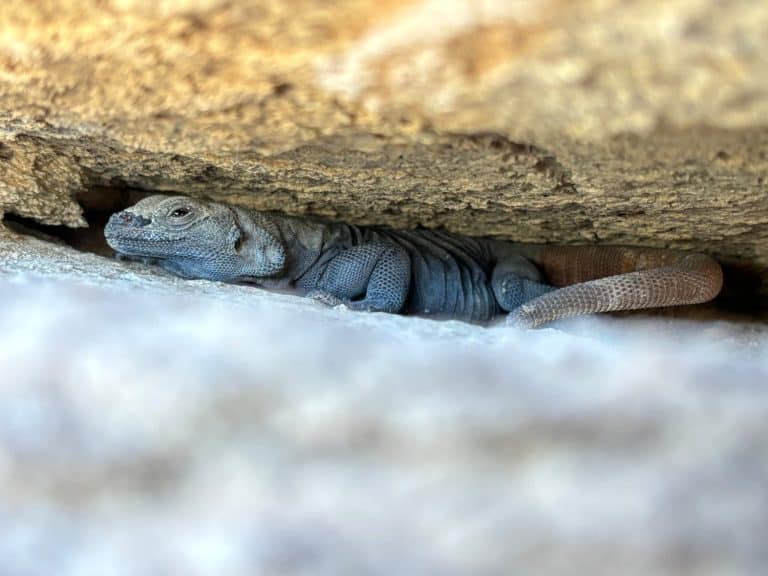
Due to their ectothermic nature, lizards are well known for sunning themselves in warm areas. This raises their body temperature towards the optimum level and allows them to perform functions such as hunting, mating, or fighting at full capacity. These reptiles prefer to live in places that are easily defensible, such as holes or rock crevices.
Their scaly skin allows scant evaporation, so lizards require very little water apart from the moisture they glean from their food or even from the licked-off dew accumulating on their own bodies. This makes them ideally suited for the desert conditions where many lizard species are found.
Largest and Smallest Lizards
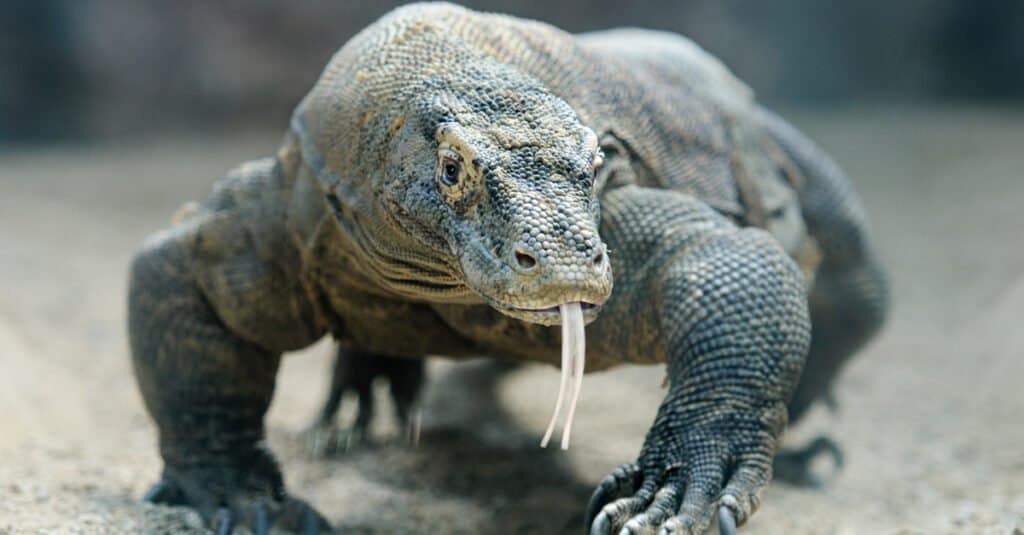
The Komodo dragon is the largest lizard in the world.
©Anna Kucherova/Shutterstock.com
The largest lizard species in the world is the Komodo dragon, which can measure 10 feet in length. The largest Komodo dragon on record weighed approximately 166 kilograms (365–366 pounds). Most of the largest lizard species are monitor lizards, but some iguana species can grow to be quite large as well. Blue iguanas weigh around 31 pounds and reach 5 feet in length.
On the other end of the spectrum, the smallest lizard is the nano chameleon, which measures less than an inch and lives in a small area of Madagascar. Incredibly, scientists first classified the nano chameleon as a species in 2021.
There are several extremely small chameleons on the northern end of Madagascar. It’s believed they shrank as an adaptation to habitat loss.
Types Of Lizards
While it would be impossible to provide an inclusive list of species everywhere, here are a few examples of the types of lizards that can be found in different parts of the globe.
Monitor Lizard
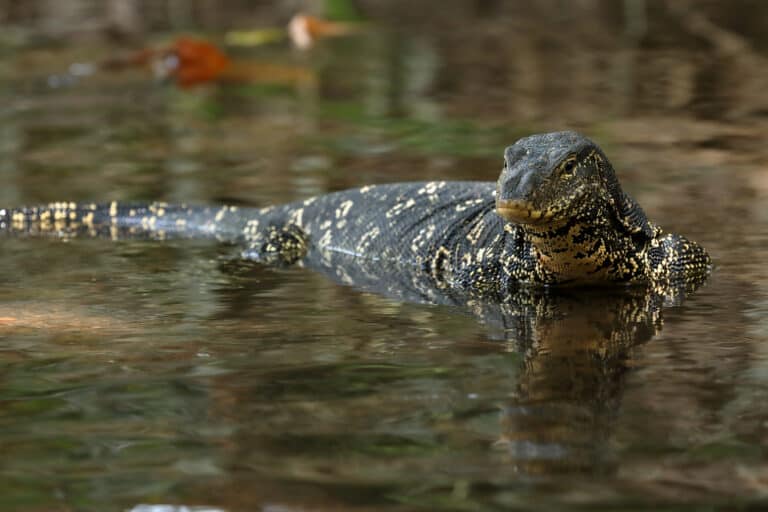
Found in Africa, Asia, and the island chains leading to and including Australia, there are more than 70 distinct species of monitor lizards. Monitors are the largest of the lizards and include the famous Komodo Dragon as well as such others as the Nile Monitor of Egypt and the Perentie of Australia.
Caiman Lizard
South America is home to the Caiman Lizard, which inhabits swampy lowlands and feeds primarily upon shelled creatures such as crayfish, freshwater clams, and snails. The Caiman lizard dumps these creatures into the back of its mouth, where its powerful jaws crush the shell of its prey. The broken shell is spat out, and the soft parts of the creature are swallowed.
Frilled Lizard
The famed Frilled Lizard is found in Australia and New Guinea. When in danger, the Frilled Lizard fans out the frill of skin that normally lies flat behind its neck and creates the illusion of a much larger and more menacing creature than it really is. It is also known for running on its hind legs with its tail and forelegs held in the air.
Armadillo Lizard
The unique Armadillo Lizard is from South Africa. When in danger, it curls up and presents an armored ball that foils predators. Its overlapping scales give the appearance of it being a very tiny dragon. In addition, the Armadillo lizard is one of the few social reptiles that live in groups rather than as solitary hunters.
Sand Lizard
Now protected from further habitat destruction, the UK’s rare Sand Lizard is found among sand dunes and on sandy outcroppings on the verge of heathlands. As with many other threatened species, increasing human population density is the primary cause of its decline.
Additionally, here is a list of other types of lizards:
- Iguanas
- Skink
- Mexican alligator lizard
- Spiny lizards
- Western fence lizard
- Bearded dragons
- Mexican beaded lizard
- Gila monster
- Chameleons
- Eastern collared lizard
- Plumed basilisk
- Basilisks
- Agamid lizards
- Leopard gecko
- Anoles
- Spiny-tailed lizards
- Glass lizards
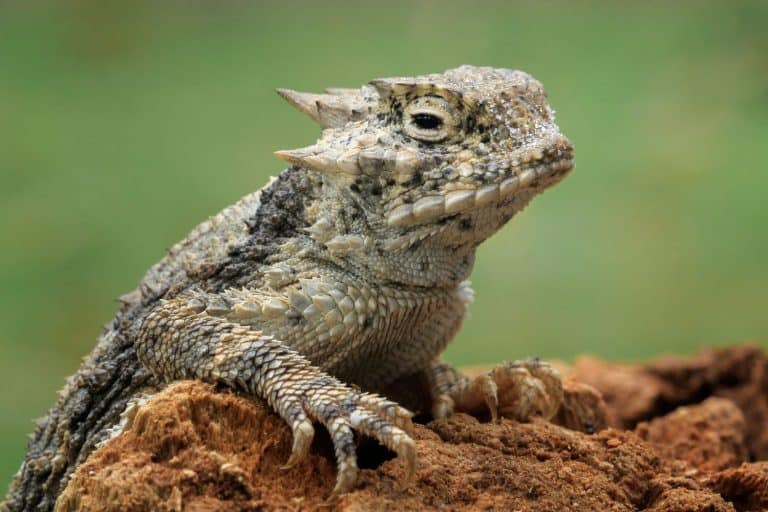
- Horned lizards
- Gerrhosauridae
- Green anole
- Tegus
- Thorny devil
- Iguanids
- Chinese water dragon
- Lacertidae
- Geckos
- Intellagama lesueurii
- Eastern fence lizard
- Sceloporus malachiticus
- Burton’s legless lizard
- Whiptails
- Giant girdled lizard
- Takydromus tachydromoides
- Mosasaurus
- Gekkota
- Crested gecko
- Mosasaurs
Habitat
These reptiles inhabit every continent on Earth except for Antarctica. Certain species have been found in far northern reaches above the Arctic Circle, and others at the inhospitable southern tip of South America.
With thousands of species on the planet, there are lizards adapted for virtually all environmental and climatic conditions. In regions where their food sources are abundant, such as in tropical jungles, they can attain very large sizes. In places of limited supplies, smaller species tend to predominate.
Some lizards prefer living in trees, while others inhabit open areas where large quantities of sunshine are readily obtainable. Most of these reptiles are daylight species, although there are a few night-specific lizards, such as the gecko and one species, the Galapagos Marine Iguana, which lives primarily in the ocean.
Diet
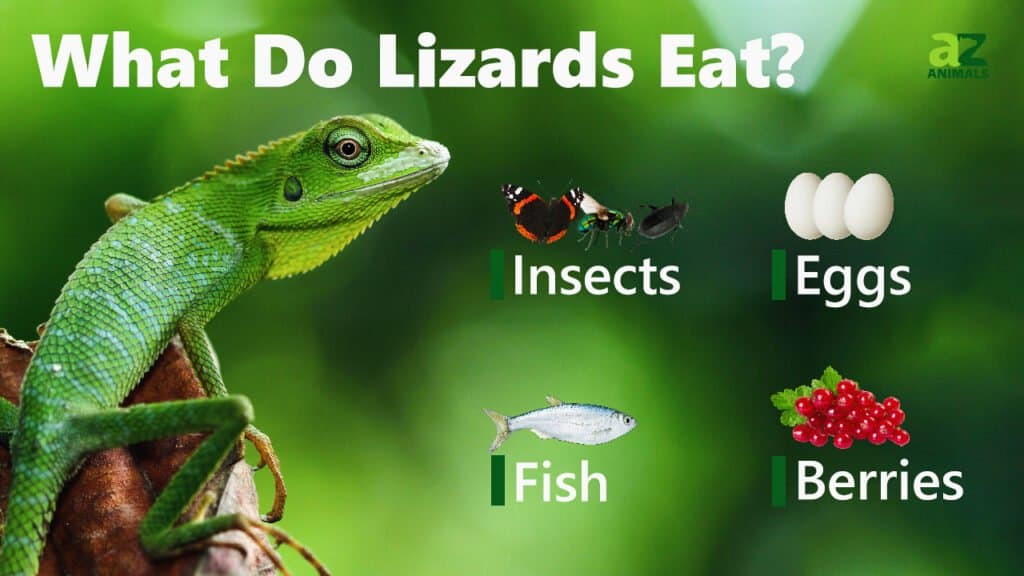
Lizards are largely predatory in nature and are often so-called “sit and wait” hunters who remain motionless until their prey comes within reach. At this point, they dart out and grab it in a surprise attack before it can escape.
What do lizards eat?
Most lizards are carnivorous and feed upon insects, ants, and other invertebrates. Larger lizard species feed upon small animals such as mice and other rodents, and snails. Still larger species, such as the monitor lizards, can prey upon much larger quarry such as frogs, birds, fish, larger mammals, and even snakes.
Around 2% of lizard species are primarily vegetarians as adults, although younger members will eat meat and then gradually adopt a vegan diet as they reach adulthood. Fruit is often eaten even by carnivorous species, and bird and reptile eggs are frequently sought by larger lizards.
Predators and Threats
In nature, animal species must balance their own need to feed against the need of other species to use them as a food source. Just as predatory lizards are always on the hunt, so too are other predators searching for them.
Human Predators
Humans are one of these reptiles’ biggest predators. Some see lizards as pests, so they constantly try to get rid of them, especially in residential environments. It’s advisable to get rid of lizards using humane methods instead of killing them, since some species are already endangered.
What eats lizards?
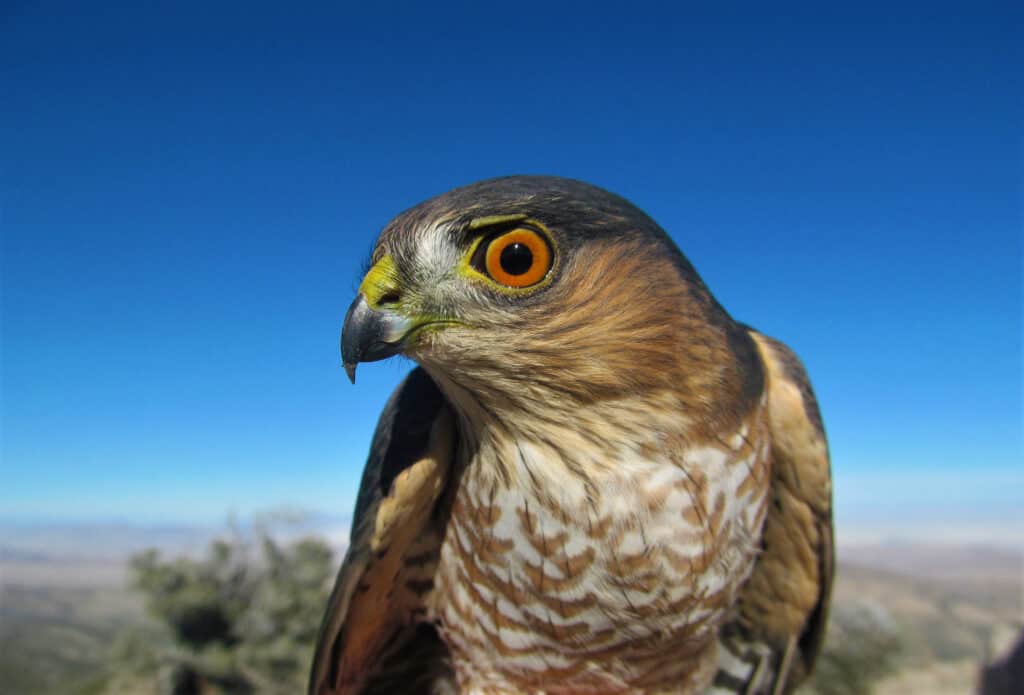
Large birds such as hawks are the primary threat to most lizard species.
©RJ Ridley/Shutterstock.com
Due to a lizard’s ability to move very swiftly when in danger, most lizard predators need to be fast-moving themselves.
Large birds such as hawks are the primary threat to most lizard species. Their keen eyesight allows them to detect movement from very far away. This leads to lizard defenses such as changing colors to match the terrain and remaining absolutely motionless in exposed locations.
Most canine and feline species, certainly including dogs and domestic cats, will eat lizards.
Although not dependent upon lizards as their primary food source, the swiftly striking mongoose is well-suited for hunting lizards.
Just as lizards eat snakes, so too do snakes return the favor and eat lizards. Larger lizards are also known to prey upon smaller species.
the regal jumping spider, weighing only 2 to 3 grams, has been known to capture lizards more than three times its own size.
Since lizard meat is considered a delicacy in some cultures, humans are the ultimate apex predator for lizards. This is particularly true of the iguana, which is prized for its meaty tail.
Environmental Threats
Since the vast array of species is generally engineered for life in a specific environmental zone and they are ectothermic, climate change can pose a serious threat to many species by either unfavorably altering the heat balance of the region or severely decreasing their preferred food supply.
Human sprawl also invades prime lizard habitats through urbanization and deforestation. This can lead to increases in predator populations caused by habitat disruption of neighboring species, introducing new threats into formerly balanced ecosystems. As human populations continue to grow, additional pressure is placed upon those lizards that are considered to be a human food source.
Threatened Lizard Species
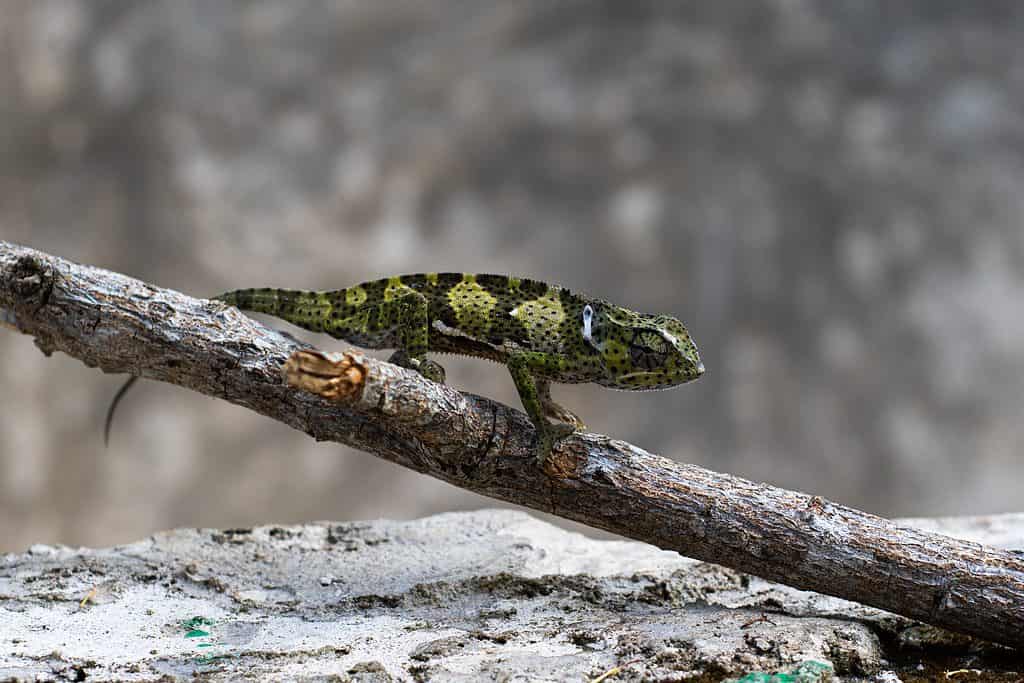
The Tarzan Chameleon has been nearly wiped out by habitat destruction of forest cover in favor of agricultural development.
©FEDERICA21/Shutterstock.com
In a rapidly altering world, it is estimated that nearly 20% of all reptile species, which include lizards, are threatened to one degree or another. Among the most severely at risk are:
The Tarzan Chameleon of Madagascar, scientific name Calumma tarzani, is generally green or yellow but adopts a striped pattern when threatened. The Tarzan Chameleon has been nearly wiped out by habitat destruction of forest cover in favor of agricultural development and gold mining in the region.
The Jamaican Rock Iguana, scientific name Cyclura collei, was actually believed to be extinct until a small colony was rediscovered in 1990. Currently numbering only about 100 individuals, the Jamaican Rock Iguana population collapsed due to being hunted for food and faced with human-sponsored habitat invasion through the introduction of non-native predators such as dogs and pigs into the area. Human development activity in the region also reduces and degrades its remaining habitat potential.
Reproduction, Babies, and Lifespan
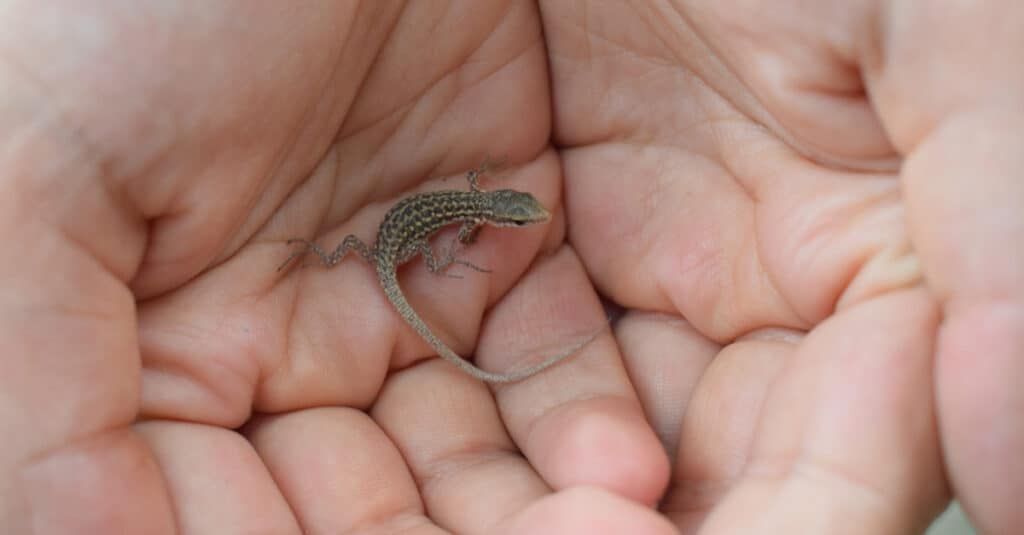
Baby Lazarus Lizard (Podarcis muralis) held in a person’s hands.
©Furiarossa/Shutterstock.com
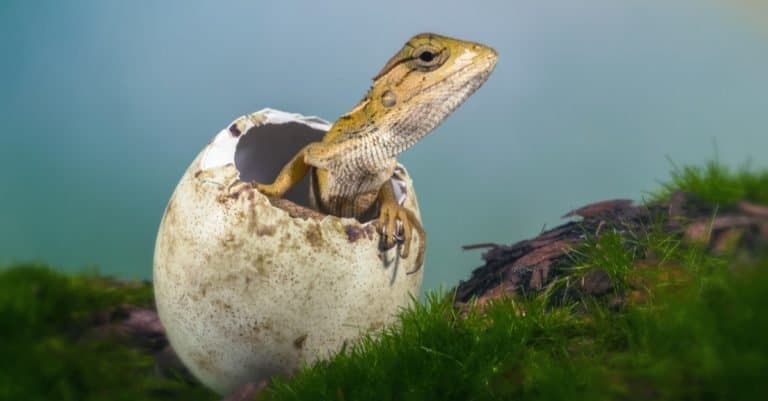
No one rule completely covers these reptiles’ reproduction methods.
The majority of species use male sperm fertilization of a female’s internal eggs as a method of reproduction. In general, these eggs are laid in a safe place and abandoned thereafter, although some species employ females to brood over the eggs until they hatch.
About 1 in 5 species employs viviparity — live birth from eggs developed inside the female — rather than laying eggs outside the body.
A few species reproduce via parthenogenesis or reproduction from eggs that do not require male fertilization. In rare cases, this has even been known to occur in non-parthenogenic lizard species where the female does not have access to a male.
When it comes to the sex selection of the embryo, the eggs are known to be temperature-dependent in some cases. High temperatures during incubation produce more females and vice versa in low-temperature conditions.
The mass of eggs laid by the female can vary from 5 percent to as much as 50 percent of her body weight. Depending on the size of eggs in the particular species, this can result in a clutch of as many as 50 small eggs or as few as a single large one.
Once laid, most eggs hatch within about 3 months. Upon birth, the infants have no family life. They are totally on their own as miniature versions of the adult they will eventually grow into.
Population
It is impossible to say how many lizards there are in the world. Some severely endangered species have been counted as part of their protection and recovery efforts.
It is almost certainly true that the number of lizards overall continues to decline even as the number of identified lizard species continues to climb.
Lizards In The Zoo
South Dakota might seem an unlikely place to find the world’s largest reptile zoo. Located 6 miles south of Rapid City, Reptile Gardens is officially the place.
Zoo Miami is located in the heart of reptile country and is a great place for the family to visit.
Another underappreciated zoo is the Henry Doorly Zoo and Aquarium in Omaha, which boasts both the world’s largest indoor desert and the largest indoor rain forest.
Lizards and Humans
Lizards have long fascinated people due to unique abilities such as regrowing lost limbs, blending in with the environment, seeing 360 degrees, climbing vertically and clinging to ceilings upside down, walking on water, and reproducing asexually.
They have been studied for ages to determine whether these qualities can be replicated or understood. Although they look scary, lizards are mostly harmless to humans, with the exception of Komodo Dragons, who have been known to stalk and attack humans.
Despite these drawbacks, lizards are quite popular as pets. Bearded dragons, chameleons, geckos, iguanas, monitors, tegus, and green anoles are among the most popular species kept as pets.
Lizard Pictures
View all of our Lizard pictures in the gallery.

Kurit afshen/Shutterstock.com
Sources
- Wikipedia / Accessed March 6, 2021
- Britannica / Accessed March 6, 2021
- Facts King / Accessed March 6, 2021
- World Atlas / Accessed March 6, 2021
- Animals Network / Accessed March 6, 2021
- Smithsonian's National Zoo & Conservation Biology Institute / Accessed March 6, 2021
- National Geographic / Accessed March 6, 2021
- Everything Reptiles / Accessed March 6, 2021
- Bio Expedition / Accessed March 6, 2021
- The Wildlife Trusts / Accessed March 6, 2021
- Reptile Gardens / Accessed March 6, 2021
- Critter Control / Accessed March 6, 2021