

Quick Take
- Vultures look menacing, but their role in the ecosystem is the opposite of what most people assume.
- Old World and New World vultures look nearly identical, yet they are not closely related at all. The reason why reveals something remarkable about evolution.
- When a vulture vomits on a predator, the act is not just disgusting. There is a debated survival logic behind it that scientists haven't fully cracked.
- Some vulture populations have been nearly wiped out by a single, entirely accidental human cause that's still active today.
The fearsome-looking vulture is often regarded by people as a nuisance or portent of death, but the birds are actually an integral part of the natural ecosystem. By opportunistically feeding on whatever remains from other animals’ kills, these scavenger birds clean up dead animal matter from the environment that may contain harmful microbes and diseases. Due to human activity, however, many species are in steep decline around the world, which may encourage the spread of diseases.
Three Incredible Vulture Facts
- The vulture has played a key role throughout human culture. Historically, it has been a common sight on the battlefield, feeding on slain soldiers or civilians. In some African traditions, the bird has a kind of supernatural ability to detect dead or dying prey.
- Some vultures will vomit up their meal to escape predators. It is not entirely clear why they do this. The vomit might serve to lighten the bird’s weight before taking off. Another hypothesis is that it distracts the predator momentarily, which allows the bird to make a quick escape.
- Vultures alternate between moments of relative plenty — gorging themselves on as much food as they can eat — and long periods of rest and sleep while they digest their meal.
Scientific Classification
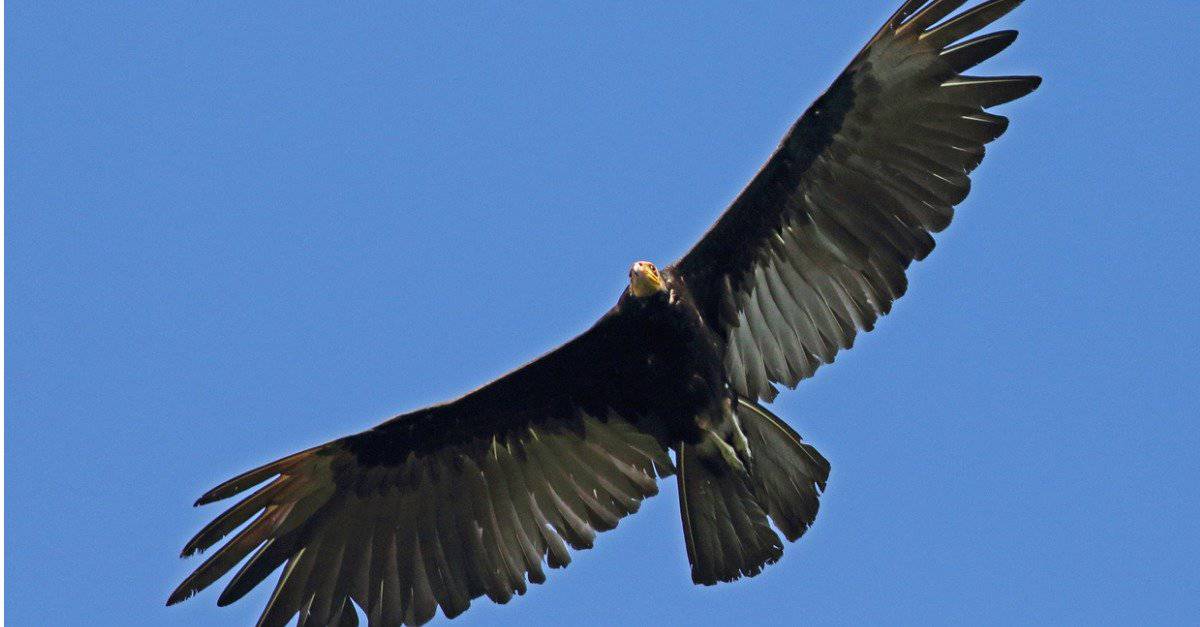
This Greater Yellow-headed vulture is one of the seven New World species from the Family Cathartidae.
©iStock.com/neil bowman
Despite popular misconception, the word “vulture” does not describe the scientific classification of a single group. Instead, it is the informal name for many types of carrion-eating birds with similar characteristics. There are 23 species of vultures currently classified by taxonomists. They fall into two broad categories:
Old World Vultures
16 species in Europe, Africa, and Asia, including
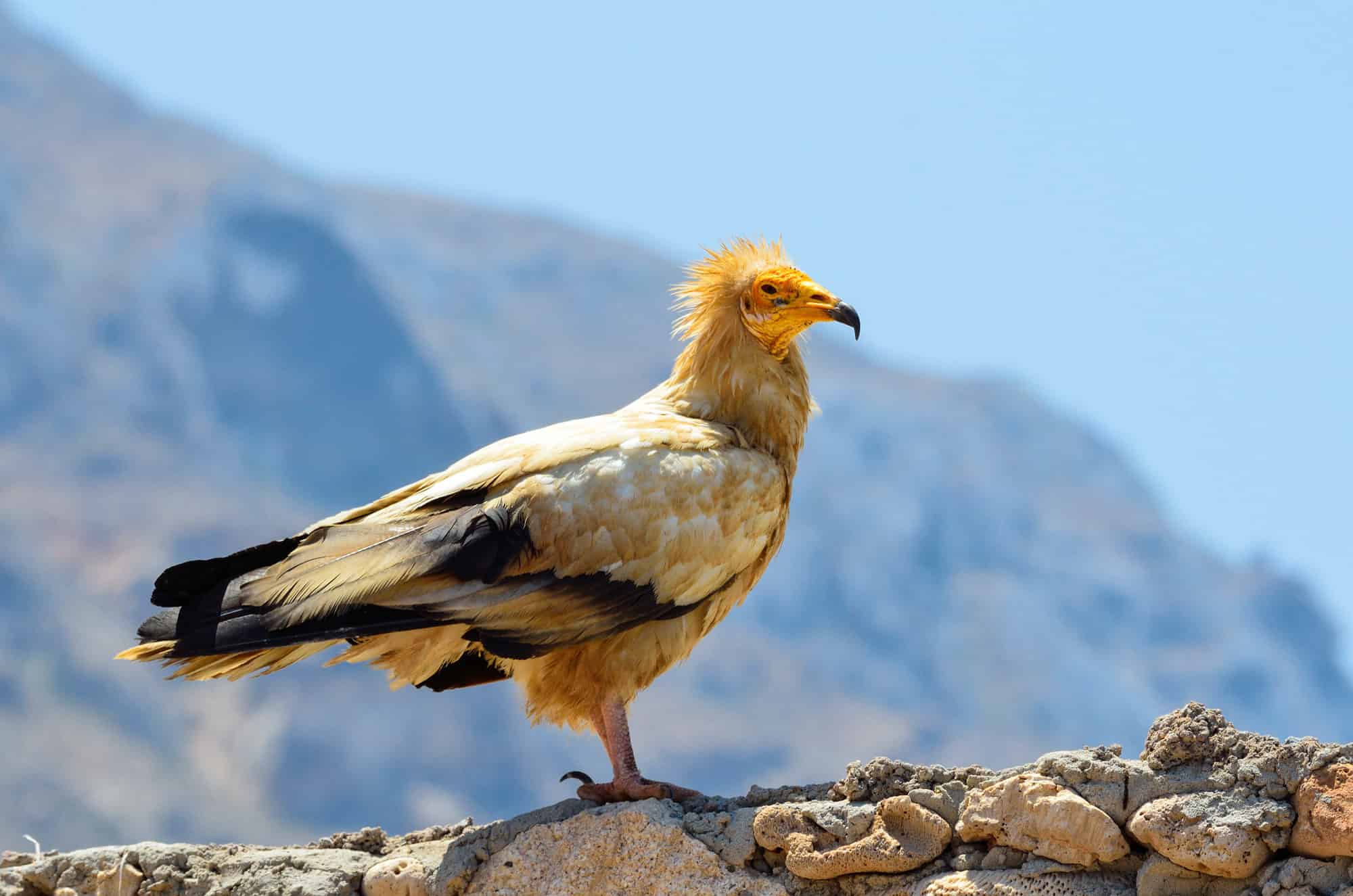
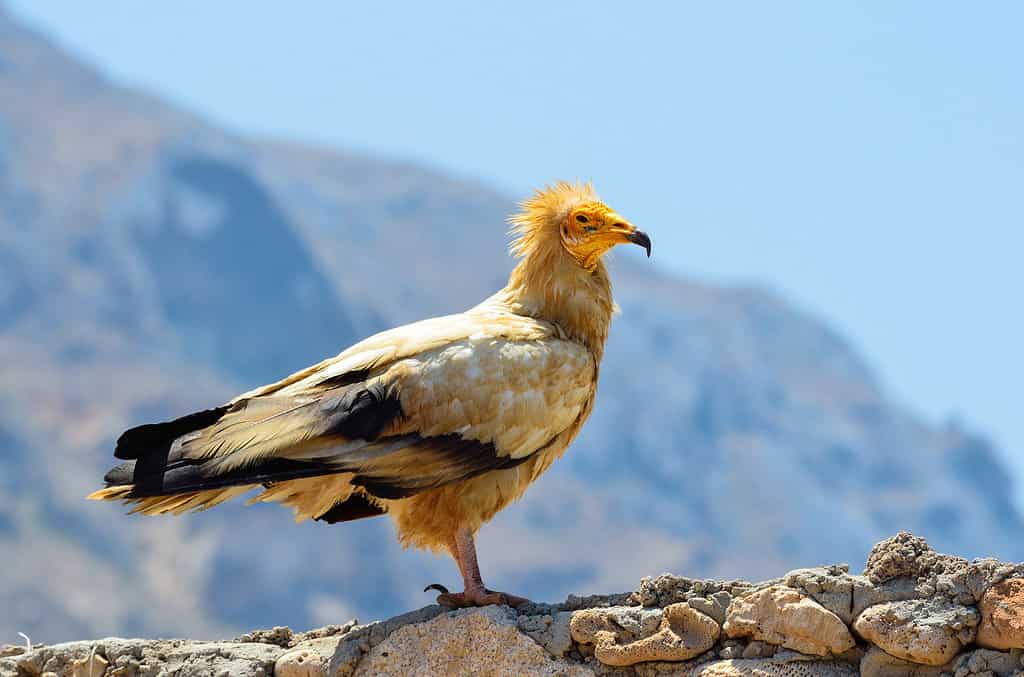
- Egyptian vulture
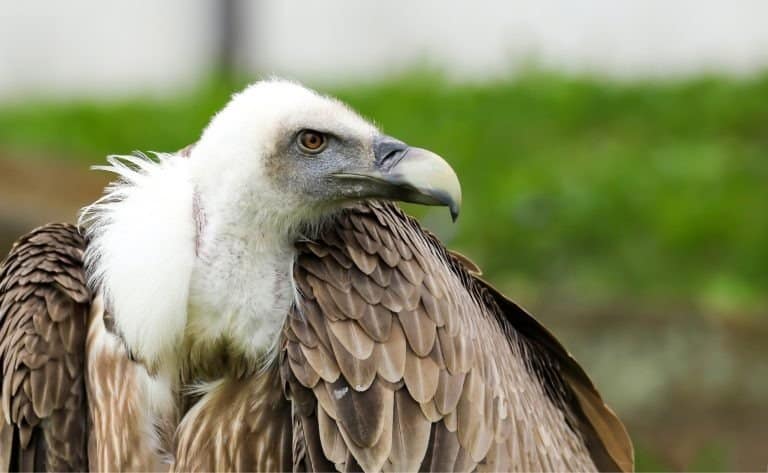
- Griffon vulture
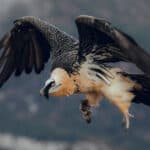
- bearded vulture
- Cinereous vulture
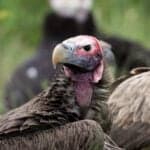
- Lappet-face vulture
- Red-headed vulture
- White-backed vulture
- Ruppell’s vulture
- White-rumped vulture
- Slender-billed vulture
- Himalayan vulture
- Cape vulture
- Hooded vulture
- White-headed vulture
- Palm-nut vulture
- Indian vulture
New World
7 species in North and South America, including
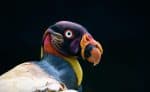
- King vulture
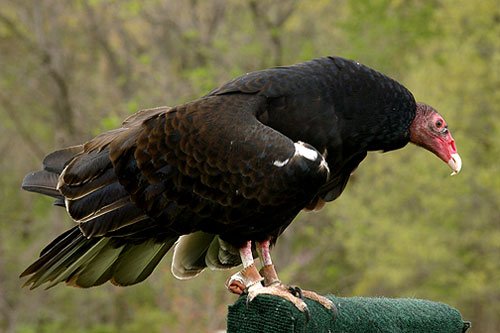
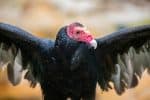
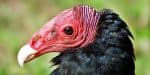
- Turkey vulture
- Black vulture
- Lesser yellow-headed vulture
- Great yellow-headed vulture
- California condor
- Andean condor
These two groups are united by many similarities, but they are actually somewhat distantly related. Old World vultures are part of the family Accipitridae, which also includes eagles, hawks, kites, and harriers. New World vultures are part of the family Cathartidae, which is part of an entirely separate order.
The vulture is an example of convergent evolution: two groups that independently evolved similar features and behavior but are taxonomically very different. In other words, despite being part of completely separate evolutionary lineages, they evolved to exploit a similar niche.
Appearance and Behavior
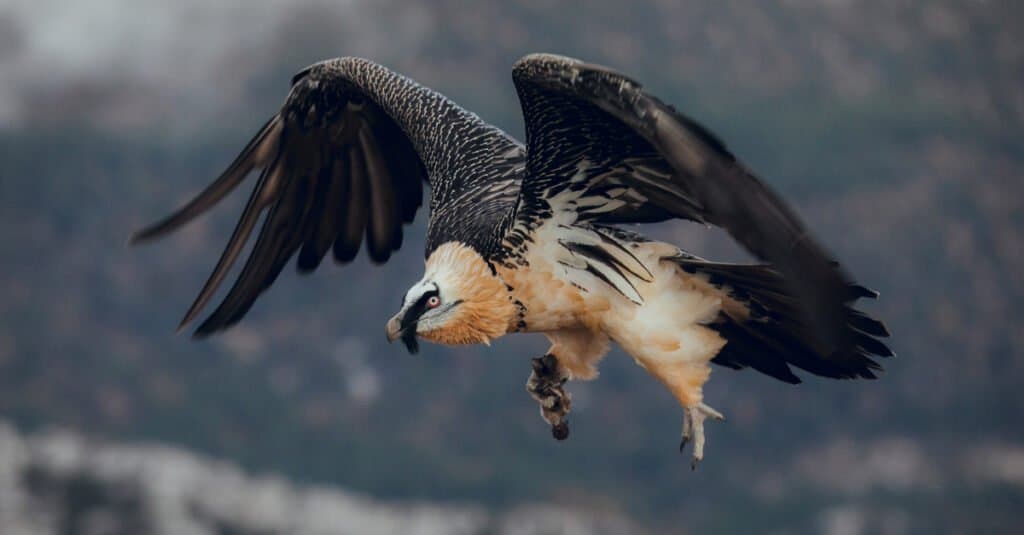
This bearded vulture shows the beak, talons, and wingspan of a vulture.
©Aitor Lamadrid Lopez/Shutterstock.com
The vulture’s appearance, physiology, and behavior are all testament to its remarkable evolutionary adaptations over millions of years to fit a scavenger lifestyle. One of the most distinctive features of the vulture is the bald head. It was once believed that this bald patch had evolved to prevent the feathers from becoming damp with blood when consuming a carcass, but another possible explanation is that it may also assist in the regulation of body temperature. The big, sharp beak also evolved to tear away flesh and muscle from the bone. The bird’s talons and feet are adapted more for walking than killing prey.
The vulture has a rather dark and subdued appearance. It is covered in feathers of black, white, gray, and tan, though a few species add red or orange plumage. The legs often acquire a white coloration due to the presence of uric acid from the bird’s waste. It is believed that the uric acid helps to kill microbes and regulate foot temperature.
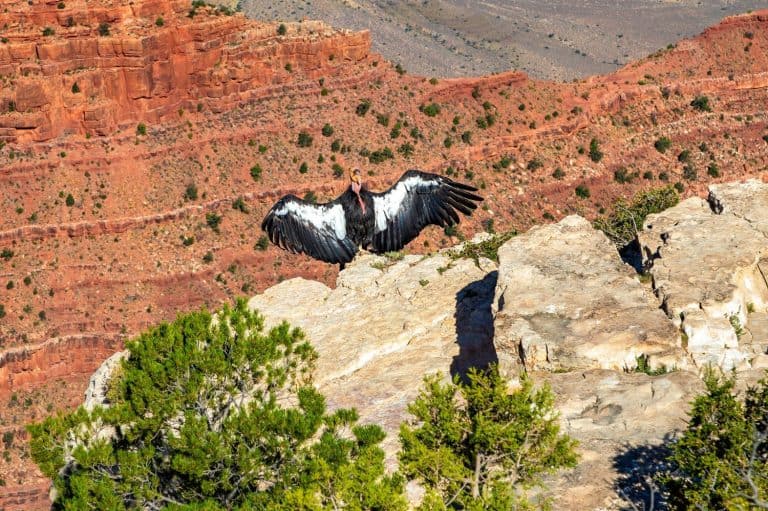
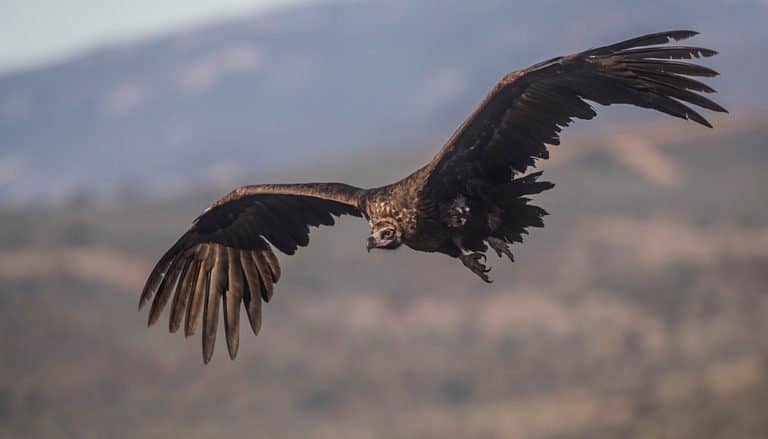
They vary in size, though most species are large and formidable like birds of prey. The largest species of Old World vulture bird is the cinereous, or black vulture. It measures more than 3 feet long with a wingspan of around 9 feet, and it weighs almost 30 pounds. The largest New World vulture bird is the condor, with a wingspan of more than 10 feet. These birds’ unique feather adaptations have enabled them to become experts at soaring miles above the ground in search of dead or dying animals. Whenever it gets cold, the bird will sometimes spread out its wings in the sun to warm up.
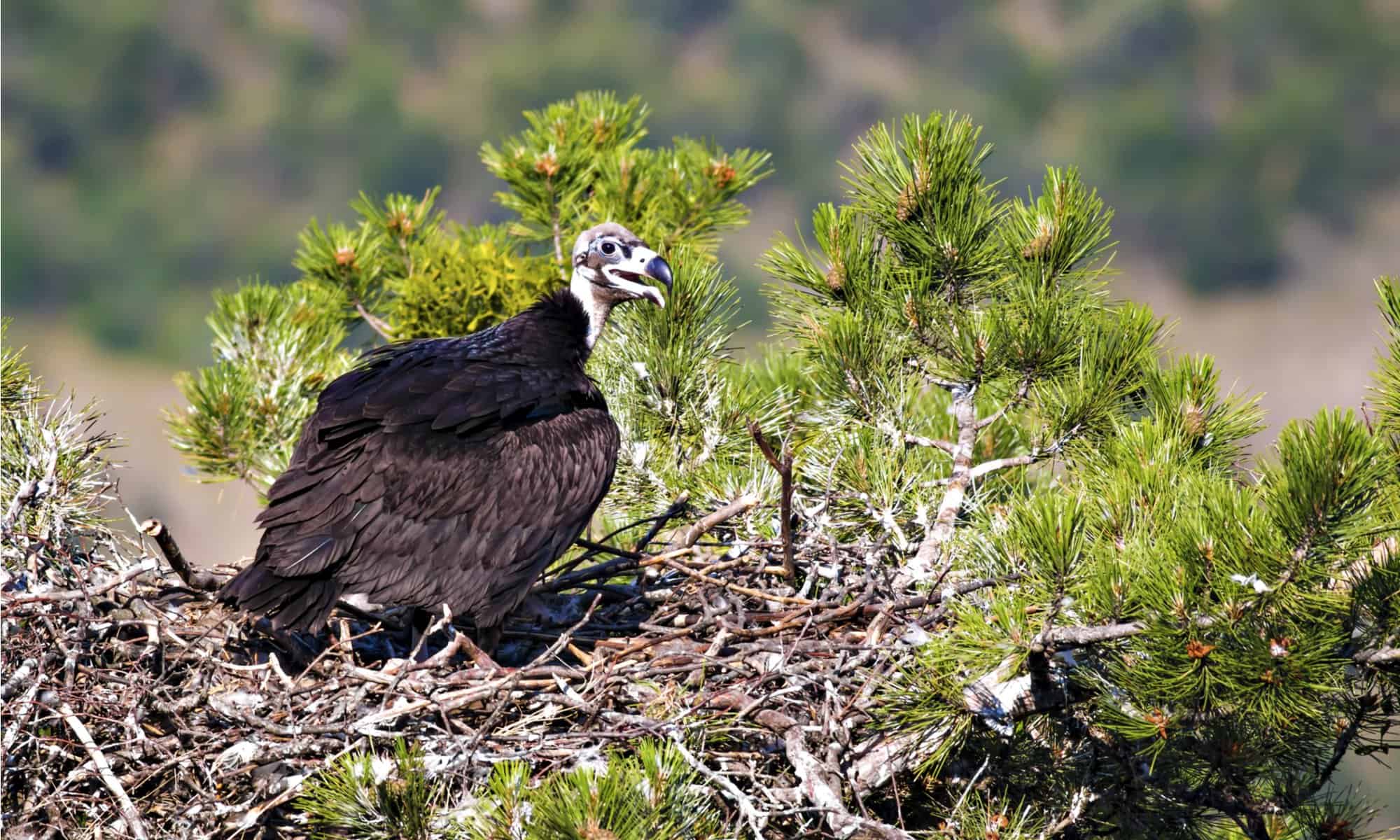
The Cinereous vulture, an Old World vulture, builds a big nest out of sticks, usually in an older tree or the edge of a cliff.
©serkan mutan/Shutterstock.com
Because of their distinct evolutionary lineages, New World and Old World vultures differ quite a bit in several key aspects. One of the most important differences is their nesting behavior. Old World vultures prefer to construct nests out of sticks. New World vultures, on the other hand, do not build nests of any kind and tend to lay their eggs on bare surfaces. These nesting areas are sometimes inhabited by large colonies of birds. A group of vultures is known as a venue or committee.
Another important difference between the two groups lies in their senses. Some New World vultures have a keen sense of smell that allows them to detect carcasses from long distances away. This is an uncommon trait among many bird species. Old World vultures traditionally rely more on their sight to locate food like a typical bird.
New World vultures also lack the throat structure — which is known as the syrinx — that gives voice to many birds. They are still capable of hisses and grunts but cannot make the kinds of complex sounds and calls for which birds are widely known. This limits their ability to communicate with each other as well.
Most species of vultures tend to spend most of their time within a narrow geographic range, but northern-based species like the widespread turkey vulture are migratory during the winter months. The turkey vulture spends most of the summer in the northern United States and then travels south when the weather starts to become cold.
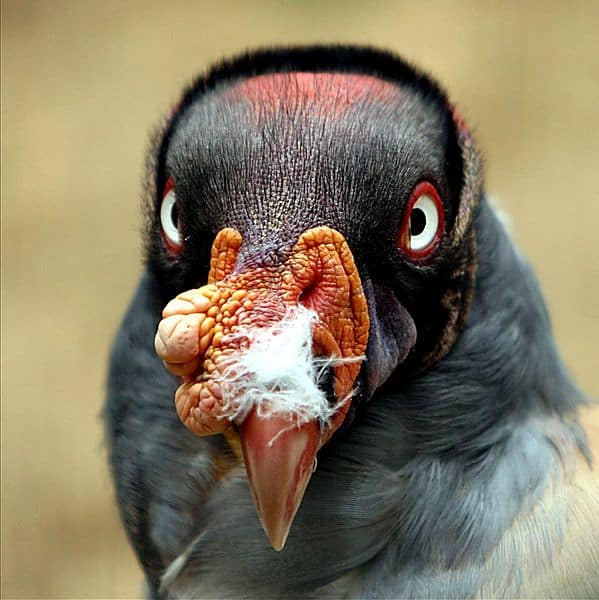
Vultures are thought to be one of the world’s ugliest animals.
Habitat
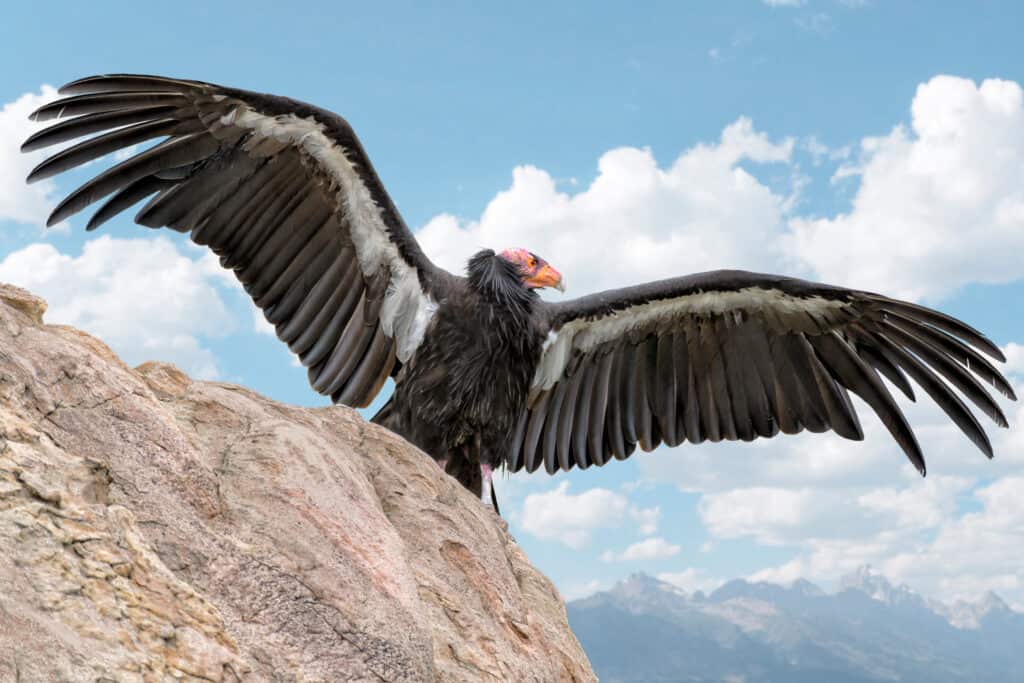
California condors, one of the New World vultures, are noted for their huge wingspan (this one is 9 feet).
©Barbara Ash/Shutterstock.com
As the name implies, Old World vultures inhabit a huge swath of territory in Europe, Asia, and Africa, except for Australia and the Pacific islands. The New World vultures inhabit a mostly unbroken stretch of territory in the Americas south of Canada. Both types prefer hot or tropical climates but inhabit temperate climates as well. They can be seen hunting in relatively remote locations, usually near large open expanses, and roost in cliffs, trees, and sometimes on the ground. Vultures tend to avoid human settlements but sometimes may attempt to eat roadkill or garbage left behind by people.
Diet
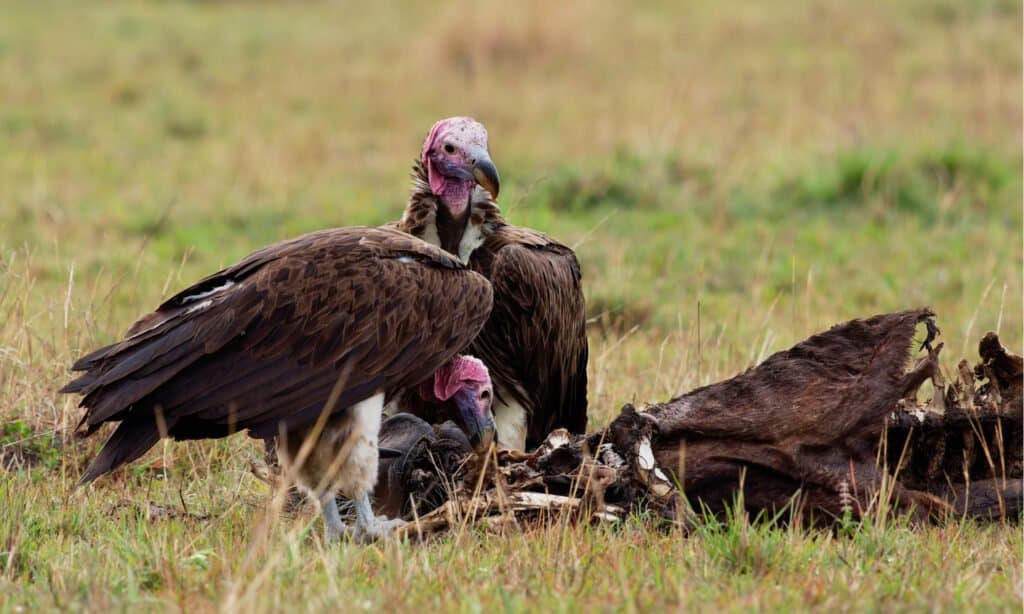
Lappet-faced Vultures, or Nubian vultures, feed on a carcass as scavengers do.
©Martin Pelanek/Shutterstock.com
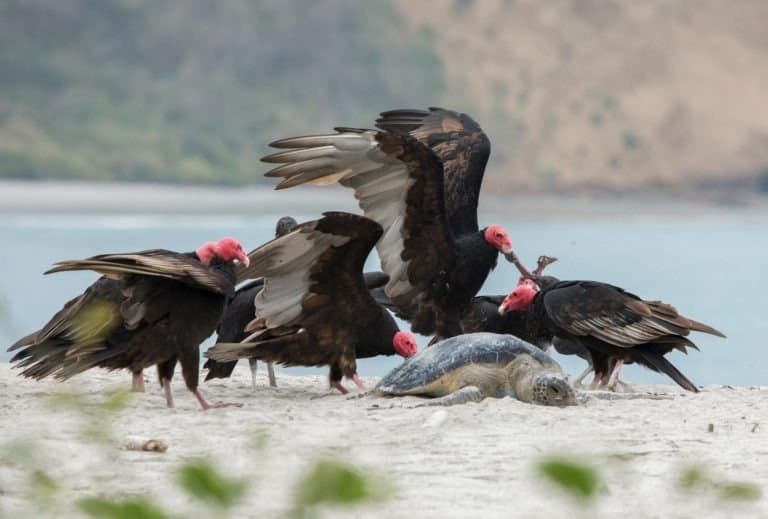
Vultures belong to a special class of carnivores known as scavengers. This means they feed almost exclusively on carrion — the leftover remains of dead bodies — but they are not particularly discerning about what kind of animal they eat. Although they are not adept at hunting, they are not above killing a wounded animal to help it get to the carrion state. They will also sometimes follow a dying animal, patiently waiting for it to perish. If the animal’s hide is too tough to pierce, then they will allow other predators or scavengers to feed on it first. They can sometimes be seen side by side with other scavengers at a single carcass.
Vultures have highly specialized enzymes (essentially a type of protein) in their stomachs to neutralize dangerous microbes that would otherwise pose a danger to most animals. In this way, they clean up rotting carcasses from the environment that have been left behind by other predators. They are voracious eaters, sometimes consuming up to 20 percent of their own body weight in a single sitting. They are extremely thorough in their consumption, often leaving very little of the carcass. The bearded vulture even consumes the bones.
Predators and Threats
Due to their size and strength, they have few natural predators in the wild, though young chicks are often vulnerable to predation from eagles and other carnivorous birds, as well as big cats like the jaguar. Small mammals are also known to steal and consume the eggs. Thus, the nest requires vigilant protection from dangerous predators.
Human activity poses the biggest threat to vultures. Some of the most pressing dangers include illegal hunting and electrocution from power lines. They are also threatened by the loss of habitat in some parts of their natural range. Perhaps the greatest human threat to them is accidental poisoning. In India and Pakistan, entire populations have been decimated by toxins that seep into the ecosystem. They can easily die when they feed on the carcasses of farm animals filled with medication.
Reproduction, Babies, and Lifespan
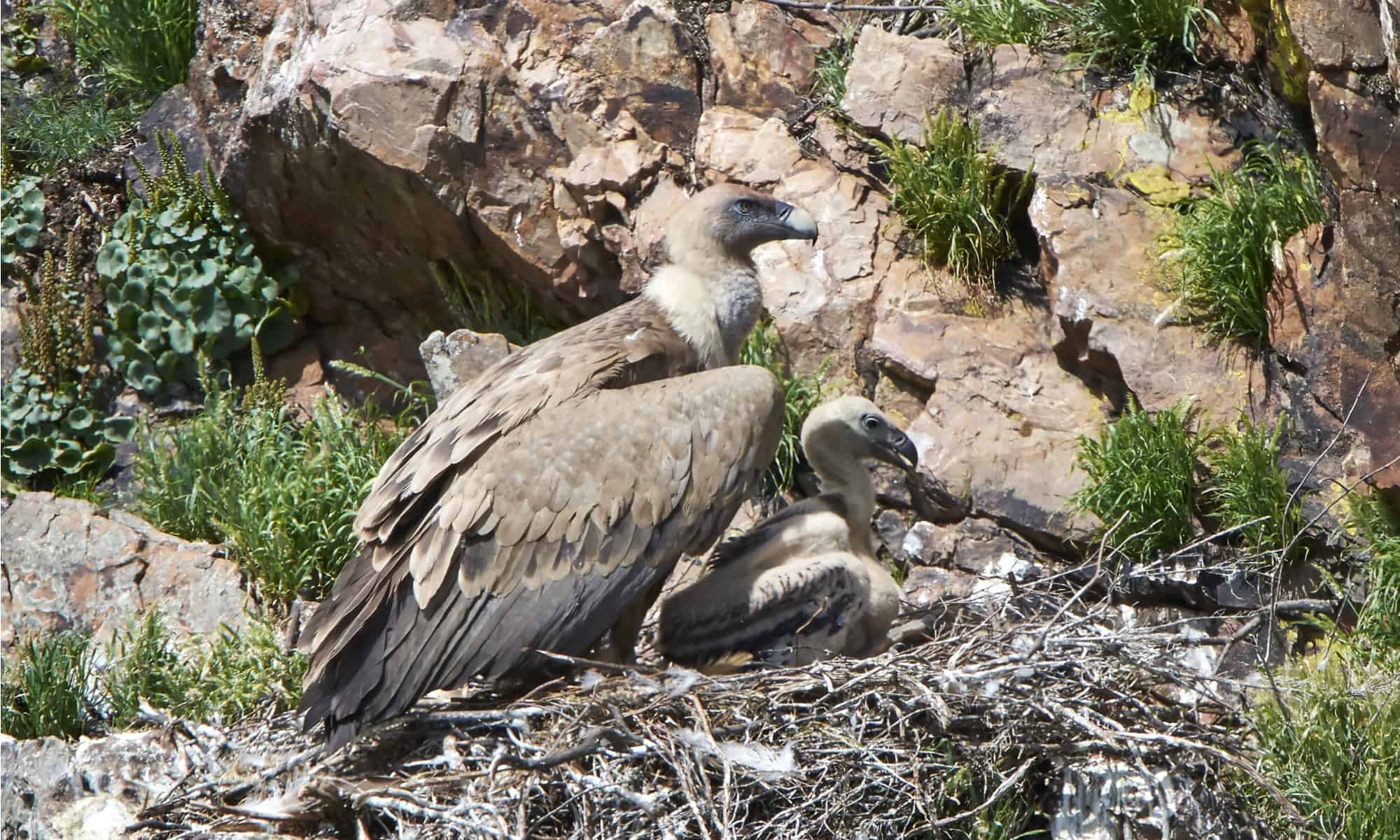
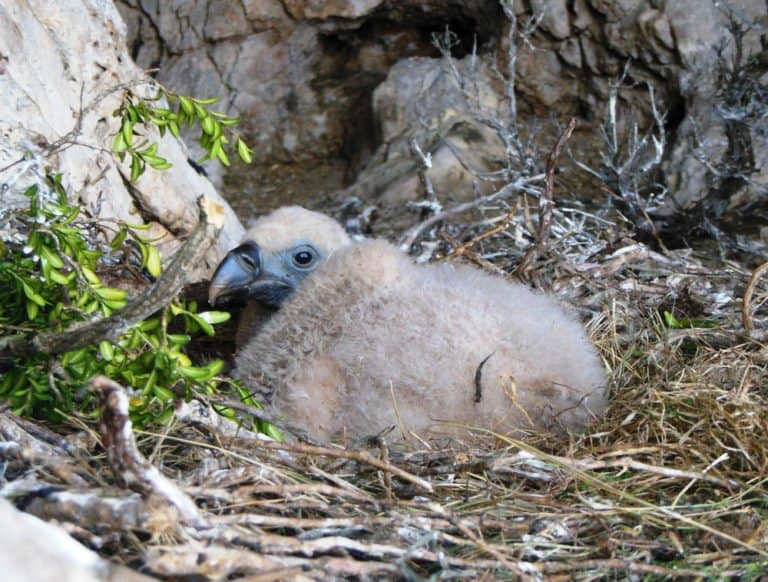
Griffon vulture in her nest with a little chick who will receive diligent care for several months.
©Dennis Jacobsen/Shutterstock.com
Vultures exhibit quite a lot of variability in their reproductive behavior. Each species may have its own specific breeding season and unique courtship ritual to attract a mate. These birds are mostly monogamous species and tend to have only one mate at a time.
After copulating, the female will lay around one to three eggs in a single clutch. It takes about a month or two to fully incubate the eggs. In some species, both parents will raise and protect the young chicks. Unlike birds of prey, they do not carry food back in their talons, but instead, regurgitate food from a specialized pouch to feed the young.
After several months of diligent care, the vulture chicks will begin to fully fledge, meaning that they will gain their flying feathers. But even after achieving some measure of independence, the chicks may not immediately leave the nest. They may choose to stay with the family to feed and protect the next generation.
For the typical species, the young birds will finally achieve full sexual maturity at anywhere up to eight years of life. These birds usually live at least 11 years in the wild, though some species can live to nearly 50.
Population
Population numbers appear to be falling across the globe, leaving the vulture, as a group, in a perilous state. According to the IUCN Red List, critically endangered species include the red-headed vulture (which has fewer than 10,000 left), the white-rumped vulture (also less than 10,000), the Indian vulture (about 15,000), the white-headed vulture, and a few other species, many of which are Old World vultures. However, this is not uniformly true of every species. The turkey vulture is listed as a species of least concern with a vast range across South America, Central America, and the United States. This species currently receives legal protection in the US under the Migratory Bird Treaty Act.
In response to declining numbers, some governments have made an effort to restore natural habitat, eliminate poaching, and reduce harmful toxins in the environment. Conservationists are also raising, nurturing, and caring for captive birds in an effort to rehabilitate their numbers and reintroduce them into their former habitats.
In the Zoo
Vultures are a major feature at many American zoos, including the San Diego Zoo, the Saint Louis Zoo, the Oregon Zoo, and the Maryland Zoo. The Oregon Zoo raised a female turkey vulture named Clyde (born in 1985) as part of its WildLife Live! show.
Vulture Pictures
View all of our Vulture pictures in the gallery.

LeAndr/Shutterstock.com
Sources
- David Burnie, Dorling Kindersley (2011) Animal, The Definitive Visual Guide To The World's Wildlife / Accessed March 11, 2009
- Tom Jackson, Lorenz Books (2007) The World Encyclopedia Of Animals / Accessed March 11, 2009
- David Burnie, Kingfisher (2011) The Kingfisher Animal Encyclopedia / Accessed March 11, 2009
- Richard Mackay, University of California Press (2009) The Atlas Of Endangered Species / Accessed March 11, 2009
- David Burnie, Dorling Kindersley (2008) Illustrated Encyclopedia Of Animals / Accessed March 11, 2009
- Dorling Kindersley (2006) Dorling Kindersley Encyclopedia Of Animals / Accessed March 11, 2009
- Christopher Perrins, Oxford University Press (2009) The Encyclopedia Of Birds / Accessed March 11, 2009
- San Diego Zoo
- Britannica
- Seaworld Parks & Entertainment