
All moth species have a subtle beauty about them, but some are absolute marvels when it comes to their sizes and design. Some of the world’s largest moths have wingspans wider than a human hand, with intricate colors, shapes, and behaviors to match. These giants thrive in tropical rainforests, mountain valleys, and temperate woodlands, each uniquely adapted to their habitat. What makes the largest moths in the world so special? Today, we’ll go over six distinct moths known for their enormous sizes and how they’ve adapted to their environments. Let these moths have the spotlight!
Atlas Moth (Attacus atlas)
©Cocos.Bounty/Shutterstock.com
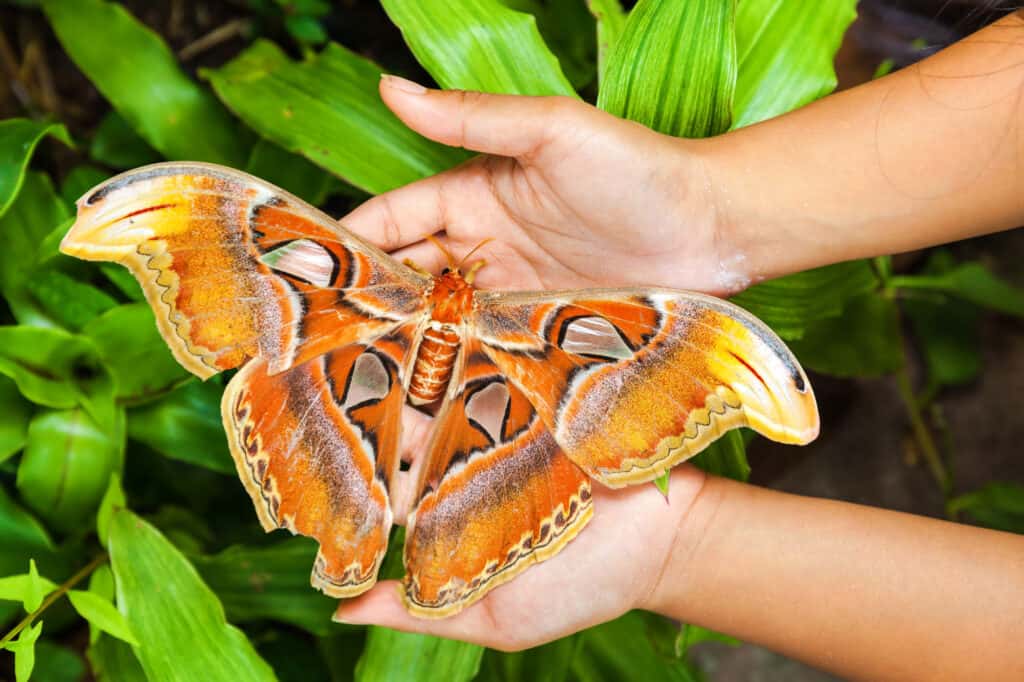
The Atlas moth is found across Southeast Asia, from India to Indonesia, and is widely recognized as one of the largest moth species in existence. Its wingspan can exceed 10 inches, with females typically larger than males.
The wings of this moth are a striking reddish-brown, patterned with triangular notches and bordered by delicate, scalloped edges. Despite its enormous size, the adult Atlas moth doesn’t eat. It actually lacks functional mouthparts, relying on fat reserves it built up during its caterpillar stage.
Young Atlas moth larvae eat the leaves of citrus, guava, and cinnamon trees. Plus, the cocoon it spins is so durable that some cultures use the silk as material for small accessories or soft goods. It is also waterproof and easily camouflaged among dry leaves, offering additional protection during the Atlas moth’s metamorphosis.
Unique Adaptations
The Atlas moth’s most unique adaptation can be found in its wing tips, which are shaped like snake heads. This is an extraordinary form of mimicry and is designed to protect the Atlas moth from predators. When disturbed, this moth moves its wings to imitate a snake’s movement, deterring birds and reptiles from investigating further or seeking a meal.
White Witch (Thysania agrippina)
©RealityImages/Shutterstock.com
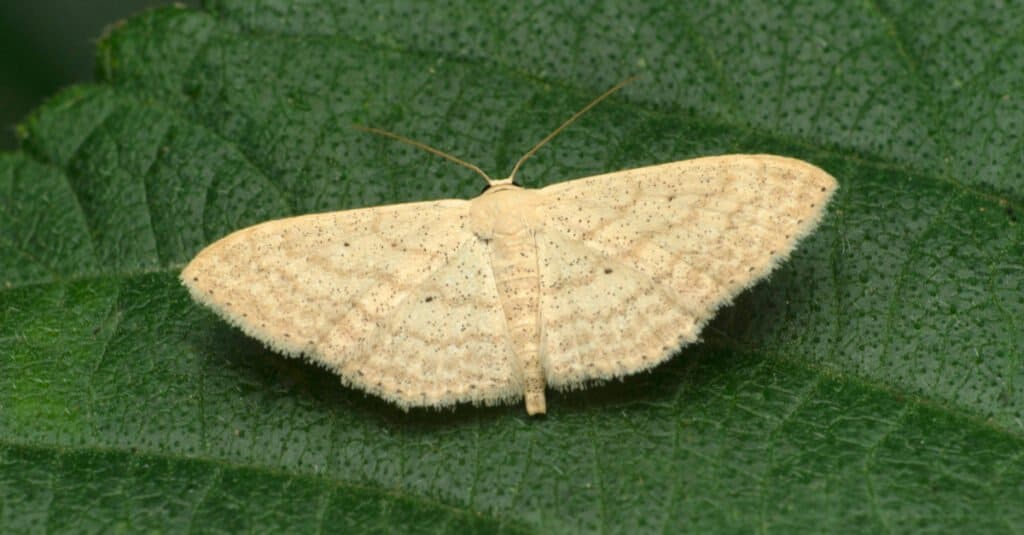
Stretching up to 12 inches from tip to tip, the White Witch moth holds the record for the world’s widest wingspan among moth species. Native to Central and South America, it thrives in humid rainforests and tropical canopies, hiding amongst leaves and bark.
Its wings are pale, patterned with wisps of silver, gray, and brown to help the moth remain safe. This camouflage, along with its nocturnal nature, actually makes it one of the most elusive insects on Earth. Scientists still know relatively little about its breeding or migration habits because it’s rarely observed in the wild.
Unique Adaptations
The White Witch’s remarkable camouflage allows it to virtually disappear against natural backgrounds, even in its rainforest habitats. Its enormous wings also generate slow, stable flight, helping to conserve energy as it travels. Its coloration and wing texture also scatter light in a way that hides movement from predators, making it nearly invisible even in motion. It’s an elusive moth to humans and animals alike.
Hercules Moth (Coscinocera hercules)
©ChameleonsEye/Shutterstock.com
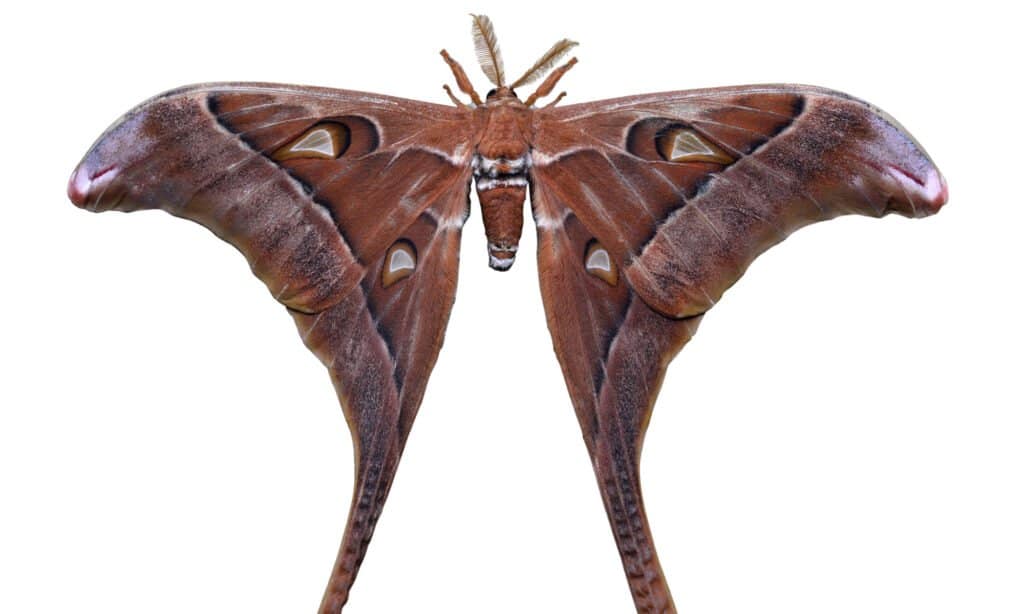
The Hercules moth is native to northern Australia and parts of Papua New Guinea and holds the title for the largest wing area of any moth, reaching up to 11 square inches. Its broad wings and long tails are captivating in flight, making it an easy target for predators.
Males are recognized by their elongated, curved tails, while females are larger overall, with much wider wings. The adult moth’s brown and cream coloration acts as camouflage against the forest canopy, though its size does tend to bring unwanted attention. Like the Atlas moth, it lives only a few days as an adult and does not eat during this time of maturity.
Unique Adaptations
The Hercules moth’s long tail streamers are thought to confuse bats as they echolocate, as bats are a natural predator of large nocturnal insects, like this moth. Their tails spin and twist during flight, deflecting a bat’s sonar away from the moth’s body. Its caterpillars, which can grow up to five inches long, have a waxy coating that helps deter parasitic insects and even retain moisture in hot climates.
Cecropia Moth (Hyalophora cecropia)

©Cathy Keifer/Shutterstock.com
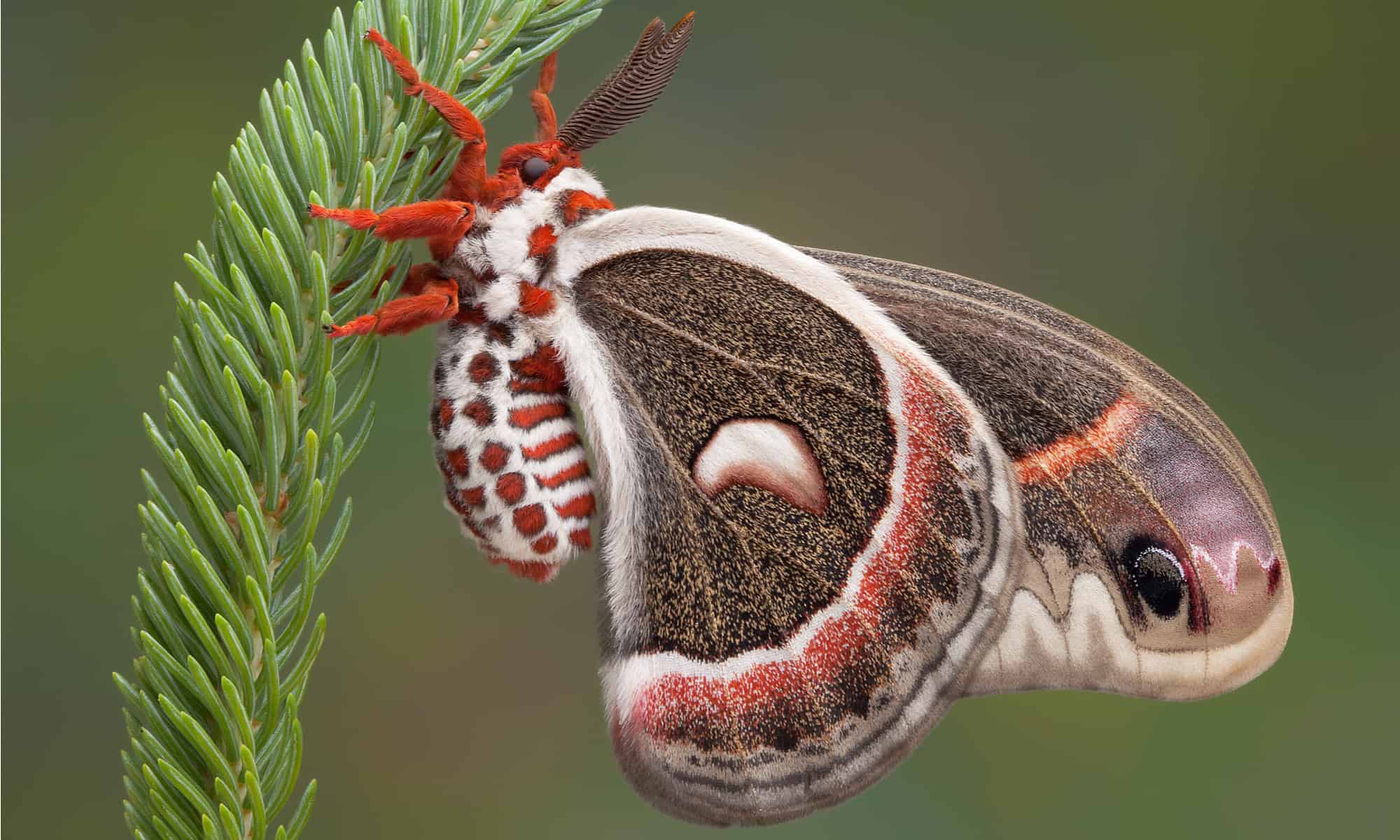
North America’s largest moth is the Cecropia, boasting a wingspan of up to 7 inches. Found throughout the eastern United States and parts of Canada, this member of the giant silk moth family is both beautiful and surprisingly hardy, given its range of habitats.
Its wings are striking, made up of deep brown shades with bands of white, orange, and gray, and its abdomen is ringed in bright red or rust. Cecropia moths emerge in late spring and early summer, often found near porch lights or tree trunks. Like the other moths on this list, adults do not eat and live only a week or so, focused solely on reproduction before passing.
Unique Adaptations
The Cecropia moth’s bold coloration isn’t just for show. It actually acts as a form of camouflage and protection. The spots on its wings can startle predators, given that they look like eyes, while its thick, fuzzy body helps conserve heat during cool northern nights, particularly in Canada. Its caterpillars have a vivid blue and yellow coloration during late development, which acts as a warning signals that help deter potential threats.
African Moon Moth (Argema mimosae)
©David Hampton/Shutterstock.com
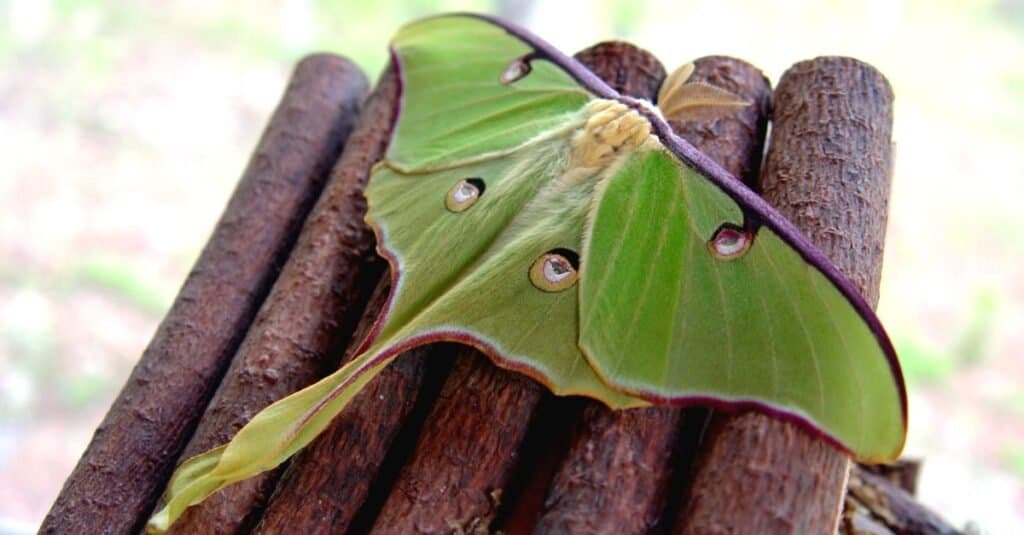
Also known as the African Luna moth, this moth is one of the most visually striking insects on the continent and beyond. With a wingspan of up to 8 inches and a graceful tail extending several more inches, it’s a close relative of Madagascar’s Comet moth. Its wings are patterned with translucent eye spots, and it also has a subtle green shimmer that glows in moonlight.
Found in sub-Saharan Africa, particularly in southern and eastern regions, the African Moon moth prefers forests and savannas where its host plants, primarily marula and tamboti trees, grow and thrive. Adults live for about four to five days, slow and delicate as they fly in search of a mate.
Unique Adaptations
The African Moon moth’s unique adaptations are similar to others on this list. Its long tail helps it evade bat predation by confusing its echolocation capabilities, like the Hercules moth. Its vibrant yellow-green coloration blends seamlessly with foliage, and the eye spots easily distract or intimidate predators, depending on the species.
Giant Silkworm Moth (Arsenura armida)

©Jim Lambert/Shutterstock.com
Native to Central and South America, the Giant Silkworm moth is another formidable member of the Saturniidae family, the moth family containing most of the largest moths found around the world. With a wingspan reaching nearly 9 inches, its reddish-brown wings and crescent-shaped forewings give it a distinctive appearance.
When it comes to the differences between genders in this species, males have more angular wings and are smaller than females, as their bodies are generally broader in structure. This species is also notable for its caterpillars, which often travel and feed in large groups for protection before dispersing to pupate. The group feeding of this species is very unique compared to other moths.
Unique Adaptations
The Giant Silkworm moth’s larvae employ safety in numbers, grouping together to appear larger and more threatening to predators, which is undeniably its most unique adaptation. They also possess unique hairs that can cause irritation when touched, acting as a physical deterrent to both humans and animals alike. Adults use their wing patterns to mimic dead leaves, allowing them to rest unnoticed for most of the day.
The Beauty of the Largest Moths In the World
Though all of these moths hail from different continents and climates, they share several traits with one another: their size, lifespans, and ecological impacts. Unfortunately, habitat loss and climate change threaten several of these species, especially those dependent on tropical forests. Scientists continue to monitor these beautiful giants in the hopes of keeping them thriving for decades to come, as our world would be much less bright and fascinating without them.